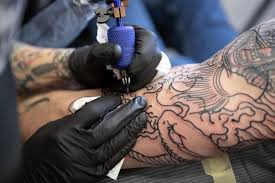
Although, in the end, all tattooing, even of mere designs, is forbidden to Jews by halachah, one opinion in the Mishna (Rabi Shimon ben Yehudah in Rabi Shimon’s name) sees the prohibition as referring specifically to tattooing the name or symbol of an idolatry. The pasuk can be read as hinting to that approach: “And a tattoo you shall not place upon yourselves – I am Hashem” (Vayikra, 19:28) – as if to imply “Nothing else is.” The power contest, so to speak, is zero-sum.
And the Rambam, in fact, places the prohibition in his “Laws of Idolatry.”
So it would seem reasonable, if seeking some message in the tattoo prohibition, to imagine that it might be a rejection of the designation of something, anything, other than Hashem as one’s ultimate object of dedication.
And, in fact, tattooing is, at least in many cultures, not a mere “decorative” practice but rather a demonstration of devotion – whether to “Mom,” “Jane,” “Jim” or “Semper Fi.”
Or to any less-than-holy ideal, no matter how worthy. What to an idolater is his deity’s name or symbol is, to a contemporary potential tattoo-ee, any of the broad assortment of “isms” – socialism, capitalism, Zionism, environmentalism… that are popular at any given time. Rav Elchonon Wasserman famously identified “ isms” as the idolatries of the modern era.
And so, what the Torah is forbidding may be understood as inscribing one’s utter dedication to any such concept. In fact, the Hebrew for “upon yourselves” (bachem) can be read even more simply as “in yourselves.”
Political isms are still popular these days, but the most widespread ism of the nonce, I suspect, is the one beginning with the word “material.” Not easily depicted in a tattoo, perhaps, but it’s a most consuming (pun intended) idolatry all the same.
We should feel prohibited from worshiping it.