I have defended Congresswoman Alexandria Ocasio-Cortez on a number of occasions in several public venues. But I was chagrined by her reaction to the recent Hamas/Israel war, and express why here.
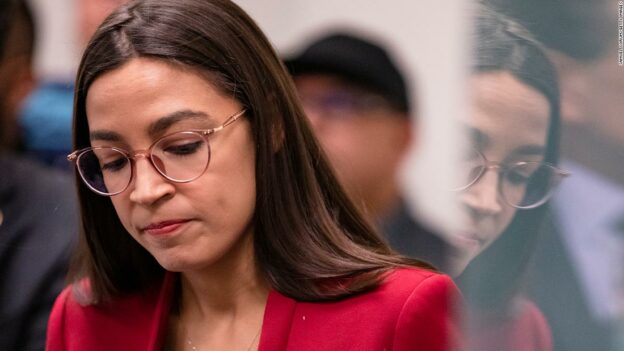
I have defended Congresswoman Alexandria Ocasio-Cortez on a number of occasions in several public venues. But I was chagrined by her reaction to the recent Hamas/Israel war, and express why here.
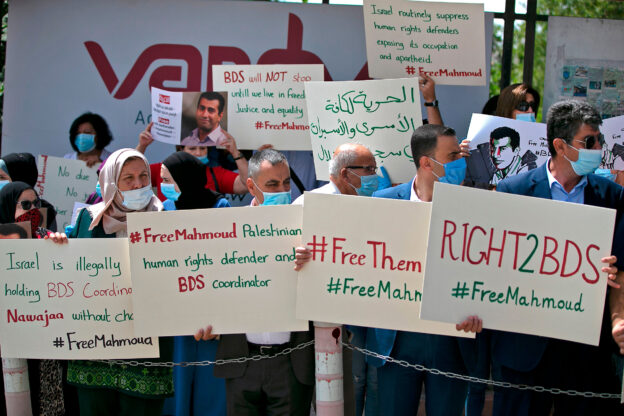
My most recent Ami column can be read here.


There’s probably no great rush among Iranian science majors to choose careers in the country’s nuclear research program. For good reason. The positions — and their holders — have often proven short-lived.
Over the past decade, at least five major Iranian nuclear scientists were assassinated, the most recent one, Mohsen Fakhrizadeh — thought to be the mastermind behind Iran’s nuclear program — just last month.
Whether Mr. Fakhrizadeh was killed by a hidden, elite sharpshooter squad or, as Iranian security officials have said, remotely, by satellite-controlled gunnery equipped with facial recognition software, the killing was clearly sophisticated, well planned and well executed.
Which, of course, made Israel a prime suspect. The motive was certainly there.
Because JCPOA, the “Joint Comprehensive Plan of Action” a.k.a.“the Iran Deal,” itself lies gravely wounded — the U.S. pulled out of it in 2018, and Iran has subsequently violated some of the agreement’s major restrictions, including the amount of enriched uranium it is allowed to stockpile and the purity to which it is allowed to enrich the element.
And so, Israel, the “little satan” Iranian leaders have repeatedly threatened, would understandably like to see Iran’s nuclear development program, well… set back. Fewer nuclear experts, fewer capabilities to create nuclear weapons.
But whoever was ultimately behind the scientists’ untimely ends, the labor-intensive setting up and execution of the projects “on the ground” was overwhelmingly likely to have been the work of Iranians.
Could they be mercenaries hired by a power like Israel or the U.S., or Iranians sympathetic to Israel? Anything is possible. But it’s also possible that the people who made the hits happen are operatives of one of two Iranian anti-government groups.
Those of us who qualify for senior citizen discounts on buses and trains likely remember when — yes, youngsters, it is fact — Iran and Israel were close allies. Iranian-Israeli military links existed, weapons projects were undertaken in tandem and El Al operated direct flights between Tel Aviv and Tehran.
That was back in the days of the Shah, Mohammad Reza Pahlavi, who ruled Iran from 1941 until 1979, when the Iranian Revolution brought Islamist Ayatollah Ruhollah Khomeini back from exile and the mullahcracy began.
The Shah fled to Egypt, where he died the next year. At the time, his son and heir to the throne had the throne persisted, Reza Pahlavi, was a trainee fighter pilot in Texas. Today, 60 years old and living in Maryland, he still aspires to return to Iran — and to return Iran to its happier past.
Reza Pahlavi leads a body called the National Council of Iran for Free Elections, an umbrella group of exiled opposition figures seeking to overthrow Iran’s current government. The would-be Iranian leader claims to have clandestine supporters within the Iranian military, including the Revolutionary Guard.
Similarly seeking to replace the mullahs is the National Council of Resistance of Iran, which aims to establish a pluralistic, multi-party and democratic system in Iran.
Sympathizers in Iran of either of those groups could have been the actual assassins of the late Iranian nuclear scientists. What is undeniable, though, is that Iranian resistance movements exist. And one or more of them may be working together with… whatever outside power is trying to keep Iran from joining the international nuclear weapons club.
That fact should give pause to President-elect Biden, who has expressed his desire for the U.S. to rejoin the Iran Deal. To be sure, there are rational reasons to try to do that, especially if the restrictions on Iran are tightened, something Mr. Biden has pledged to pursue. The deal, after all, did prevent what Iran is openly up to now.
But there’s no hurry. The U.S. sanctions currently in place continue to take a devastating toll on Iran’s economy; the country’s inflation rate is currently running around 40 percent. And the brazen assassinations — along with the 2018 Israeli operation that “borrowed” important documents outlining Iran’s nuclear designs, and a series of explosions over recent months that have destroyed a centrifuge factory, a secretive military installation and a missile facility — have surely made Iran’s leaders keenly aware that their country is rather vulnerable to formidable adversaries.
So, the incoming Biden administration would be wisest to let the pressure on Iran continue to build — to enforce the sanctions in place, to encourage the Iranian movements seeking to overthrow the Islamic Republic of Iran, and to continue to strengthen whatever entity it suspects has been undermining Iran’s nuclear ambitions.
© 2020 Ami Magazine
Dear Subscriber,
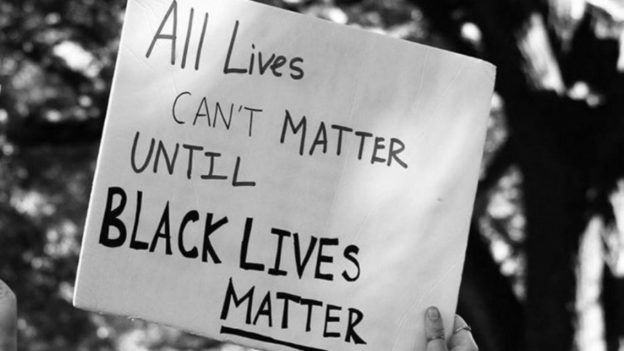
“Black Lives Matter” is a phrase that can describe any of a number of groups or an amorphous social movement. Is anti-Semitism pervasive in any of the groups or the movement itself? Are there signs of a healthy response from black public personalities toward Jew-hatred in general? My thoughts on the matter are here.

The unhealthy confusion of Torah values with politics brings disrepute to Torah and harm to Torah Jews.
No party platform can substitute for our mesorah.
As a community, we ought to clearly and proudly stand up for the Torah’s stance on societal issues, embracing a worldview that identifies with no party or political orientation. Our interests may dovetail with a particular party or politician in one or another situation, but our values must remain those of Sinai, not Washington.
Moral degradation infects a broad swath of the American political spectrum. In the camps of both liberals and conservatives, many political players are on a hyper-partisan quest for victory at all costs.
Good character and benevolent governance are devalued, contrition is seen as weakness and humility is confused with humiliation. Many politicians and media figures revel in dividing rather than uniting the citizens of our country. Others legitimize conspiracy theories. None of this is good for America, and certainly not for us Jews.
Shameless dissembling and personal indecency acted out in public before the entire country are, in the end, no less morally corrosive than the embrace of abortion-on-demand or the normalization of same-gender relationships. The integrity and impact of what we convey to our children and students about kedusha, tzni’us, emes, kavod habriyos and middos tovos are rendered hollow when contradicted by our admiration for, or even absence of revulsion at, politicians and media figures whose words and deeds stand opposed to what we Jews are called upon to embrace and exemplify.
These are not new problems. But the challenge seems to grow worse with time. If we don’t stop to seriously consider the negative impact of our community’s unhealthy relationship with the current political style, we risk further erosion of our ability to live lives dedicated to truly Jewish ideals.
We Jews are charged to be an example for all Americans.
Serious moral issues — truth, loyalty, contrition, vengeance, tolerance — are at the heart of much of today’s political discourse. Whether we realize it or not, many of us have come to be guided in such matters, at least in part, by politicians and media figures with whom we share neither values nor worldview.
We are a people charged with modeling and teaching ethical behavior and morality to others. It should be inconceivable for us to be, and be seen as, willing disciples of deeply flawed people who are now the de facto arbiters of what is morally acceptable. We should be ashamed when Torah leaders seem to have been replaced as our ethical guides by people of low character and alien values.
As Orthodox Jews, we live in a benevolent host society to which we have rightly given our loyalty. It is thus important that we not be regarded by the American public as turning a blind eye to the degradation of our moral climate in exchange for political support for parochial interests.
We must not allow ourselves to be co-opted by any party.
There are issues of great importance to us, like education funding, anti-discrimination laws and the affordability and safety of our neighborhoods, and we rightly advocate for our positions.
But we must reject the efforts of those who, for self-serving electoral gain, seek to turn Jews against any party or faction. Our practical focus should be on recruiting allies and building alliances, and we ought to shun partisan posturing that only alienates us from those who govern us.
We must ensure that Israel is not used as a political weapon.
We must oppose efforts to turn support for Israel from a broad consensus into a wedge issue. Although we may rightly be concerned about trends regarding Israel in some corners, indicting an entire party as anti-Israel is not only inaccurate but has the potential of becoming a self-fulfilling prophecy. Nor should any party’s strong support for Israel become a justification to blindly support its politicians in every other matter. We should advocate for Israel’s security and other needs without painting ourselves into a partisan corner.
We should vote as Jews, not partisans.
Nothing stated above is intended to address anyone’s voting choices. We write simply to caution against the reflexive identification of Orthodox communal interests with any particular party or political philosophy.
To that end, let us commit to being guided only by Torah perspectives and strive to insulate ourselves, our families, students and congregants from being influenced by the objectionable speech and conduct that have come to infect many parts of the political spectrum.
When we vote, let us do so as Torah Jews, with deliberation and seriousness, not as part of any partisan bandwagon. We are not inherently Democrats or Republicans, conservatives or liberals. We are Jews – in the voting booth no less than in our homes – who are committed, in the end, only to Torah.
Rabbi Emanuel Feldman
Rabbi Hillel Goldberg
Jeff Jacoby
Eytan Kobre
Yosef Rapaport
Rabbi Avi Shafran
Dr. Aviva Weisbord

A piece I wrote for the Jewish Telegraphic Agency about how several example of recent Israeli television shows, including a new “reality series,” are serving to “normalize” charedim for non-observant Israelis can be read here.
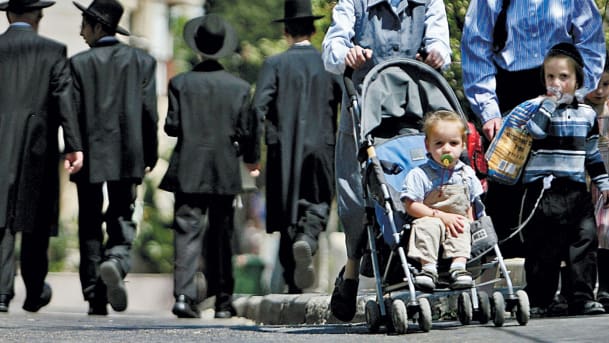
An article I wrote about the media’s obsession with Haredim who flout norms, and what it shows — about the media, not Haredim — is here.

I’ll never forget coming across the phrase “the Holocaust” – complete with the definite article and capitalized second word – in, of all things, a translation of the Mishnah. More unnerving still was that the volume had been published in the 1920s.
The Holocaust?!
Leafing through the old, worn book in the otzar sefarim of the yeshivah in Providence, where I was a Rebbi (and history teacher) for eleven years, and confronting those words, I wondered if I had somehow been transported to an alternate universe.
I hadn’t been, baruch Hashem. (I’m quite fond of this one).
The initially flabbergasting phrase, as a glance at the Hebrew text it was translating revealed, was a reference not to a historical event but rather to a korban olah, what most translations today would call a “burnt offering” – a sacrifice that is entirely consumed on the mizbe’ach. (Holo, in Greek, means “entirely”; caust, “burnt.”)
As it turns out, the more familiar use of the phrase today derived from that earlier usage. It was apparently, and understandably, deemed an apt descriptor for the Nazis’ and their friends’ plan for European Jewry.
All sorts of words also see their meanings morph over time. Many of us can recall when the sentence “My mouse died” more likely referred to the demise of a small furry pet than the failure of an electronic computer accessory.
Another word that has come to mean something entirely other than what it once meant is “Palestinian.” Once, it indicated a Jewish resident of Eretz Yisrael.
I discovered that fact as a teenager, when I salvaged a box of coins from a Jewish bookstore that was jettisoning old merchandise before a move. The coins were Palestinian pounds, duly labeled so, examples of the currency used, first, by the British Mandate, from 1927 to May 14, 1948; and then by Israel until 1952, when they were replaced by lirot.
The Palestine Bulletin was the name of the newspaper founded by Jews in Eretz Yisrael in 1925; later it was renamed The Palestine Post. What today is known as the Israel Philharmonic Orchestra began, in 1936, as the Palestine Symphony Orchestra.
Today, though, “Palestinian” has come to signify Arabs who lived in Eretz Yisrael under Jordanian or Egyptian rule, and their descendants. It is, thus, a most misleading morph.
Which brings me to a new book, The Hundred Years’ War on Palestine, by Rashid Khalidi, the Edward Said Professor of Modern Arab Studies at Columbia University. If that endowment chair title doesn’t tell you enough about the man’s sympathies, the subtitle of his book, A History of Settler Colonialism and Resistance, 1917-2017, should. And you can add his longtime support of the BDS movement to the evidence.
Professor Khalidi sees Israel’s founding as akin to the early American colonization of the land of native North American tribes or to Australia’s appropriation of that continent’s Aborigines’ land.
But the professor’s postulate is a put-on.
While Arabs have lived in Eretz Yisrael for centuries, there was a Jewish presence in the land since Yehoshua’s time, even after the destruction of the Second Beis Hamikdash and the expulsion of most of Klal Yisrael from the land. The Arab presence, by contrast, was anything but indigenous.
What people like Professor Khalidi imply, that Arabs are the native residents of Eretz Yisrael, is, simply put, a fiction.
Many who today claim the label “Palestinians,” in fact, are descended from successive waves of people who came to the area from other places. Like Egypt, from which successive waves of immigrants arrived at the end of the 18th century, fleeing famine, government oppression and military conscription at home.
The 19th century saw further Arab immigration to the land from Algeria and what is now Jordan. Bosnian Muslims, too, came in fairly significant numbers.
Later on, in tandem with Jewish return to the land, employment opportunities drew yet more Arab immigration. As the Peel Report noted in 1937, “The Arab population shows a remarkable increase ….. partly due to the import of Jewish capital into Palestine and other factors associated with the growth of the [Jewish] National Home…”
To be sure, when Israel declared its statehood in 1948, there was a sizable Arab population in Eretz Yisrael. To pretend otherwise is to deny facts. And the desires and aspirations of that population and its descendants who remained in the land should not be ignored. That is why a two-state solution like the one President Trump has advanced, is a necessary part (though no less necessary than the Arab population’s sincere embrace of peaceful coexistence) of ending the conflict in the region.
But v’ha’emes v’hashalom ehavu, “Love truth and peace” (Zecharyah, 8:19). Before peace there must be truth.
And the truth that here needs to be confronted is something that President Trump stated on the campaign trail, that Yerushalayim is the “eternal capital of the Jewish people”; and that his predecessor, President Obama, said back in 2013, that, after “centuries of suffering and exile, prejudice and pogroms and even genocide… the Jewish people sustained their unique identity and traditions, as well as a longing to return home.”
In other words, that, with all due recognition of the aspirations of Arabs in Israel and Yehudah, Shomron and Gaza, while there is indeed an indigenous population of Eretz Yisrael, it isn’t them.
© 2020 Hamodia
For some of us, double-edged swords don’t come more dangerous than the prospect of a Jewish president. The accomplishment would be heartening in a way, and would say much about America. But the reality of a Jewish person sitting in the White House would not please people infected with the derangement we call anti-Semitism. And we have more than enough of that as is, thank you.
To be sure, unless the current Commander-in-Chief is removed from office (not likely) or the Electoral College is abolished (less likely), the race for the Democratic candidacy will probably prove to be only a contest to determine who will be defeated by President Trump in November.
Still, it is noteworthy – and fear-worthy, for the above-mentioned some of us – that, back in the 1950s, two currently viable viers for the highest office in the land celebrated bar mitzvahs.
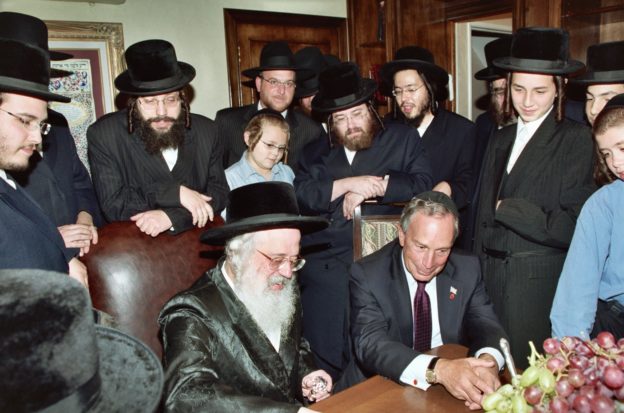
Both are ex-mayors: Senator Bernie Sanders, of Burlington, Vermont; and Michael Bloomberg, of New York. The former is a populist progressive backed by a strong grass-roots movement; the latter, a savvy, successful businessman backed by an impressive record and the willingness to spend a billion dollars of his own money on his campaign.
And both are touting their tribal credentials, to appeal to Jewish voters.
“I’ve spent a lot of time in synagogues in my life,” Mr. Bloomberg told a packed Jewish venue in Miami last week, “but my parents taught me that Judaism is more than just going to shul. It is about living our values… and it’s about revering the miracle that is the state of Israel, which – for their generation – was a dream fulfilled before their very eyes.”
In oblique criticism of Senator Sanders’ democratic socialism, he joked that “I know I’m not the only Jewish candidate running for president. But I am the only one who doesn’t want to turn America into a kibbutz.”
Continuing his bombing of Bernie, who has indicated he might withhold military aid from Israel if it didn’t better address humanitarian needs of Gazans, Mr. Bloomberg pledged to “never impose conditions on our military aid [to Israel], including missile defense – no matter who is Prime Minister.”
And, of course, after speaking at length about recent acts of violent anti-Semitism, he attacked Mr. Trump, associating him obliquely, and unfairly, with “racist groups” that “spread hate.”
“A world in which a president traffics in conspiracy theories,” he went on to declare, “is a world in which Jews are not safe.”
For its part, the Sanders campaign rolled out its own Jewy video last week, which began with a clip of the senator, at a J Street gathering last year, proclaiming that “I’m very proud to be Jewish, and look forward to becoming the first Jewish president in the history of this country.”
At that gathering, Mr. Sanders declared: “If there is any people on Earth who understands the dangers of racism and white nationalism, it is certainly the Jewish people.” And, in his own swipe at the president, he added: “And if there is any people on earth who should do everything humanly possible to fight against Trump’s efforts to try to divide us up… and bring people together around a common and progressive agenda, it is the Jewish people.”
And, although he accuses the current Israeli government of unfairness to Palestinians, he calls himself “somebody who is 100 percent pro-Israel.”
Fighting anti-Semitism and declaring support for Israel may please many Jewish political palates, and, b”H, remain pretty much de rigueur positions for any serious presidential candidate.
But office contenders seeking Jewish votes these days would be wise to not ignore American Jewry’s Orthodox segment. It may be a fraction of the country’s Jewish population (around 10%, it’s estimated) but it is a fraction that, according to sociologist Steven M. Cohen, has more than quintupled over the past two generations, and stands, b’ezras Hashem, to continue its growth.
According to the Pew Research Center, more than a quarter of American Jews 17 years of age or younger are Orthodox. Public policy experts Eric Cohen and Aylana Meisel have estimated that, by 2050, the American Jewish community will be majority Orthodox.
We Orthodox, like most other Jews, are greatly concerned about Israel’s security and about rising anti-Semitism. But, in addition to those issues, a major item on our political agenda is education.
We believe in school choice – that parents are the best arbiters of what schools their children should attend, and should not be financially penalized for not choosing public schools. And we consider it critically important that government involvement in determining the content of curricula in private schools be minimal.
Senator Sanders is officially on what we consider the wrong side of both those issues. Mr. Bloomberg, while he has long been a proponent of educational choice with regard to things like public charter schools, hasn’t taken a public position on either of our own educational concerns.
It’s not too late for him to do so, of course, and, as someone who fundamentally understands the importance of educational options, he might come to see the sense and fairness in our positions.
From a political perspective, it would be wise.
More important, though, from a Jewish perspective, it would be right.
© 2020 Hamodia