Can you remember the last time a consumer of rats merited an obituary in The New York Times? Me neither. But there recently was one, and you can read my thoughts about Flaco the owl here.

Can you remember the last time a consumer of rats merited an obituary in The New York Times? Me neither. But there recently was one, and you can read my thoughts about Flaco the owl here.

The parallel in wordings between the Torah’s account of the universe’s creation and of the building of the Mishkan has been noted by commentaries. I won’t cite examples here but they abound.
The late British Chief Rabbi Jonathan Sacks well phrased the upshot of that parallel, writing that “Genesis begins with G-d creating the universe as a home for humankind. Exodus ends with human beings, the Israelites, creating the Sanctuary as a home for G-d.”
A little-known Midrash, I believe, also adds to the parallel. The Midrash Hagadol, on the parsha’s final pasuk (Shemos 40:38) – which states that “For the cloud of Hashem was upon the Mishkan by day, and there was fire within it at night, before the eyes of the entire house of Israel…” – recounts the following:
“When the Jews saw the cloud resting on the Mishkan, they rejoiced… [but] when night came and fire surrounded the Mishkan, they were anguished and cried ‘All our work was for naught!’ When they awoke the next morning and saw the cloud enveloping the Mishkan again, they rejoiced an even greater rejoicing…”
That account is strongly reminiscent of the Gemara (Avodah Zara 8a) that tells of how:
“On the day that Adam Harishon was created, when the sun set upon him, he said: ‘Woe is me, as because I sinned, the world is becoming dark around me, and the world will return to the primordial state of chaos and disorder. And this is the death that was sentenced upon me from Heaven.’ He spent all night fasting and crying, with Chava crying opposite him. Once dawn broke, though, he said: ‘Evidently, the sun sets and night arrives, and this is the order of the world.’ He arose and offered a sacrifice…”
Both accounts illustrate that, even when it seems that all is lost, that the world is bearing down and no hope is in sight, reason to rejoice may lie around the corner.
Living as we are in precarious times and headed toward Purim, when we will read of how a seemingly dire, threatening situation was turned on its head, it is a timely and trenchant message.
© 2024 Rabbi Avi Shafran

It might be because last Shabbos was the yahrtzeit of my mother, Puah bas Rav Noach HaCohein, a”h. But, whatever the reason, she came to the fore of my mind when reviewing parshas Vayakhel, in particular the missing yud in the word nesi’im.
The word for those tribal leaders of Klal Yisrael is spelled without a letter yud where there should be one (Shemos, 35:27).
Rashi, channeling Bamidbar Rabbah (12:16), notes that the truncated spelling reflects the Nesi’im’s declining to make their donations immediately, along with all the other Jews. Although their intention was to make up any shortfall, an undeniably laudable goal, their lack of alacrity is still held against them.
Two years ago, I offered one approach, based on Rav Dessler’s writing, to why that might be so. But this year, the memory of my mother suggested another possible explanation for why the Nesi’im are held accountable despite their good intention.
My mother was well known in Baltimore for warmly engaging everyone she met – and that was many people, since she was a shul rebbetzin. And she made constant efforts to find matches for unmarrieds. Try, though as she did, no marriages resulted from her efforts.
At least not directly. Because when one makes an effort to do something meritorious, it advances the goal, contributes to the realm of good. No hishtadlus is without worth.
What occurs is that the Nesi’im’s lapse may have been the lack of effort. Instead of acting, even though they left open the door to future action should it be needed, they held back. That missing yud may thus signal the fact that effort is inherently meaningful, no matter the odds of success or the calculus for inaction. The effort itself is a success.
In the end, Hashem’s will will be done. As Mordechai told Esther when he chastised her for hesitating to engage the king on behalf of her fellow Jews, “For if you remain silent at this time, relief and rescue will arise for the Jews from elsewhere.”
What he was saying was: Hashem has His plan and it will persevere, with or without your effort. But your effort will be meaningful, will advance the goal, and accrue to your everlasting credit.
© 2024 Rabbi Avi Shafran

The Hebrew words panim and achor (as in lifnei and acharei) are used in both a spatial and temporal sense – either as “front” and “back” or as “before” and “after.”
One approach to the mysterious revelation of Hashem’s glory to Moshe as he gazed from a cleft in a rock (Shemos 33: 18-23) sees forms of those words as referring not, as they most simply read, to the dimension of space but, rather, that of time.
“You will see My ‘back’ but My ‘face’ [or ‘front’] will not be seen” is what Hashem tells Moshe. The Chasam Sofer and Rav Tzadok HaCohein both understand that along the lines of “You may understand My ways when they are behind you in history, but the future (and even present) will not be perceptible.”
I wonder if what permeates and drives both the past and the future might lie in what Chazal comment on the word for “My back”: “He showed Moshe the kesher shel tefillin, the ‘knot at the back of the phylactery [placed on the head]’” (Berachos 7a).
And indeed, the Gemara (ibid, 6a) says that Hashem, in some sense, “wears tefillin.”
What occurs is that the word kesher can mean not only knot but also “bond.” The Gemara tells us that, while our own tefillin contain pesukim praising Hashem, the divine tefillin contain a pasuk praising His people (ibid).
Might “kesher shel tefillin,” here, be a pun of sorts, referring to the eternal bond binding Hashem to Klal Yisrael? And may that bond be the essential thread that runs through human history – past, present and future?
© 2024 Rabbi Avi Shafran
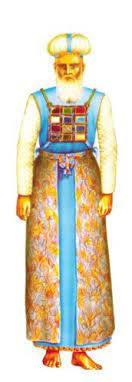
There’s really no such thing as a kohein.
At least not the way we generally pronounce the word in conversation, with the accent placed on the first syllable. In the Torah, the stress is on the second syllable, a hint to the fact that the word is not a noun but rather a verb.
That is Rashi’s observation in the parsha (29:30), on the words hakohein tachtav, which can only be properly translated as ‘who ‘koheins’in his stead” – with kohein meaning “serves.” (The cantillation, Rashi notes, would not support translating the phrase as “who is a kohein in his stead.”)
That may be nothing more than an interesting grammatical observation. But it may also signal something deeper.
Kohanim, of course, derive their status from being descendants of Aharon. In the non-Jewish sphere, special roles can also be transferred genealogically, as in monarchies.
But the “divine right of kings,” whereby monarchs claimed authority that rendered them unaccountable for their actions by earthly laws and courts (a topic that remains germane, oddly, even today, even in democracies) could not be further from the divine role of kohanim. A kohein is as governed by the Torah’s laws as any other Jew.
Kohanim are verily defined as “servers,” as being charged to do Hashem’s will. They are not defined by a noun but a verb – referring to performing the acts they are commanded to perform.
To be sure, kohanim have a special status in Klal Yisrael and are deserving of honor. But their specialness is born of mission, not license or immunity.
Truth be told, every one of us is, each in his or her way, special, whether we happen to carry a particular title or are just the unique individuals each of us is. And we all are likewise defined not by our particular statuses or identities, but by our missions.
© 2024 Rabbi Avi Shafran

A piece I wrote for Religion News Service about “brain death” can be read here.
The aron habris, the ark of the covenant that held the luchos, the tablets of the law, consisted of three nested boxes, the middle one of wood, the outer and inner ones of zahav tahor – “pure gold.” Its kapores, or cover, was made entirely of “pure gold.”
Not so the poles that are placed in rings on the sides of the aron – and that are to remain there permanently. Like the aron itself, they are wooden but covered with gold. But only “gold,” not “pure gold” like the aron’s inner and outer boxes.
In his sefer Nachalas Tzvi, Rav Meshullam Gross notes that difference and sees in it the fact that those whose lives are dedicated to Torah-study, symbolized by the aron, must be pure-hearted and not motivated by ulterior motives. Those who support them, however, who are symbolized by the poles with which the aron was carried, may condition their support on other things.
Ulterior motives do not cancel the merit of Torah-support or other meritorious giving. As the Talmud (Pesachim 8a) teaches: “One who says: I am contributing this coin to charity so that my son will live… is a completely righteous person.”
A common ulterior motive in philanthropy is honor. That is why donors’ names on plaques in shuls, Jewish outreach centers and yeshivos, or on the edifices themselves are perfectly proper.
In fact, such displays can constitute great merits in their own rights.
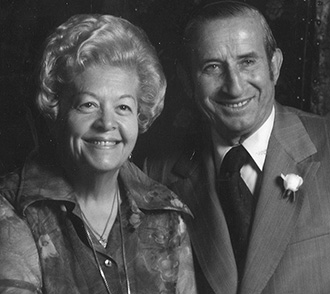
One of the most generous donors to Torah causes was Joe Tanenbaum, whose name, along with his wife Faye’s, graces wonderful institutions not only in his adopted city Toronto but across the globe. As a child, he hadn’t received a thorough Jewish education and he wanted others to have every opportunity to Jewishly educate themselves.
He was, though, by all accounts, a most modest man. A story that made the rounds many years ago is that he was once asked why he wanted his and his wife’s names to be prominent on the facades of the countless Torah-promoting buildings.
His reply was that, in the event that one of his future descendents should for some reason not receive a Jewish education or fall away from the Jewish path, he hopefully imagined the young person seeing the name Tanenbaum on an edifice and, carrying the same surname or knowing it was in his or her genealogy, becoming sufficiently intrigued to enter its doors.
© 2024 Rabbi Avi Shafran

On June 6, 1944, D-Day, more than 150,000 Allied troops stormed the coast of Normandy to begin the liberation of France from the Nazis.
The criteria for choosing that day included a low but rising tide for the seaborne soldiers, a tide that occurred only around the time of a new or full moon. It took place on the latter.
Other military onslaughts throughout history were scheduled based on the moon’s phase – full moons when light was desired; new moons when darkness was needed to limit soldiers’ visibility to the enemy.
Among the 53 mitzvos in parshas Mishpatim is one that, peripherally, involves the moon. And it is one of the most compelling pieces of evidence of the Torah’s divine origin. Because the mitzvah, by all logic, would seem to doom the Jewish people.
On the shalosh regalim, the three “pilgrimage festivals,” all adult Jewish males are commanded to journey to the Beis Hamikdash in Yerushalayim. That, of course, would leave the borders of Eretz Yisrael essentially open to attack by the Jews’ enemies. And two of those festivals were utterly predictable – because they began on the 15th of their Jewish months, one in the spring (Pesach) and one in autumn (Sukkos). Each at the full moon of its month.
Even the most primitive military strategist would have noticed that pattern and would conclude that the land would be most vulnerable to attack on those holidays. Or, in the summer, during the first quarter moon, when the right half of the moon is lit – the holiday of Shavuos.
Which makes the mitzvah of alyah liregel starkly self-defeating. No human lawmaker would be cruel or dim enough to lay down such a law – only a Legislator who could in fact ensure that the populace would not perish as its result. And, of course, it didn’t.
© 2024 Rabbi Avi Shafran

An essay I wrote about the issue of age in the presidential contest was recently published at Religion News Service and can be read here.

When I was a teenager, I wrote a short poem that went:
All could be lies
For we see with our eyes.
Descartes, as I later discovered, beat me by some three centuries at expressing the thought that our senses necessarily mediate reality for us and thus cannot be relied upon to yield absolute truth.
That idea underlies the Rambam’s approach to miracles, that they cannot, on their own, conclusively prove anything at all. In his words: “…because it is possible to perform a wonder through trickery or sorcery” (Mishneh Torah, Hilchos Yesodei HaTorah, 8:1).
Even the plagues in Mitzrayim and the splitting of the sea could not prove anything decisively. (And so, once, when a Christian missionary came to my door to tell me of wonders performed by the object of his veneration, I just smiled and said “That’s very nice” and wished him a good day.)
What then, asks the Rambam, was it that fully convinced Klal Yisrael of Hashem’s existence and role in their exodus from Mitzrayim? His answer: Mattan Torah. (ibid).
As he explains (I paraphrase here), the happening at Har Sinai wasn’t something witnessed but, rather, something experienced. Our ancestors didn’t hear or see Hashem; they met Him intimately. They were imbued with His presence.
Which, I suspect, is the upshot of the words “They saw the thunder and lightning” (Shemos 20:15). The people, Chazal comment on those words, saw what normally can only be heard. Because they weren’t seeing or hearing at all as we normally define those words but rather experiencing the reality of Hashem. The synesthesia indicates that Hashem bypassed their senses entirely and entered their very souls.
Which is why the experience was so traumatic: The very pasuk after the one about seeing sound has the people begging Moshe, “You speak with us… let Hashem not speak with us lest we die.” To use a mundane simile, they had been like overloaded electrical circuits.
But that overload was necessary, if only for the first two dibros. Because it is what established for all generations to come – through the transmission of that experience – the relationship between the Creator and the people he chose to fulfill His mandate and carry His message.
© 2024 Rabbi Avi Shafran