Category Archives: Jewish Thought

Enemies, Enemies Everywhere

“Notorious anti-gunner George Soros joins anti-gun billionaires Steyer and Bloomberg. There is no end to how much they’ll pay to push their elitist agenda on Americans.”

Thus tweeted the National Rifle Association three days after the fatal shooting of 11 Jews in Pittsburgh by a right-wing anti-Semite. George Soros, of course, is the wealthy philanthropist who funds liberal causes, is a perennial victim of conspiracy theories, was one of those targeted with letter bombs by a right-wing dingbat last month, and is Jewish.

Tom Steyer is another billionaire philanthropist given to liberal causes and, because his father was Jewish, is regarded by some as a Jew.

Michael Bloomberg is, well, you know who he is. And his ethnicity.

No, I’m not – repeat, not – accusing the NRA of being anti-Semitic. Only noting that the group’s recent tweet-targets are people whom unabashed anti-Semites have relentlessly and gleefully attacked as Jews.

Then we have the many anti-Semites on the political left, who target people like billionaire activist Sheldon Adelson or conservative commentator Ben Shapiro, who, according to a study conducted by the ADL was the most frequent target of Jew-hating tweets in 2016. (Significant in itself, the study found that from August 2015 through July 2016 a total of 2.6 million tweets contained anti-Jewish sentiments.)

Anti-Semitism on the fringes of the left is exemplified by the likes of Louis Farrakhan, who, as impaired in humor as he is in intelligence, thought it funny to compare Jews to termites; and Linda Sarsour, who cautions her intersectionality-addled admirers that Israelis must not be “humanized.”

So whom, exactly, are we Jews to fear? Who is the Jewish people’s enemy? Those on the far right, or on the far left? The answer, of course, is “both of the above.”

Which conclusion leads to a thought that needs to be a prominent part of our thinking these days. Namely, that when an “us-vs.-them” mentality becomes dominant in a society – and such an attitude, disturbingly, has come to affect more than just the fringes – it does not bode well for the progeny of Yaakov Avinu.

Historian Deborah Lipstadt put it well, likening anti-Semitism to a latent infection that lies dormant and re-emerges at times of stress. Jew hatred, in the end, is, she says, “a conspiracy theory,” and needs only societal strife to become active.

For better or worse, Jewish figures will always be prominent on the political and cultural scenes. The Jewish soul is hard-wired, to use a discordant metaphor, to try to better the world.

Truly knowledgeable Jews know that the path toward that goal does not lead through politics, but consists of embracing Torah and mitzvos and being worthy examples of ovdei Hashem.  But even Jews who are misguided in their good intentions, who see salvation in this or that political or social stance, are motivated by their neshamos, clear-sighted or clouded. And thus, Jews will always rise to the top of whatever heap they perceive as a hope.

As a result, those who harbor the spiritual cancer that is Jew-hatred will always find Jews among those they label as enemies of all that is shiny and good, and will point to them in order to spur other hate-filled people to embrace their cause.

That’s how Jews can be hated because they are communists or capitalists, elitists or defenders of the common man, allies of blacks or racists; how they can be vilified for being “Zionists” or globalists, why both Mr. Soros and Mr. Adelson can be portrayed as Der Ewige Jude, the reviled “Eternal Jew,” of our time. What matters in the end – the only thing that matters – is that they are… Jews.

There’s a real-world application of that truism. Recognizing that exacerbating the political rift in the United States today is not just inherently lamentable but the very opposite of “good for the Jews,” we are acting irresponsibly if we jump into the melee and hoist a flag, furthering the societal inflammation. Sides, we do well to realize, don’t always have to be taken.

These words are being written before the mid-term elections; you’re reading it after them. During their campaigns, some candidates sought to garner votes by appealing to the very worst in voters, seeking to capitalize on the rift in society and to stoke anger – aimed in whatever direction. Others chose to run more soberly, on records and positions. Which ones won and which did not is something you know but I, as I write, do not. But the answer to that question will play a role in how secure we Jews can hope to feel, going forward in the American galus.

© Hamodia 2018

A Safer Space for Women… Redux

An October 17 article of mine at Tablet concerned the #MeToo movement.  It bemoaned the state of general society’s inconsistent attitude toward women and suggested that it might be helpful if new norms based somewhat on the halachic prohibitions against yichud and negiah were adopted by the wider world.

The piece unleashed a number of angry responses on social media; and a rejoinder, in the form of a personal letter to me, was published by Tablet too, and can be read here: 

My response to that rejoinder is below:


Dear Mrs. Jankovits

Thank you – and I mean that sincerely – for offering your perspective, an important one, to the discussion I hoped to spur.

I am appalled to read that you have been verbally assaulted as a woman by men in observant environments. While I have spent my entire life to date in such environments and have never seen a woman treated that way, I take your word for what you have experienced, and can only bemoan it. Jewish modesty is not limited to dress, and governs men no less than women.

But I cannot accept your contention that considering the halachic laws of yichud and negiah (which ban an unmarried man and woman from being secluded in private or touching one another, respectively) to be preventatives against abuse is “outlandish.”

If, at the earliest stage of a bad man’s bad intent toward a woman, she is warned of whom she is dealing with by his actions or words, how could that not help prevent the sort of assaults that the #MeToo movement has rightfully decried?

If, in a world with restrictions modeled on those of halacha, a man invites a woman to a secluded place or touches her in even an “innocent” way, that would be her signal to immediately recognize his less than honorable designs. And it is self-evident that if a man and woman are not secluded, he cannot wantonly abuse her without fear of witnesses.

That was the essence of what I wrote, and I don’t understand how anyone could read it as an attempt, God forbid, “to silence Orthodox women, to perpetuate abuse and to hide and shelter Orthodox abusers.”

As I explicitly wrote, sexual abuse does exist in the Orthodox community. Whether it is as widespread as you claim – and that exists, as you contend, within many marriages – is simply unknowable. You imply that it is very common, and that the relative dearth of claims is due to intimidation or social pressures. I allow you your assumptions, but assumptions, in the end, are not the same things as facts.

Yes, there are self-selected studies that show sexual abuse in the Orthodox community at levels similar to those in other parts of society. But a careful read of them yields the realization that a large part of such abuse, while reported by adult women, is about things that took place when they were children or adolescents, those least likely to realize that yichud and negiah are red lines that, if crossed, label the adult violator, whoever he is, a person to resist and avoid.

Child abuse is unquestionably a tragic and serious problem to which Orthodox society has, sadly, not shown itself immune. There is much to say about that topic its terrible toll and the efforts in the Orthodox community over recent years to combat it. Much to say about the studies, too, as in my P.S below.

But it is not the issue addressed by the #MeToo movement, and thus not pertinent to my essay. And conflating the two issues obscures the one at hand. We indeed need to better educate our children about abuse, and that is in fact happening in many places in many ways. But child abuse and adult-on-adult abuse are two very different, if equally abhorrent, animals.

You contend that “When women have been brave enough to voice their abuse, they are bullied, silenced and threatened again by our male leaders, rabbis who dismiss abuse, rabbis who protect abusers.” Every one of the congregational and teaching rabbis I know is are deeply sensitive to women’s safety and wellbeing, both within marriage and “on the street.” The picture you paint of chauvinistic disdain for women on the part of rabbinic leaders is as bizarre to me as if you had painted a landscape with black grass and a green sky. I don’t deny you your impression, but please know that it is diametric to mine.

I’m sorry but, for better or worse, I cannot change the fact that I am a “male Orthodox rabbi,” but I will not concede that that fact renders me unable to participate in the conversation about abuse, or makes me inherently insensitive to women. I don’t think that is a judgment either my wife or our six daughters (or any of the scores of female students I taught over many years) would regard as justified or fair. As to experience with sexual assault victims, I do indeed have some, though all were cases that took place when the victims were children. So please don’t deny me a voice in the discussion.

Finally, it is not “misogynistic” to note that women performers who appear in minimal clothing are not helping the cause of women’s dignity. It is factual.

Nor is counselling modesty in dress “victim blaming,” any more than counselling pedestrians to look both ways before crossing a street, or telling men to not let their wallets protrude from their back pants pockets in public. That’s not to blame anyone but the inattentive driver or pickpocket; but such counsel is simple common sense. From your self-description as an Orthodox mother, you would not smile, I am sure, on one of your daughters going out in public in revealing clothing. By asking her to not cave in to society’s exhibitionist expectations, you are not blaming them; you are educating them.

At no point did I – or ever would I – assert that seeming Torah-observers “are not susceptible to perpetrating evil.” Quite the contrary, bad intentions are everywhere. That was the very premise of my article, which argues that sensible precautions modeled on those of halacha could benefit our unrestrained world. I did not intend for that suggestion to cause offense, only to spur discussion. Thank you again for furthering that goal.

All good wishes,

Avi Shafran

PS: Although child abuse, as I noted, is not what #MeToo is about, and not what my article and its suggestions concerned, some studies routinely cited about that issue are limited in what they can tell us.

Not only are some of them reliant (as they admit) on self-selected samples, which skew the results in the direction of artificially high percentages of abuse, but substantial amounts of even reported abuse was perpetrated by presumably non-Orthodox men (because the samples included women who only became observant after childhood).

And other studies report very different results. This synopsis of a 2014 Israeli study concludes that:

“Unexpectedly, no significant differences between observance groups are found for any childhood abuse (45%), physical abuse (24%), or emotional abuse (40%). Childhood sexual abuse has the lowest frequency (4.8%) of all abuse categories with more reported by Secular than Haredi respondents (7.7% vs. 3.1% p = .05).”

So, while even one case of child abuse is one case too many, and the Orthodox community must continue to be vigilant on this front, it is important, in the interest of facts and truth, to realize the limitations of studies.

The Torah’s Not a Tool

Justice Brett Kavanaugh is well into his service to the country as a member of its highest court, and the controversy that swirled around him as a nominee for the position is, at least for people who don’t live in the past, entirely in the past.

And so, with the contentious Senate Judicial Committee hearings that took place over Sukkos rapidly receding in the rearview mirror, there is little point in revisiting the issues of Mr. Kavanaugh’s qualifications, judicial record or activities in high school and college. Or in imagining that any of us can really know if either he or any of those who accused him of misconduct in his youth had testified entirely truthfully.

What is worth revisiting, though, at least to my mind, is a peripheral issue that emerged during the hearings: the invoking of Torah concepts to support political stances.

One example was a group of politically active Orthodox rabbis who support Republican causes that issued a press release during the hearings “Urg[ing] Immediate Confirmation of Judge Kavanaugh” and supporting that imploration with the argument that “The Bible not only doubly emphasizes that ‘justice, justice shall you pursue’… but it also enjoins us to avoid peddling in unsubstantiated rumors.”

Another, over at a left-leaning secular Jewish newspaper, was a respected Orthodox columnist who cited Pirkei Avos about the “importance of a good name” as an important qualification a leader must have. She quoted the Rambam, too, as asserting that someone considered for a public position must bear “no trace of an unpleasant reputation, even during their early manhood.”

To be sure, both not “peddling in unsubstantiated rumors” and insisting on a leader’s good reputation are entirely valid Torah concepts. But – and aye, there’s the richtigeh rub – knowing how to apply them to a particular situation where they seem to clash is not a job for either activists or columnists.

A Gadol baTorah, of course, can choose to offer guidance about a current event. But if any Gadol rendered any public daas Torah about the advisability of Mr. Kavanaugh’s confirmation, it escaped my attention. And that none likely did is hardly surprising.

To be sure, Torah expertise can be brought to bear on any issue. But we wouldn’t expect a Gadol to offer a daas Torah about the wisdom of a baseball rule or the propriety of a player’s behavior on the field. And we have no reason to expect a daas Torah ruling on most political matters either (many of which, come to think of it, have come to have much in common with sports). Not every issue, we all understand, is worthy of any great man’s time or consideration.

What’s more, just as the yod’ei ha’itim (Esther, 1:13) in Achashverosh’s court – the talmidei chachamim, Chazal tell us – purposely elected to not become involved in a burning contemporary political issue (whether Vashti should remain on her throne or not – one wonders if it was the subject of a The Shushan Times editorial), so is there little incentive, and much hazard, in contemporary Torah leaders venturing for no good reason into contentious current events waters.

Which, as I see it, leaves us lesser rabbis and columnists (and rabbi-columnists), with only the option of offering our personal opinions, based either on the political teams we root for or on arguments born of objective analysis of facts. But not with the option of co-opting the Torah for partisan purposes.

Rabi Tzadok in Avos (4:5) declares the wrongness of using the Torah as “a spade with which to dig.” That is to say, to use Torah study or knowledge as a means of attaining financial gain. But, at least conceptually, what he is implying is that Torah is not to be regarded as a tool to be employed toward other ends. Appropriating Torah concepts, particularly in a selective fashion and especially when it is unclear which concepts best apply, is something we should avoid at all costs.

Needless to say, there are many issues of public concern that, from a Torah perspective, are effectively “open and shut,” and about which we have every right and responsibility to promote the clear and obvious Jewish view. Nor is it necessarily wrong to suggest that a Torah ideal might inform our understanding of a particular topic. But claiming with surety that the Torah requires a particular position regarding a controversy where our mesorah’s guidance is far from clear, we should realize, is a less than proper pursuit.

© 2018 Rabbi Avi Shafran


Where’s the Slide?

I pass the large lady twice each workday, and no longer pay her much mind, unlike the tourists on the Staten Island ferry sailing with me, who have journeyed hundreds or thousands of miles to get a glimpse of – and, of course, a selfie with – the Statue of Liberty.

But when we moved to New York 24 years ago, we visited the statue with our children. The visit yielded one of those “kids say the funniest things” quotes, one we invoke to this day.

We marched up the 150 or so steps of the double spiral staircase from the statue’s base to its crown. It was an increasingly claustrophobic experience, as the passage grew narrower with our ascent, but with each step I marveled at the fact that I was actually walking inside the gift from France and symbol of freedom across the globe, seeing it from an entirely new perspective.

Impressively, even the youngest member of our family, a bright and energetic then-three-year-old, managed to scamper up the steps with his little feet.

His memorable comment, delivered with puzzlement, when we reached the top: “Where’s the slide?”

If he was distressed by our laughter and explanation that, unlike the culmination of other climbs he had made, there was no slide here, he didn’t show it. And while he may have wondered about the point of it all, good soldier that he was (and is – today as a member of Rav Shimon Alster’s kollel in Cliffwood, New Jersey), he dutifully marched with us back down.

So “Where’s the slide?” has become the Shafran family’s version of the saying, attributed to cartoonist Allen Saunders, “Life is what happens to us while we are making other plans.” Fixation on some end can obscure what one is experiencing now.

Yiddishkeit certainly focuses us on both the past and the future. As Jews we are enjoined to remember and try to emulate the Avos and Imahos, to recall Mattan Torah, the Beis Hamikdash and more. And we are ultimately enjoined to defer the impermanent indulgences of Olam Hazeh for the only meaningful and ultimate fulfillment of the future, Olam Haba. But none of that contradicts our need, at the same time, to recognize the import of the moment, the opportunity that the present alone provides.

We often find ourselves so focused on the slide that we don’t notice where we actually are, so absorbed in the later that we are oblivious to the now.

My wife and I try to get away for a day or two each summer in search of a waterfall we haven’t yet seen. Several years ago we hiked up a steep trail to experience Kaaterskill Falls, in upstate New York.

About 100 miles north of New York City, the falls have two tiers, with a combined height of 230 feet, higher than Niagara Falls. We didn’t know it at the time, but the falls have been the site of several fatalities, at least eight since 1992.

According to Rob Dawson, a state forest ranger, the last four people who died at Kaaterskill Falls were either taking or posing for pictures. They were focused, quite literally, on creating mementos of their having reached the falls – or, more likely of late, on transmitting images of themselves there to their friends and relatives on social media.

It’s understandable, of course, for a person to want a photograph of an achievement or event, and usually, baruch Hashem, the endeavor isn’t fatal. But reading of the tragedies reminded me of Saunders’ adage, and made me wonder if our obsession with documenting things hasn’t overly encroached on the wonder of actually experiencing them.

Think of all the time, effort and trouble that go into creating chasunah photos and videos. Leave aside how often most people really look at them after the first time. Just think of how much the recording of a simchah can deprive the principals and celebrants of enjoying the moment. (Please, professionals, no angry letters! I don’t mean to, chalilah, devalue your skill and work, only to spur thought.) And with the ubiquity of cellphone cameras, how much time people spend staring at little screens depicting joyous occasions rather than being parts of them.

There were no cellphone cameras when we navigated the Statue of Liberty’s innards; we hadn’t bothered bringing my Minolta. But even though we have no photos of the experience, and our little boy may have been disappointed by it, the trip to the crown, even sans slide, remains most memorable and vivid in my mind.

© 2018 Hamodia

Look Up!

We regard the enclosures where we spend Sukkos as, well, sukkos. And they are, of course; the walls comprise a necessary part of a sukkah. But it’s their roofs – the bamboo poles or mats woven for the purpose from slivers of the same material, or branches or leaves or thin, unfinished wooden slats – that give the structures their name.

The roofs, that is, made from vegetation once-alive but now detached from the earth it needs to grow: s’chach.

That word is from the Hebrew socheh, meaning to “cover” or “hover over.”

But there is another meaning to that Loshon HaKodesh word, as various sefarim note, namely “to see” or “to perceive.” That association would seem to imply that a sukkah somehow provides some special perspective. And, of course, it does.

On even the most mundane plane, living in a small rudimentary hut for a week, within sight of, yet apart from, one’s more comfortable, more spacious home, does afford a different point of view.

Like about our vulnerability, and reliance on Hashem’s everlasting rachamim. While our sturdy houses may be nearby, and if it rains hard enough we can – indeed should – return to surer shelter, our exposure to the elements in the sukkah, if we only care to ponder it, just magnifies our exposure to all sorts of threats, even in our “secure” abodes.

Not only are those abodes subject to other natural disasters – which we may not often think about, but should all the same, even if we don’t live in earthquake or flood zones – but there are dangers lurking wherever we are. Bad drivers and bad people, obstacles to trip over and germs with the potential to lay waste to our good health… That is part of the perspective granted the thoughtful sukkah-dweller.

But there is more. What the sukkah allows us to perceive, if we try, is that our homes and their contents are not us. That is to say, our possessions don’t really matter. The mindless man in a fancy car with the bumper sticker reading “The one who dies with the most toys wins” reflects a mainstream conviction, but it’s as far from Jewish belief as east is from west. Sitting in our primitive week-house, we come to know that what we have accumulated is simply not essential. In fact, no matter how much it may have cost us, in the end, it’s meaningless fluff.

Which is why Sukkos is zman simchaseinu.

No, I’m not being facetious. The happiness that is the theme of Sukkos and to which we make much reference in our tefillos on the holiday not only is not antithetical to our “deprivation”; it is born of it.

That’s because attaining true happiness begins with realizing what, despite its promise, doesn’t really make us happy. The “high” afforded by a new possessions dissipates quickly. The moment one first drives a new car, it becomes a used one.

What’s more, possessions only beget the desire, even the need, for yet more of the same, a truth that has come to be called the “hedonic treadmill” – “hedonic” meaning “pertaining to pleasure.” The treadmill mashal conveys the fact that the pursuit of happiness is like a person on a platform moving in the opposite direction, who has to keep walking just to stay in the same place. A person may achieve wealth, in other words, but his expectations and longings only rise in tandem. There’s no permanent net gain in happiness.

Chazal, of course, said it pithily: “He who has a hundred wants two hundred” (Koheles Rabbah 1:34).

And, as Chazal also said in many instances, pok chazi – “go out and look around.” At all the possession-endowed, that is, here: the entertainers, sports figures, best-selling authors, the old-moneyed and the lottery-winners. They may zip around in Lamborghinis and check the time on Rolexes, but is their happiness quotient necessarily greater than that of those who take the bus and keep time with a $5 watch? Are their grand estates more of a home than the simplest, cozy cottage? A cogent case could be made that the precise opposite is true.

In the end, dependency on having stuff is what keeps us from being truly happy. Because authentic joy comes from things unavailable from Amazon.com. Like our relationships with our parents and children and friends, and with our community. And, ultimately, with Hakadosh Baruch Hu.

So the sukkah is indeed a source of “sight,” or, perhaps better, insight. It opens our eyes, letting us better see that, ultimately, what we really have is not what we own, but what we are.

And, fully comprehended, that is the true path to simchah.

© 2018 Hamodia

The Arvus Factor

A mother and father are notified that their darling little boy broke a neighbor’s window. They feel, and of course are, responsible to right the wrong. They are, after all, where the buck stops in their family.

But they may be responsible in a deeper sense too. If the boy didn’t just accidentally hit a ball through the Feldstein’s picture window but rather carefully aimed a rock at it – and had been influenced in his disregard for the property of others by some remark he heard at home – the responsibility exists on a much deeper level than mere buck-stopping. The parents, in a sense, are complicit in Yankeleh’s act of vandalism.

The concept of “arvus” – the “interdependence” of all Jews – is sometimes understood as akin to the first, simpler, sense of responsibility. Jews are to regard other Jews as family, which they are, and therefore to take responsibility for one another.

But Rav Dessler, in Michtav Me’Eliyohu, teaches that Jews are responsible for one another in the word’s deeper sense too.

When a Jew does something good, it reflects the entire Jewish people’s goodness. And the converse is no less true. Thus, when Achan, one man, misappropriated spoils after the first battle of Yehoshua’s conquest of Canaan, the siege of Yericho, it is described as the aveirah of the entire people (Yehoshua, 7:1). Explains Rav Dessler: Had the people as a whole been sufficiently sensitive to Hakadosh Baruch Hu’s commandment to shun the city’s spoils, Achan would never have been able to commit his sin.

Several weeks ago, we read in the parashas hashavua of the eglah arufah, a ritual that is commanded if a murder victim, presumably a wayfarer, is found outside a city. The procedure, which involves the elders of the city dispatching a calf, is called a kapparah, an atonement, yet there seems to be no sin for which the elders need atone. That’s because part of the ritual is their declaration that they did everything they could to ensure the safety of the visitor. And it certainly isn’t atonement for the killer; if he is ever discovered, he faces a murder charge and its penalty.

Here, too the arvus factor may be the solution. Even if no particular person was directly responsible for the wayfarer’s murder, what could have enabled so terrible an act to happen might have been a “critical mass” of lesser offenses, perhaps things that Chazal likened to murder, such as causing another Jew great embarrassment or indirectly causing a person’s life to be shortened.

In which case, the atonement would be for Klal Yisrael as a whole, areivim as its members are zeh lazeh.

The idea, in fact, is borne out by the passuk itself, which prescribes what the elders of the closest city are to say at the eglah arufah ceremony: “Atone for Your people Yisrael” (Devarim, 21:8).

So, if a Jew commits a financial crime, it may never have been able to happen had all of us been sufficiently careful to not “steal” in other ways.

Every cheder yingel knows that even a small coin placed in a pushke is the fulfillment of a mitzvah. It should be equally apparent, especially to all us grown-up children, that the misappropriation of even a similarly small amount of money is the opposite.

And so Jews, whoever and wherever they are, who cut corners for financial gain – who underreport their income or avoid taxes illegally or are less than fully honest in their business dealings – contribute thereby to the thievery-matrix. And then there is “thievery” of more subtle sorts, like wasting the time or disturbing the sleep of another. Or misleading someone – which Chazal characterize as “geneivas daas,” or “stealing mind.”

That deeper concept of arvus leaves us to ponder the possibility that some less blatant and less outrageous – but still sinful – actions of other Jews, ourselves perhaps included, may have, little by little, provided a matrix on which greater aveiros subsequently came to grow.

On Yom Kippur, Jews the world over will repeatedly recite “Ashamnu” and “Al Chet Shechatanu.” Both, oddly, are in the first person plural. It is a collective “we” who have sinned. One approach is that if any Jew anywhere is guilty of a sin on the list we recount, the arvus of Klal Yisrael obligates us to confess on his behalf. But, on a deeper plane, that arvus implies something else too: That even with regard to aveiros of which we are personally innocent, we may still be implicated.

May our viduyim and teshuvah be accepted Above.

Gmar chasimah tovah!

© 2018 Hamodia

Traffic Jams and the Yom Hadin

As a young teenager davening daily in the shul that my father, a”h, served as Rav, a congregation whose clientele ranged from totally non-observant Jews to fully observant ones, I considered myself something of an expert in Jewish sociology.

I wasn’t anything of the sort, of course, and my assumptions that none of the non-observant shul members would ever one day begin to keep Shabbos or undertake kashrus or study Torah were happily proven wrong. I underestimated the power of my father’s warmth and his standing on principle, and the respect that those things engendered in his congregants. And the ability of people to change.

But before I saw the power of an unabashed but warm presentation of Jewish right and wrong, I looked down at the shul members who expressed their Jewishness only on the “High Holidays” – “three day Jews,” some called them – and yahrtzeits, and I considered them to have missed the point of the Jewish mission. Judaism, after all, can’t be “compartmentalized” and “practiced” only in shul. It’s an all-encompassing, non-stop way of life.

Around the same time I stopped looking down my young nose, I started looking into my young heart, and realized that I, too, compartmentalized Yiddishkeit, living it fully at times and places but… less fully at other ones.

The truth is that it’s a problem many of us, young or old or in-between, regularly need to confront. We may live observant Orthodox lives, doing all the things expected of a frum Jew – eating only foods graced with the best hechsherim and wearing whatever de rigeuer head-covering our communities expect of us, avoid things that must be avoided – but may still, at least to some degree, in other environments or areas of our lives… compartmentalize. It’s a challenge to keep foremost in our consciousnesses that the Creator is as manifest on a July Tuesday in a traffic jam as He is in shul on Yom Hadin.

Compartmentalization explains how it is that an otherwise committed Orthodox Jew can, in his workplace, engage in questionable business practices, or mistreat a child or a spouse. Or, more mundanely but no less significantly, how he can cut others off on the road, speak rudely to another person, or blog irresponsibly.

It’s not, chas v’shalom, that such people don’t acknowledge Hashem’s presence or their responsibilities. It’s just that, while going through the daily grind, they don’t always include Him in their activities.

Even many of us who think of our Jewish mindfulness as healthy are also prone at times to compartmentalize our avodas Hashem. It’s painful to ponder, but do we all maintain the Hashem-awareness we (hopefully) attain in shul on a Shabbos at all times, wherever we may be? Do we always, wherever we may be, think of what it is we’re saying when we make a brachah (or even take care to pronounce every word clearly)? Do we stop to weigh our every daily action and interaction on the scales of Jewish propriety? Do our observances sometimes fade into mindless rote?

When it comes to compartmentalization, I suspect, there really isn’t any “us” and “them.” All of us occupy a point on a continuum here, some more keenly and constantly aware of the ever-present reality of the Divine, some less so.

Rosh Hashanah and the rest of Aseres Yemei Teshuvah are suffused with the concept of Malchiyus, or Kingship. The shofar, we are taught, is a coronation call, and we say Hamelech Hakadosh in our tefillos. We might well wonder: What has Kingship to do with teshuvah?

Consider: a king rules over his entire kingdom; little if anything escapes even a mortal monarch’s reach, and no subject dares take any action without royal approval. All the more so, infinite times over, in the case not of a king but a King.

And so, we might consider that kingship (or, at least, Kingship) is diametrical to compartmentalization, to the notion that the Monarch rules only here, not there; only then, not now. There are, ideally, no places and no times when Hakadosh Baruch Hu can be absent from our minds.

Rosh Hashanah is a yearly opportunity to internalize that thought, and to try to bring our lives more in line with it.

And, no less than some of those once-“three day Jews” did, to change our lives.

Ksivah vachasimah tovah.

© 2018 Hamodia

Letter in the New York Times

A letter of mine was published in the New York Times on Shabbos:

To the Editor:

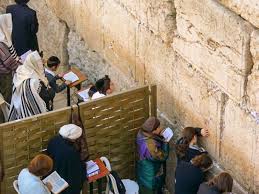
In his essay “Israel, This Is Not Who We Are” (Op-Ed, Aug. 14), Ronald S. Lauder sees the Israeli sky falling, as a result of Israel’s “destructive actions” like the maintenance of traditional Jewish religious decorum at the Western Wall, which Mr. Lauder criticizes as coming at the expense of a planned egalitarian prayer space, and a new Israeli law that establishes Israel as a state with a Jewish identity, which he says “damages the sense of equality and belonging of Israel’s Druze, Christian and Muslim citizens.”

But Israel, as a self-described Jewish state, needs a Jewish standard for public behavior at religious sites and to inform religious personal status issues. The standard that has served the state since its formation has been the Jewish standard of the ages — what the world calls Orthodoxy.

And, whether or not the nation-state law was necessary or wise, it does not impinge in any way on the equality before the law of any Israeli citizen.

Israel is not, as Mr. Lauder says some think, “losing its way.” It is the vast majority of the world’s Jews, those who do not regard their religious heritage as important, who are in danger of being lost — to the Jewish people. And it is those indifferent Jews who have the most to gain from the example of Israel preserving the traditional Jewish standards and values that have stood the test of history.

Avi Shafran

New York

The writer, a rabbi, is the director of public affairs for Agudath Israel of America.

First Amendment and Ninth Commandment

Most of us born and raised in this great country, an outpost of galus that offered our immigrant forebears unprecedented freedoms and protections, deeply appreciate not only those gifts but the Constitutional principles on which these United States stand. Among them, the First Amendment’s guarantee of freedom of speech.

The issue of that guarantee’s limits is currently a thing, thanks to one Alex Jones.

Mr. Jones is an extremely popular radio program host and the proprietor of a number of websites, most notably one called Infowars. He traffics in unfounded “reports” of conspiracies and nefarious actions by government and “globalist” agents.

He famously averred that the Sandy Hook school shooting was a hoax, an assertion that resulted in threats against bereaved parents of some of murdered children. He has also propagated the notion that Democratic lawmakers run a global child-trafficking ring, and that the U.S. government was involved in both the 1995 Oklahoma City bombing and the September 11 attacks. He has also claimed that the moon landing footage was fake, and that NASA is hiding secret technology and the deaths of thousands of astronauts.

Mr. Jones is in the news these days because of pending lawsuits by Sandy Hook victims’ parents and others against him, complaints by former staffers of his alleged racist or anti-Semitic behavior and, most recently, because of the removal of his posts and videos from top technology companies’ media platforms.

Enter the First Amendment.

Characterizing the tech companies’ decision to not host his misinformation as “censorship,” he says the move “just vindicates everything we’ve been saying.”

“Now,” he proclaimed in a tweet, “who will stand against Tyranny [sic] and who will stand for free speech? We’re all Alex Jones now.”

No we’re not.

To be sure, distasteful opinions are legally protected in our country. In 1969, the Supreme Court held that even inflammatory rhetoric is protected unless it “is directed to inciting or producing imminent lawless action and is likely to incite or produce such action.” Revolting as some of Alex Jones’ rants have been, they likely fall on the mutar side of that legal psak. But the rabble-rouser’s lament that, with the curbing of his exposure, the citizenry has been deprived of their last defense against tyranny (upper-cased, no less) is as hollow as the heads of his fans who act on his wild speculations.

In the end, though, no one is preventing Mr. Jones from promoting his untruths (or his products – the diet supplements and survivalist gear he profitably hawks between diatribes) from other rooftops, literal or electronic. The First Amendment limits only the actions of government, not private companies.

Jones, though, is also using the right to free speech as a defense against the lawsuits he’s facing.

One concerns Brennan Gilmore, a former State Department official who attended last summer’s violent “Unite the Right” rally in Charlottesville, Virginia. Mr. Gilmore was present when a man drove his car into a crowd of protesters, killing a woman.

After Mr. Gilmore posted a video of the episode and spoke about it, Mr. Jones accused him of being a C.IA. plant employed by the billionaire George Soros, and as having possibly been involved in the attack on the woman to bring about what he described as “the downfall of Trump.”

In March, Mr. Gilmore sued Mr. Jones for defamation, arguing that he had suffered threats and harassment as a result of the unfounded claim.

Do such public speculations and conspiracy theories merit First Amendment protection, even when they cause harm to others?

In a recent court filing, four law professors specializing in free-speech issues said no.

“False speech does not serve the public interest the way that true speech does,” the scholars wrote. “And indeed, there is no constitutional value in false statements of fact.”

For what it’s worth, Donald Trump Jr. feels differently. He reacted to criticism of Mr. Jones by asserting that “Big Tech’s censorship campaign is really about purging all conservative media. How long before Big Tech and their Democrat friends move to censor and purge… other conservatives [sic] voices from their platforms?”

Judges will decide, at least with regard to American law. As believing Jews, though, we know that there really is no hallowed ideal of “free speech.” The unique ability with which the Creator endowed us, the ability to communicate ideas, is not an “inalienable right” but a formidable responsibility. “From a word of falsehood stay distant” (Shemos 23:7) and “Do not give false testimony against your neighbor” (ibid 20:13) comprise our duty.

Would that American jurisprudence, even as it protects unpopular opinion, recognize the import of that charge.

© 2018 Hamodia