An essay of mine about the Siyum HaShas and Jewish unity appears in this week’s Jewish Week. It can be read here.
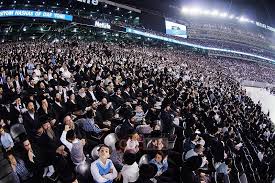
An essay of mine about the Siyum HaShas and Jewish unity appears in this week’s Jewish Week. It can be read here.
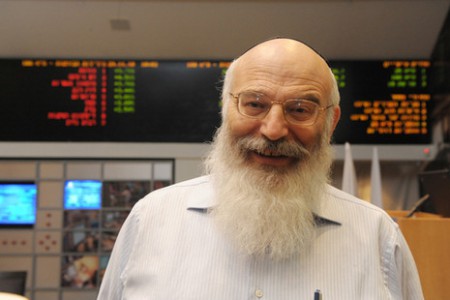
The well-known British doctor and pundit Jonathan Miller, who died last month, felt he had the solution to anti-Semitism.
He was quoted in a 1985 book as asserting that, to end Jew-hatred, “the Jew must constantly re-adventure and re-venture himself into assimilation.”
“I just think,” he continued, “it’s the nobler thing to do, unless in fact you happen to be a believer in Orthodoxy, in which case there are self-evident reasons to keep [living Jewish lives]. But, if it’s done for the sole purpose of making sure that in the future you’ll be able to say the prayers for the dead when the Holocaust is finally inflicted again, then I think it is a [cursed] device.”
The good doctor really should have realized that among the most assimilated Jews in modern times were much of German Jewry in the 1800s and the early part of last century, Jews who, in headstrong manner, adopted many of the practices and attitudes of their non-Jewish neighbors. And we all know how, despite those efforts to become “just Germans,” they were cruelly reminded of who in fact they were.
We “believers in Orthodoxy” could have explained to Dr. Miller that, au contraire, assimilation doesn’t prevent Jew hatred; it breeds it. We Jews are meant to be a people apart, and when we try to forget who we are, Hashem allows others to help us remember.
There is much talk these days, for good reason, about what practical steps can be taken to deal with anti-Semitism. In the wake of countless vandalisms of Jewish sites and cemeteries, physical attacks on Jews in Europe and here in America, and vicious verbal ones on the internet, various means of addressing the idiocy of Jew hatred are being put forward.
They are not without merit. Even though Chazal have revealed the law of nature that “Esav hates Yaakov,” there are efforts that can be made to counter both anti-Semitic acts and anti-Semitism itself.
Advocacy for security funding and increased police patrols are examples of the former. And educational efforts in public schools, of the latter.
There are, of course, chassidei umos ha’olam, people with an appreciation of Klal Yisrael; and then there are the aforementioned heirs of Esav. But there are also many people in our current (we hope final) outpost of galus who have as yet unformed attitudes about Jews. And so, educational efforts can be worthy means of fostering sanity and knowledge in young minds.
Another area in which our hishtadlus can help influence open-minded people to reject haters’ libels and imaginings is “upping our game” in our interactions with others.
All of us “visibly Jewish” Jews are aware that eyes are always on us; hopefully, we take pains to not act in any way that might be seen as uncaring or rude. We avoid cutting others off in traffic or raising our voices in public. We try to project the true image of a Torah-faithful Jew: modest, courteous and civil.
Sometimes, though – through no fault of our own – even our entirely proper restraint and reticence are misconstrued. Not only by people looking for anything they can “interpret” negatively, but even by “pareve” citizens who lack any pre-existing animus for us. Being reserved can be misunderstood as being “stand-offish”; avoiding eye contact can be misinterpreted as condescension.
Many of us who move among non-Jews during our commutes, or who work in non-Jewish environments, have found that being “proactive” in interactions with others can yield much good will.
An obviously observant Jew who enters a building and holds the door open for anyone behind him has likely, with that almost effortless act, left an impression.
An unsolicited “Good morning” to a fellow elevator passenger does the same. We have here nothing less than the testimony of Rabbi Yochanan ben Zakkai, that no one ever beat him to a greeting, as he was always first to offer one, “even [to] a non-Jew in the marketplace” (Brachos 17a).
Eye contact, when appropriate, is a statement of respect. And its lack, fairly or not, may be taken as the opposite. And a smile should be part of our faces too. Shammai tells us as much: “Receive every person with a pleasant countenance” (Avos 1:15).
Not long ago, a middle-aged African-American woman was waiting, as was I, for a bus that didn’t come. I phoned my wife to ask if she was free to pick me up at the bus stop, and she was. When she arrived, I offered the other would-be bus passenger a ride to her destination, a public housing project. Surprised but overjoyed, she accepted, and we took her home.
A few weeks later, waiting (I do a lot of waiting) for a ferry, I heard a loud, happy “Hi, Rabbi!” from behind me. It was she. And with her were her adult son and several grandchildren in tow. I returned her greeting (with a smile) and said hello to her family members.
End of unremarkable story. But it made me think about how the lady must have described my wife and me to her progeny. And how it might have influenced their picture of “Jews.”
Just as important – perhaps more so – than increasing security measures, police presence and educational programs is strengthening our efforts to show others who we really are.
© 2019 Hamodia
At the time of this writing – and, hopefully, of its reading – the most recent domestic terror attack was the shooting in Jersey City that left three civilians, including two Jews, and a police officer dead.
Less than a week earlier, there was the fatal shooting of three sailors at a Navy training center in Pensacola, Florida, by a seemingly well-adjusted Saudi trainee, Mohammed Alshamrani.
It seems that the Jersey City killers were motivated by “Black Hebrew Israelite” ideology. And, while authorities to date have offered no official conclusions about the Saudi murderer, it is not unlikely that Islamist radicalism played a part in his action.
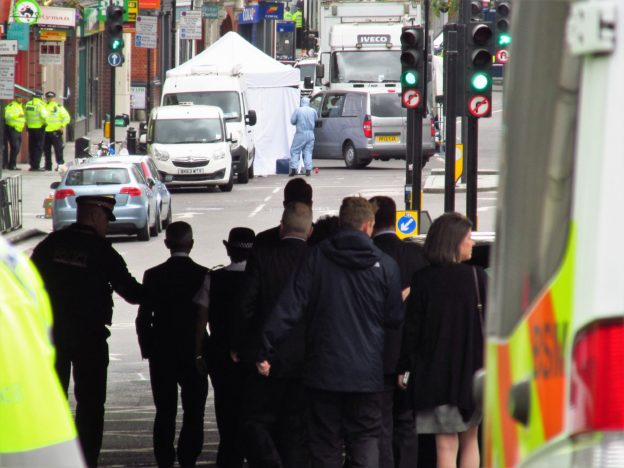
It definitely did in a terror attack in another Western country, Britain, a mere week before the Pensacola massacre.
In that stabbing spree, which has come to be known as the “London Bridge Attack,” Usman Khan, a 28-year-old British citizen, the son of Pakistani immigrants, attacked five people, leaving three injured and two dead, before he was killed by British police.
Incredibly, the attacker was, at the time of his rampage, on probation from prison, where he had been serving a reduced sentence for having been part of a plan to bomb, among other targets, the London Stock Exchange, the Houses of Parliament, the U.S. embassy, two synagogues, and the home of then London Mayor Boris Johnson. The plan also included building a terrorist training camp on land the stabber’s family owns in Kashmir.
What had reduced his sentence and allowed for his furlough was his renunciation of terrorism.
In one letter to probation officers, he had written: “At the time [of my terrorist plottings] I was immature and now I am much more mature and want to live my life as a good Muslim and also a good citizen of Britain.”
In another, he asserted that “I have learnt [sic] that many of my past beliefs came from my misinterpretations of Islam. There were many gaps in my knowledge but now I am on [a] new path and am learning to become a good Muslim. I would like a chance to prove to you that I will not cause harm to nobody [sic] in our society.”
He got the chance, and decisively proved the opposite.
The lesson lies in the fact that, while people can change, they can also claim to have changed and be lying.
While there is no reason to believe that many American or British Muslims are hiding murderous plans, there is no reason, either, to imagine that there aren’t other Muslims in Western countries who see the world as he did, and who present a threat like he was.
You may not have noticed, but we are in the throes of a presidential campaign.
And an American group, Muslim Advocates, took the opportunity of Michael Bloomberg’s joining the Democratic presidential candidacy pool to demand that the ex-New York mayor renounce the New York Police Department’s “Muslim surveillance” program instituted in 2002 under his administration. (The program was abandoned in 2014 by then-police Commissioner William J. Bratton.)
The Council on American-Islamic Relations joined the cause, asking Mr. Bloomberg to “see the error of his ways and apologize to the Muslim community for his long-term support for illegal surveillance and targeting of Muslim New Yorkers.”
The legality of the program was never negated, but I sympathize all the same with law-abiding Muslims of good will discomfited by the erstwhile police effort to keep tabs on Muslim communities and houses of worship. I understand how the effort struck some as religious discrimination. And I know that the data show that right-wing domestic terrorist acts have both been attempted and occurred more often than Islamist attacks.
But it can’t be denied that Islamic terrorists, inspired or directed by groups like IS and al-Qaida, pose a clear threat to American citizens – as the Pensacola attack and the 2017 Hudson River Park truck ramming and the 2016 Ohio State University attack and the 2015 San Bernardino attack, among others, well illustrate.
Sadly, all Muslims are adversely affected. Both by the way they are regarded by some others and by efforts to prevent future attacks. The NYPD’s surveillance program was, especially in the years directly following 2001, not unreasonable.
Suspicion of Muslims is often called “Islamophobia.” Merriam-Webster defines the word as “an irrational fear of, aversion to, or discrimination against Islam or people who practice Islam.”
The key word there is “irrational.”
Thus, we have arachnophobia, the fear of spiders; mysophobia, the fear of germs; and any of a long list of other unreasonable anxieties. Is Islamophobia irrational? It depends.
None of us, in our religiously pluralistic and free society, should ever disdain, or discriminate against, any Muslim simply because of his or her faith.
But, unfortunately, it’s impossibly hard to not harbor entirely rational fear of people like Mohammed Alshamrani and Usman Khan.
© 2019 Hamodia
Last week saw the launch of an initiative born of a strange shidduch – between the foundation of famously progressive philanthropist George Soros and that of libertarian donor Charles Koch.
The “Quincy Institute for Responsible Statecraft” was introduced as a “transpartisan” think tank whose focus will be on promoting diplomatic agreement instead of military solutions.
The new enterprise takes its name from John Quincy Adams, the sixth American president, who, as Secretary of State in 1821, made a speech warning against the U.S. going abroad “in search of monsters to destroy.”
There are, however, in fact, a number of fearsome monsters out there, some of whom threaten our allies and our own country. It’s nice to imagine that diplomacy might contain them but, alas, sometimes military action is really the only effective course.
The hope for a pre-Moshiach peaceful world, unrealistic though it is, is vintage George Soros. The Jewish Hungarian-American investor (original name: Schwartz) has spent billions to spread democratic values and human rights worldwide.
He also has expressed some repugnant attitudes.
He revoltingly likened President George W. Bush and his administration to Nazis. Asked once about his thoughts on Israel, he replied: “I don’t deny the Jews to a right to a national existence – but I don’t want anything to do with it,” and he has blamed anti-Semitism on Israel’s policies.
At the same time, Soros has himself become a favorite bugaboo of anti-Semites, like Turkish President Recep Erdogan, who denounced him as “the famous Hungarian Jew Soros.”
His status as a prime target of haters came up during the House Intelligence Committee hearings last month.
Former top National Security Council staffer Fiona Hill delivered what was to many the most riveting testimony of the hearings. She told of a smear campaign against former U.S. Ambassador to Ukraine Marie Yovanovitch.
Ms. Hill pointed out that a conspiracy theory associating Ms. Yovanovitch with the much-vilified Mr. Soros was at the heart of a smear campaign against the respected ambassador, who was fired from her position by the president.
“When I saw this happening to Ambassador Yovanovitch…,” Ms. Hill said, calmly but forcefully, “I was furious, because this is, again, just this whipping up of what is frankly an anti-Semitic conspiracy theory about George Soros to basically target nonpartisan career officials.”
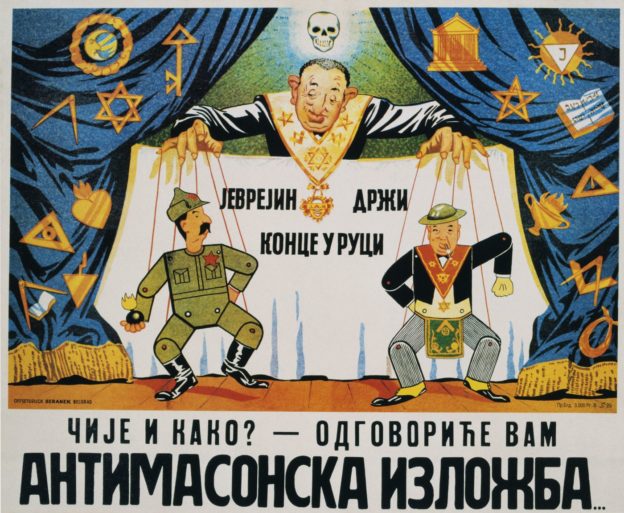
“This is the longest-running anti-Semitic trope that we have in history…” she continued, “the new Protocols of The Elders of Zion.” That reference, of course, was to the 19th-century forgery created by the Russian czar’s secret police that cast Jews as evil, all-controlling plotters against mankind, a book that is still published and cherished by anti-Semites to this day.
Some commentators, like Dinesh D’Souza, Alex Jones and Glenn Beck, have portrayed Soros as a Nazi collaborator.
For all his faults, that charge is silliness. During the Nazi occupation of Hungary, the future financier was a 13-year-old who, with the help of his father, who feared for his son’s life, assumed a false identity as the godson of a Hungarian official. That foster-father functionary was tasked with taking inventory at the homes of Jewish families so that their possessions could be taken by the Nazi authorities. Witnessing his protector taking notes was the extent of young George’s “collaboration.”
Nor is Mr. Soros a global puppet master intent on bending world powers to his will, as charged by conspiracy theorist Alex Jones (he of the “the Sandy Hook massacre of schoolchildren was staged” claim), convicted felon Roger Stone and attorney Joe DiGenova.
The latter (who, incidentally, led the prosecution of Jonathan Pollard) told Fox News, “There’s no doubt that George Soros controls a very large part of the career foreign service at the United States State Department. He also controls the activities of FBI agents overseas.”
No evidence of those assertions, however, was offered.
In October, 2018, Fox even banned one of its regular guests, Chris Farrell, of Judicial Watch, from the network, for falsely suggesting that Soros had funded a migrant caravan traveling through Central America.
Despite Mr. Soros’ “progressive” values and his (at best) ambivalence about Israel, it’s important to not buy into the utter vilification of the man – to realize that casting him as a fabulously wealthy aspirant to world domination is unadulterated anti-Semitism, a contemporary take on the portrayal of Jews as controlling the wealth, and thus the destiny, of the world. As it happens and just for the record, Christians hold the largest amount of world wealth (55%), followed by Muslims (5.8%) and Hindus (3.3%). Jews come in at 1.1%.
And so, Ms. Hill’s claim that making false assertions of Soros connections to smear people is thinly veiled anti-Semitism was, as they say in her native Great Britain (she became a U.S. citizen in 2002), spot-on.
Part of the bane of galus is that Jew haters will always seek Jewish malefactors to portray as emblematic of a nefarious pan-Jewish plot. And when they come up empty, they simply create demonic Jewish plotters out of thin air, like the “Elders of Zion.”
Or their version of George Soros.
Even with our own justified criticisms of the investor, we should take care to not buy into the Jew haters’ narrative and inadvertently aid those who spread libels and wish all of us only ill.
© 2019 Hamodia
The ad accuses President Trump of having paid a $2 million bribe to a Vermont prosecutor for the latter to fabricate a larceny charge against Senator Bernie Sanders.
Despite the president’s vociferous objection to the promotion of an entirely fictitious accusation against him, the social media giant Facebook refused to remove the ad.
Likewise fictitious, as you may have guessed, is the existence of any such ad, whose crafting and publicizing any right-minded person would consider akin to a crime.
Entirely real, though, is an actual video ad Facebook ran that falsely accused former Vice President Joe Biden of having blackmailed Ukrainian officials to halt an investigation of his son, Hunter. “Send Quid Pro Joe Biden into retirement,” the voice-over intoned.
In 2016, Mr. Biden did indeed urge Ukraine to fire its top prosecutor, with the threat of withholding U.S. aid. But, as numerous fact-checkers have pointed out, that was the official U.S. government position, not his personal decision, and had nothing whatsoever to do with Hunter Biden.
The video making the bogus accusation was the work of a “super PAC,” or deep-pocketed political action committee. Facebook explained that, although disseminating false information violates the social network’s policies on misinformation, a political leader’s claims, even if they are lies, are inherently newsworthy, and thus immune to removal.
The Biden campaign objected that the falsehood was not made by a politician but rather by a political committee, and thus should have been rejected.
Which, of course, entirely misses the larger point: We are at (or over) the cusp of a presidential campaign that appears bound to be saturated with deceit and disinformation. Voters, beware.
Six versions of the “Quid Pro Joe” ad were targeted to Facebook users in South Carolina, Iowa and Massachusetts, according to Facebook’s ad library. The ad is no longer active, but, in a recent speech to students at Washington’s Georgetown University in Washington, Facebook CEO Mark Zuckerberg defended his treatment of political ads containing falsehoods on grounds of freedom of expression.
“People having the power to express themselves,” he said, “is a new kind of force in the world – a Fifth Estate alongside the other power structures of society.”
The phrase “power structure” put me in mind of something we read about in shul two Shabbosos ago – the Tower of Bavel. Not all power structures are good ones.
And using the power of mass communication to empower falsehoods would seem to fall in the not-so-good category.
Interestingly, there have been numerous political ads rejected by Facebook. The global media and technology company Buzzfeed’s news division found 160 vetoed spots, submitted by candidates Joe Biden, Elizabeth Warren, Bernie Sanders, Tom Steyer and President Trump.
Not one, though, was rejected for containing an untruth, only for things like offensive language and “fake buttons” – nonfunctioning “yes” and “no” click-options, something Facebook, for some reason, doesn’t allow on paid content.
So, as far as Facebook is concerned: Fake buttons, no way; fake facts, no problem.
I’m not naïve. Political ads have, of course, always sought to mislead, at least in the sense of presenting one side of an issue without acknowledging the argument for the other side. That’s the prerogative of parties and PACS, which, after all, pay good money to present their cases. Critical thinking will always be an essential part of citizens’ weighing of arguments.
But asserting that Medicare for all or universal gun registration or building a border wall is a good idea or a bad one is one thing. Contending falsely that a president bribed a prosecutor or that a former vice-president used his power of office to block prosecution of his son, or that “the Jews” were behind the 9/11 attacks is in another category altogether.
To its credit, Facebook recently removed from its platform four foreign-based networks – including one linked to Russia’s Internet Research Agency, the group indicted for interference in the 2016 presidential election – that were targeting Mr. Biden’s current quest for the Democratic Party presidential nomination.
But shouldn’t domestic shenanigans by candidates of any stripe be subject to similar treatment?
In defense of Facebook’s “lies by politicians are acceptable” policy, the company’s vice president of global affairs and communications Nick Clegg compares the social media platform with its more than 2 billion global users to a tennis court.
“Our job is to make sure the court is ready – the surface is flat, the lines painted, the net at the correct height,” he explained. “How the players play the game is up to them, not us.”
No, Mr. Clegg: If you’re providing the court and broadcasting the game, you need to make clear to the players that smashing your opponent over the head with your racket simply isn’t an acceptable move.
© 2019 Hamodia
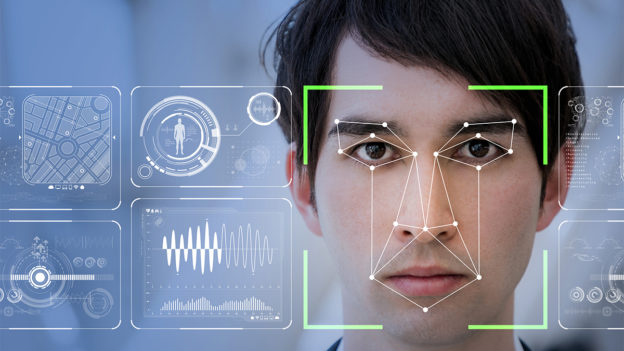
“We used to spend a good two hours here… chaos,” Palestinian construction worker Imad Khalil explained to National Public Radio’s Daniel Estrin. “Today we arrive and we immediately pass.”
The worker was marveling at the efficiency of “Speed Gate,” a facial recognition technology that has done away with crowds and individual inspections by Israeli soldiers at checkpoints through which Arab day laborers must pass from Yehudah and Shomron to work in Israel proper. Nearly 100,000 Palestinian laborers cross such checkpoints daily.
Where the technology is in place, the workers now need only place electronic ID cards on a sensor and stare at a camera. Panels then open to let them through.
Palestinians wishing to work in Israel have for many years been photographed and fingerprinted, in order to ascertain that they have nothing in their records to indicate they’re a threat to anyone.
Having soldiers ascertain identities of crossing workers created long lines and frustrated people. The new facial recognition software allows workers’ ID cards to immediately connect to a biometric database and confirm their identities in an instant.
Israel is also building a database of its own citizens, and already uses similar facial recognition technology for passport control at Ben Gurion airport.
As might be expected, human rights advocates are upset by the effort, seeing it as helping perpetuate the current political status quo and as a violation of individuals’ privacy.
Omer Laviv of Mer Security and Communications Systems, an Israeli company that markets the technology to law enforcement agencies internationally, had four words in response to such anxieties: “Security concerns override privacy.”
Several thousands of miles to the west, in New York City, the city’s police department use of identification technology is likewise being criticized by privacy advocates.
The department has not only built a giant facial recognition database and loaded thousands of arrest photographs, including of children and teenagers, into it, but was recently revealed to have accelerated the collection and storage of criminals’ and suspects’ DNA, obtained from cheek swabs or even from coffee cups, water bottles or cigarette butts harboring trace amounts of suspects’ saliva.
There are currently more than 80,000 genetic profiles in the city database, begun in 2009, an increase of 28 percent over the past two years. Scores of violent crimes have been successfully prosecuted based on collected DNA.
The criticism, from groups like the Legal Aid Society, has focused on the fact that some 30,000 of the profiles are of people, including minors, who were only suspected of crimes, but never convicted.
Some civil liberties lawyers contend that taking someone’s DNA without probable cause to suspect that they did something illegal violates the U.S. Constitution’s Fourth Amendment’s ban on “unreasonable searches and seizures.” The legitimacy of that assertion depends on the meaning of “searches and seizures.” DNA and facial recognition technology were things unimagined, likely unimaginable, to the Constitution’s crafters.
But is there anything qualitatively different between fingerprinting a suspect – or just photographing him – and recording the patterns of his DNA? While DNA identification is not, in many cases, at all as indisputable as most people assume – there are a number of issues that can render it less than conclusive – it is certainly a most useful tool in better focusing investigations that can lead to more decisive evidence.
And there can be little doubt that not only does “searches and seizures” in the Fourth Amendment need a modern definition; so does the word “unreasonable.
There may well be activists who maintain that street cameras should be considered unlawful, or who shun EZ-Pass or GPS technology because they consider such things, which identify users’ locations and movements, dangers to individual privacy. But, justified in their fears or not, they are blowing hard at a hurricane.
Because, like it or not, we no longer have private lives, at least not in the sense of being invisible to a plethora of commercial, governmental or law enforcement entities. Cameras on the sides of buildings, and inside them, abound. Anyone with a driver’s license or passport has surrendered information to authorities, and anyone who uses the internet is shedding dribs and drabs of facts about himself to untold numbers of commercial and other interests.
That might dismay some people, but it is, in the end, a simple fact of modern life. And leveraging technology to fight crime – as long as it is done responsibly and with recognition of new tools’ limits – doesn’t strike me as unreasonable. Even if a youngster’s DNA is on file in a police database, well, youngsters grow up, after all, some of them, sadly, into violent criminals. And a means of identifying a perpetrator of a crime is something beneficial to society.
For Jews who recognize the truth of the Jewish mesorah, the new technologies can serve to remind us that, as Rabi Yehudah Hanasi stresses in Avos (2:1): “An eye sees and an ear hears…”
And, particularly apt, with the Yamim Nora’im still fresh in our memories, “…all of your actions are in the record written.”
© 2019 Hamodia

A Nordic effort reminds us of a mitzvah for our time.As Jews the world over listened to Krias HaTorah on Shabbos morning parashas Shoftim, someone at the New York Times was preparing to post a news story quite pertinent to a passuk in the parasha, although he or she was likely oblivious to the connection.
The passuk (Devarim 20:19) forbids the destruction of a fruit tree even during a war, and is the source for the prohibition of bal tashchis, the wanton destruction of anything useful.
The story, which appeared the very next day, was datelined Helsinki, Finland, and described “Happy Hour” at one of a supermarket chain’s 900 stores, all of which steeply discount hundreds of items about to run afoul of their expiration dates. Finns crowd the stores to buy the goods.
According to the U.N. Food and Agriculture Organization, close to a third of the food produced and packaged for human consumption is lost or wasted. Here in the United States, nine out of ten supermarket chains assessed last year by a nonprofit group, the Center for Biological Diversity, were given a C grade or lower on food-waste issues.
We citizens of industrialized western countries live, baruch Hashem, in a world of plenty. Suffering poverty might tempt someone to steal or cheat. But swimming in a sea of abundance presents its own challenges – like the temptation to overindulge, with resultant obesity and other health risks. And, for Klal Yisrael, the inadvertent flouting of bal tashchis.
I know from speaking with others that I am not the only one whose parents rinsed out plastic cups instead of throwing them away, or who refrigerated even small amounts of a meal’s leftovers rather than consigning them to the garbage. Or who opted to darn holey socks instead of just tossing them out and buying a new pair.
And I know, too, that I’m not the only one who tries – even if very imperfectly – to maintain the mindset that yields such practices. It is, after all, a very Jewish mindset.
Some stereotypes are outright falsehoods. Mexicans may take siestas (as do many Israelis) during the hottest time of the day, but all the workers from south of the border whom I’ve observed have been anything but lazy; in fact they are exceedingly hard-working.
The stereotype of Jews as penny-pinching, however, isn’t necessarily false, only mischaracterized. While there may be people who are stingy for selfish reasons, frugality can – and in Yiddishkeit is meant to – bespeak a deep appreciation for the worth of every single resource with which Hashem has gifted us.
We are enjoined by the Torah to not waste material or money. “Each and every penny,” Rabi Elazar is famously quoted as saying, “adds up to a fortune” (Bava Basra 9b). And fortunes, we all know, can be put to very worthy and effective use. Those same Yidden from previous generations who sewed up holes in clothing and reused disposable utensils were impressively generous with their resources when it came to helping others.
There are, to be sure, situations where destroying or discarding a useful item is permitted, as when a greater good is thereby accomplished, or where there is some special need. Here is not the place to enter the realm of the halachic implications of our throw-away society. But that there exist actual such concerns with common contemporary practices is something that deserves our consideration.
The Finnish effort was spurred by the increase in greenhouse gas emissions and the effects of climate change. Still and all, it might serve to stimulate us to take bal tashchis more seriously in this era of abundance and this annual time of teshuvah. Whatever our thoughts about carbon footprints, we are enjoined to recognize that wasting any resource debases it, and us.
Every year on Shabbos parashas Shoftim, I reread the words of the Sefer HaChinuch (mitzvah 529). He explains that the bal tashchis prohibition aims to “teach our souls to love what is good and useful, and to then cleave to it,” adding that “through this, the good will cleave to us and we will distance ourselves from every evil thing and every destruction. This is the way of exemplary Jews, who love peace, rejoice in the good of creation and bring everyone close to the Torah.
“They do not destroy anything – even a mustard seed – and it pains them to encounter any destruction or harm. If they can act to save anything from destruction, they use all their strength to do so.”
“Not so,” he adds by contrast, is the way of resha’im, “the cohorts of mazikim [destructive forces], who rejoice in destroying the world.”
That attitudinal polarization is well evident in our world. Broken windows, smashed bottles and graffiti-marred walls are the yield of one end of the spectrum.
And rinsed-out plastic cups in dish drainers, with filled-to-their-brims tzedakah boxes on nearby kitchen window sills, the other.
© 2019 Hamodia

Hoisted by its own petard, The New York Times cried foul. Please forgive the clichés, but they’re really most apt.
Let’s start with the paper of record’s wail of indignation. It came last week in the form of a lengthy front-page article reporting that “A loose network of conservative operatives allied with the White House is pursuing what they say will be an aggressive operation to discredit news organizations deemed hostile to President Trump by publicizing damaging information about journalists.”
The “operation,” the paper continues, is “the latest step in a long-running effort by President Trump and his allies to undercut the influence of legitimate news reporting.”
I have no dog in the president-media fight (okay, okay, I’ll curb the clichés). But the Old Gray Lady’s umbrage over revelations that some of her valued servants harbor some skeletons in their closets (really, I’m trying) is a bit amusing. After all, the Times has made a major industry of discrediting people hired by Mr. Trump, most recently, newly appointed White House press secretary and communications director Stephanie Grisham, who, The Times dutifully reported, has “professional scrapes [and] ethical blunders” in her history.
Now, though, the revered medium sees something disgraceful in the unearthing of some bones in its own, and other major media’s, possession, in the form of social media posts by members of their staffs.
Like the Times’ own now-former politics desk editor, Tom Wright-Piersanti, whose years-old anti-Semitic and racist tweets, when recently revealed by right-wing website Breitbart News, resulted in his reported demotion.
Or the paper’s likewise demoted erstwhile deputy Washington editor Jonathan Weisman, who was punished for posting messages on social media about race and politics that showed what the paper called “serious lapses in judgment.”
Undemoted, though – in fact, invited to join the Times’ editorial board – is Sarah Jeong, who had tweeted, among other things, “oh man it’s kind of sick how much joy i get out of being cruel to old white men.” The paper defended its hire with the explanation that the tech editor’s “journalism and the fact that she is a young Asian woman have made her a subject of frequent online harassment. For a period of time she responded to that harassment by imitating the rhetoric of her harassers.”
Oh.
Then there was CNN’s Mohammed Elshamy, who was forced to resign in July from his position as the news organization’s photo editor and writer when GOP operative Arthur Schwartz discovered and disclosed that Mr. Elshamy had praised the murder of “More than four jewish pigs [sic – and sick, too],” in a 2011 terrorist attack in Yerushalayim.
Both the CNN and NYT erstwhile bad boys apologized profusely, and two of them attributed their undignified behavior to the vagaries of their youths. (Mr. Wright-Piersanti was in college at the time of his terrible tweets; Mr. Elshami, in his teens). But, of course, the ultimate issue is whether such people should be trusted to be objective reporters. The child, after all, as the poet William Wordsworth put it, “is father of the man.” Is there reason to assume that youthful hatreds or biases simply disappeared over a few years?
Nonetheless, Times publisher A. G. Sulzberger rose up in righteous defensiveness, ironically presenting a mirror image of Mr. Trump’s recent turgid tweet that journalism is “nothing more than an evil propaganda machine for the Democrat Party.” Mr. Sulzberger, for his part, decried the exposure of reporters’ biases as a campaign “to intimidate journalists from doing their job, which includes serving as a check on power and exposing wrongdoing when it occurs.”
Curiously, there seems to be no comprehension in that declaration of the difference between being intimidated and being responsible; nor any hint that the power of media may need – no, surely needs – checks too.
With similar umbrage, a CNN spokesman characterized the disclosure of ugliness in its reporters’ pasts as “a means of suppression” and “a clear abandonment of democracy.”
Applesauce. It’s a means of transparency, and an expression of democracy. It makes the Fourth Estate answerable, as it should be, to the citizenry.
The president and those in his orbit should not be immune to criticism, and their foibles should not be out of bounds for journalistic inspection and revelation. But the very same is true for reporters and editors. If Americans are to be properly served by their public servants – and it should never be forgotten that such servitude is the essential charge of elected office – and by the organizations that mediate between happenings and citizens, transparency is paramount.
Both government and media, in other words, need to do their due diligence when recruiting employees.
After all, what’s good for the goose is – oh, sorry.
© 2019 Hamodia
Grass is green.
Gettysburg is where a major Civil War battle took place.
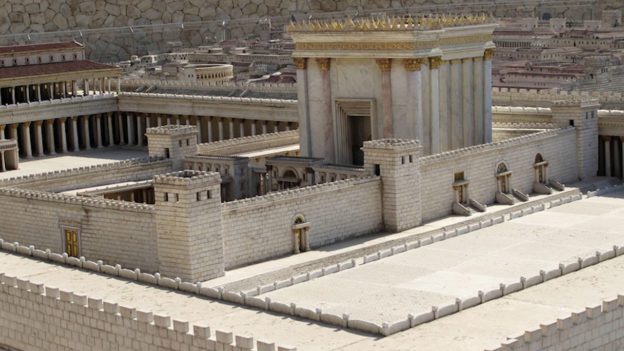
The Har HaBayis is where the Batei Mikdash stood.
Astoundingly, some news organizations seem ignorant of that last truism.
Last week, Jordanian Foreign Minister Ayman Safadi complained to E.U. ambassadors about “Israeli transgressions in the holy city,” more accurately described as Israeli police’s dispersion of rioting Muslim worshippers on Har HaBayis this past Tisha B’Av. Reporting on Mr. Safadi’s expression of righteous indignation, the Chinese news agency Xinhua referred to the holiest Jewish site on earth only as the “Al-Aqsa Mosque compound in Jerusalem.”
The report had Safadi going on to warn against what he sees as Israel’s attempt to “change the historical and legal status of Jerusalem” – ludicrously oblivious to, or shamelessly obscuring, the site’s actual history.
Of course, one doesn’t expect the People’s Republic of China to care a great deal about truth. Nor should one expect any important context from Al-Jazeera. That network’s report of the clash noted that it occurred on “the Jewish holiday [sic] of Tisha B’Av,” without any explanation of the doleful day’s significance to Jews. And Saudi Arabia’s Arab News, in its reportage, omits any mention of a Jewish connection to the Har HaBayis.
Yahoo News took a baby step further, noting that Jews “refer to [the place] as the Temple Mount” and adding that Jews “believe it was the site of the two biblical-era Jewish temples.”
Yes. We also believe that the Normandy coast was the site of the World War II-era D-Day invasion of France.
Kudos, though, to NBC News for its above-average HIQ (history intelligence quotient). It reported that the “the 37-acre esplanade [that] is home to Al-Aqsa Mosque” is Judaism’s holiest place because of “its history as the site of First and Second Temples.”
And even Reuters, which has something of a history of its own when it comes to Israel reportage, laudably identifies the location as “revered by Jews as Temple Mount, the site of two biblical Jewish temples.”
The Associated Press also gets a high HIQ score, for explaining that the Har HaBayis, while “currently the home of the iconic gold Dome of the Rock and the al-Aqsa Mosque,” was “the site of two Jewish temples in antiquity” and for explaining that “the Ninth of Av [is] a day of fasting and mourning for the destruction of the two biblical temples that, in antiquity, stood at the site.”
UPI, too, earns special mention for its story on the clashes, for referring to the site simply as the “Temple Mount.”
The truthfulness tide turned, I think, in 2015.
On October 8 of that year, The New York Times published a news article about Muslims’ and Jews’ relationship to the Har HaBayis, contending that the question of “the precise location of two ancient Jewish temples, one built on the remains of the other, and both long since gone,” has “never [been] definitively answered.”
A deluge of incredulity followed– including a letter from this writer, who somewhat snootily observed that, “despite Palestinian insistence to the contrary… the central Jewish Temple stood on the Temple Mount nearly 1,500 years before Islam’s founder’s grandparents were born.”
More measured, and authoritative, was a missive from one of the experts whose view had been muddled in the article.
University of North Carolina-Chapel Hill Professor Jodi Magness explained that “literary sources leave little doubt that there were two successive ancient temples in Jerusalem dedicated to the G-d of Israel… These sources and archaeological remains indicate that both temples stood somewhere on the Temple Mount. The only real question is the precise location of the temple(s) on the Temple Mount.”
The Times article was amended the following day, and a correction, echoing Professor Magness’ explanation, was duly published in the newspaper.
We who have been entrusted with preserving the Jewish mesorah – who face the Har HaBayis daily in tefillah, who beseech Hashem to rebuild Yerushalayim in our every tefillah and birchas hamazon, and who bemoan the churbanos in our tefillos Mussaf – have no need for scholarly or archaeological evidence for the historicity of the Batei Mikdash.
But a sweet note arrived just before our most recent observance of Tisha B’Av, when it was reported that archaeologists had just uncovered, in the words of CNN, “evidence of the Babylonian conquest of the city, appearing to confirm a Biblical account of its destruction.”
“The combination of an ashy layer full of artifacts, mixed with arrowheads, and a very special ornament indicates some kind of devastation and destruction,” explained University of North Carolina at Charlotte’s Shimon Gibson.
It’s not likely that historical Jewish provenance of Yerushalayim and the Har HaBayis will be acknowledged any time soon by Xinhua or Al-Jazeera. But the fact that at least some major media have allowed themselves to become better educated on the subject is heartening.
May it be a harbinger that the fulfillment of our entreaty “chadesh yameinu k’kedem” – “renew our days as of old” – is quickly approaching.
© 2019 Hamodia

Are you aware of the connection between the El Paso shooter and Palestinian terrorists?
No, the shooter wasn’t a Palestinian and had no known affiliation with the Palestinian cause. He was apparently an anti-immigrant white nationalist, as indicated in the manifesto he seems to have posted on a shady website shortly before he set out to kill innocent Hispanic people, accomplishing that goal in 22 cases, and failing in 24 others, where the victims were merely wounded.
The Palestinian “connection,” such as it is, is indirect, and involves Jake Tapper, the well-known broadcast journalist and frequent critic of President Trump.
In the wake of the domestic terrorist attack in El Paso, many charged that the president’s rhetoric bore some responsibility for the carnage. Mr. Trump’s repeated characterization of migrants seeking asylum in the U.S. as an “invasion,” the critics asserted, echoed the shooter manifesto’s anti-immigrant sentiments and repeated use of the same word in that context. Accused accessories to the president’s alleged crime included various media outlets, primarily Fox News, which used “invaders” or “invasion” to describe migrants or migration in more than 300 broadcasts over the past year alone.
The killer himself acknowledged the likelihood that Mr. Trump would be implicated in the attack. “I know,” he wrote, “that the media will probably call me a white supremacist… and blame Trump’s rhetoric.” Well, yes.
No one needs to convince those of us even rudimentarily informed by Jewish thought that words can be weaponized. Chazal in fact characterized words as capable of “killing.” Whether, though, political rhetoric can be rightly pointed to as a culprit in white nationalist attacks – like the one in El Paso or the 2015 murder of nine black churchgoers in Charleston, South Carolina or the Poway, California synagogue shooting this past spring – is arguable.
Mr. Tapper, predictably, leans toward a “yes” vote. But, on a CNN program panel, he also raised an intriguing point. “What’s interesting,” he averred, is that “you hear conservatives all the time, rightly so in my opinion, talk about the tone set by people in the Arab world… Palestinian leaders talking… about Israelis,” claiming there is “no direct link necessarily between what the leader says and violence against some poor Israeli girl in a pizzeria.” Conceding that “you can’t compare the ideology of Hamas with anything else,” he asserted that, “at the same time, either tone matters or it doesn’t.”
Sana Saeed, Al-Jazeera’s online producer, was appalled, calling on CNN to fire Mr. Tapper for achieving “the height of unethical journalism.” BDS proponent and all-purpose Israel-basher Linda Sarsour seconded the motion.
U.S. Congresswoman Rashida Tlaib chimed in too, accusing Mr. Tapper of “comparing Palestinian human rights activists to terrorist white nationalists.” (If Ms. Tlaib considers Hamas terrorists to be “human rights activists,” it is she who deserves to lose her job.)
Not one to be left behind, Raouf J. Halaby, Professor Emeritus of English and Art at Ouachita Baptist University in Arkadelphia, Arkansas (no, none of that is made up) reacted to Mr. Tapper’s point by calling it “the height of hypocrisy,” and adding, for good measure, that “Israel is led by racist rulers and rabbis egging their citizens to kill Palestinians because (they claim) the Torah sanctions these killings and it is kosher to do so.”
One can only hope that Arkadelphians recognize a madman in their midst when they hear one.
Mr. Tapper’s verbal assailants, of course, grossly misrepresented what he said. He did not compare human rights activists to white nationalists or defend any fictional rabbinical inciters to murder. But the critics are correct in feeling that his comparison was imperfect.
Just not in the way they contend.
The reason Mr. Tapper’s comparison was faulty is because, whatever one may think about the president’s rhetoric or judgment or positions or personality, whatever one may think about whether or not his words inadvertently offer solace or encouragement to evil people, he has never called for attacks on anyone.
Unlike Palestinian leaders, media and schools.
Palestinian Authority President Mahmoud Abbas, for example, in 2015, after violent riots on the Har HaBayis initiated by Muslim extremists, declared that “We welcome every drop of blood spilled in Jerusalem. This is pure blood, clean blood, blood on its way” to heaven.
Palestinian media regularly laud “the resistance.” Fatah’s “official” Facebook page has featured a knife with a Palestinian flag on its handle stabbing a bearded religious Jew.
And Palestinian educational materials encourage violence against Israelis and Jews. As chronicled last year by the Institute for Monitoring Peace and Cultural Tolerance in School Education, a nonprofit that aims to do just what its name says, textbooks created as part of the Palestinian Authority’s new K-12 educational curriculum “are teaching Palestinian children that there can be no compromise” and “indoctrinat[e] for death and martyrdom.”
Fourth graders, for example, learn addition, and ninth graders multiplication, by counting the number of Palestinian “martyrs” – terrorists who perished in the course of their murderous acts.
No, it’s not Palestinian authorities’ “tone” that’s at fault.
It’s their promotion of murder.
© 2019 Hamodia (in edited form)