Category Archives: News

How Dare Reform Rabbis Speak On Behalf of Diaspora Jewry?

He may not have meant it as a threat, but Reform Rabbi Rick Jacobs, president of the Union for Reform Judaism, certainly sounded like he was delivering an ultimatum when he warned that if an area at the Kotel Ma’aravi is not set aside for non-Orthodox services, “it will signal a serious rupture in the relationship between Diaspora Jewry and the Jewish state.”

Struck my ears like a Jewish version of a protection racket pitch.  “Hey, nice relationship you got there.  Be a real shame if anything bad happened to it…”

Those are the opening paragraphs of a piece I wrote that was recently published by Haaretz.  For the entire article, please visit

http://www.haaretz.com/opinion/.premium-1.718990

Hubris Heights

Three years ago, geneticists Drs. Stephen Friend, Eric Schadt and Jason Bobe set out to search international databases for people who were over 30 and healthy but who carried mutations that typically cause childhood diseases like Tay-Sachs or muscular dystrophy.  In other words, people whose genetic makeups should have disabled or killed them years ago, but for some reason did not.

The scientists recently reported that they found 15,597 people who seemed to fit the bill, but they had doubts about some of the data about the patients and were unsure if their genetic mutations indeed coded for the diseases they were predicted to develop.

Thirteen people, though, turned out to have verifiable mutations that definitely cause one of eight serious diseases before age 18 in all who inherit them.  Or, at least, so it had been assumed.  In those thirteen cases, no disease had occurred.

The researchers surmise that there may be some other genetic mutations in those people, and likely in many others, that somehow counteract the natural effects of the disease-causing mutations.  Further research will focus on identifying any such “protective” genetic factors.

The large majority of people carrying genetic markers for serious diseases will in fact experience those diseases.  But the recent report reminds us that things aren’t always as clear as they may have once seemed.  Medical death sentences are sometimes unexpectedly commuted.  Widely accepted treatments are sometimes found to confer no benefit – even, in some cases, to be detrimental to health.  Medical truths sometimes turn out to be fictions.

In the late 1980s, the Cardiac Antiarrhythmic Suppression Trial found that widely trusted medications for patients with a particular heart arrhythmia conferred greater mortality than a placebo.  That is to say they were worse than useless.

In 2005, a procedure known as vertebroplasty, the injection of medical cement into fractured bone, was performed more than 27,000 times in the United States.  A study in 2009 conclusively showed that the procedure was no better than a sham procedure where nothing at all was done.

Routine PSA screening, once the gold standard for identifying prostate cancer, is no longer recommended, as it turned out to have caused many unnecessary biopsies and surgeries.  Likewise for routine mammography screening for women in their 40s.

Such “well, now we know better” changes of policy are known as “medical reversal” and are nothing new. Ancient Greek medical researchers like Hippocrates and Galen contributed much to the understanding of the human body.  But the treatments that resulted from their findings and theories soon enough (well, what’s a thousand years in the larger picture?) fell victim to the Dutch anatomist Vesalius’s discoveries.  In the 17th century, William Harvey further revolutionized medical treatment.

The next century saw Edward Jenner perfect the art of inoculation, and then the medical revolution born of germ theory.  Then, the discovery of DNA opened an entirely new vista: genetics.

It is, of course, not surprising that medicine has advanced with time, and that we know more about the body and disease than ever before.  Such progress is true about science in general.  Aristotle’s understanding of physics pales beside what Newton laid out; and Newtonian physics was upended in fundamental ways by Einstein and later physicists and cosmologists.

But what’s important to realize is that much of what we know about medicine or other sciences is not so much based on what we thought we knew but rather reversed  it.

And yet much of the scientific establishment, and laymen who trust them implicitly, persist in the illogical belief that what we think we know will prove impervious to being overturned by future discoveries.  Why, though, should we imagine that our generation possesses ultimate knowledge?  Has there ever been such an animal?  Is there really any reason to doubt that a century hence some of our most cherished scientific knowns will prove to have been unknowns?

To be sure, we must utilize the medical understandings and treatments of our day.  But our minds must hold the thought, too, that changes will likely come on a future day.

As Rav Samson Raphael Hirsch wrote, Hashem granted us two revelations: nature and Torah.  Immutable knowledge of only one of them, however, has been Divinely transmitted to human beings.  We can be mechadesh ideas in Torah, but only by building upon its unchanging truths. Nature, by contrast, remains an open question, and is thus subject to (and has long evidenced) conceptual revolutions.

Ignoring history, thinking that we have some ultimate understanding of the physical world, may provide solace to some.  But, in truth, it is the height of hubris.

© 2016 Hamodia

And The Winner Is…

“Americans love a winner and will not tolerate a loser,” the famous, and famously blunt, General George S. Patton declared in a 1944 speech.  “When you were kids,” he explained, “you all admired the champion marble shooter, the fastest runner, the big league ball players, the toughest boxers.”

A few years later, UCLA Bruins football coach Henry Russell (“Red”) Sanders effectively concurred with the general.  “Winning isn’t everything,” the coach told his charges, pausing a moment for effect, “It’s the only thing.”

Fast-forward to today, when presidential candidates seem tireless in trumpeting victories and portraying themselves as winners.

It’s not just wishful thinking that impels coaches and politicians to promote their winning ways. They know there is practical value in that self-portrayal.  Namely, the “bandwagon effect” – the fact that winners tend, by their very victories, to pick up fans.

And indeed, while correlation isn’t causation, Donald Trump’s popularity seems to have risen at about the rate at which he has labeled himself a winner, and other people losers (among them an 87-year-old woman who sued him over a real estate venture, New York Attorney General Eric Schneiderman, conservative columnist Charles Krauthammer and Senator John McCain).

Politics, though, are just politics.  And sports are only sports.  There is, though, also these days a very different example of the allure exerted by “winning teams.”  That pull, unfortunately powers not only mundane enterprises but some of the darkest evils that humanity (using the word in its broadest sense) has to offer.

There’s no doubt that Islamist groups whose members exult in killing and maiming men, women and children who pose them no threat are manifestations of what is implied by pereh adam: utter barbarism.  Terrorists revel in violence for violence’s sake.

But the mayhem that such groups spawn and celebrate also serves to garner them new recruits.  It might seem confounding to civilized people that terrorists’ carnage advances their recruitment goals.  Sadly, though, it does.

“My brothers,” enticed a French-language social media message sent to young people’s phones in the immediate wake of the recent terror attacks in Brussels, “why not join us in the fight against the Westerners, make good choices in your life?” Don’t you see, the message seems to be saying, how successful we’ve been?

To be sure, psychological frailty, vulnerability to radical politics or theologies and even boredom play parts in leading some young Westerners to join barbarous organizations.  But those who study terrorism confirm another factor in those decisions: a perception of the sociopaths as “winners” in some malignant Monopoly game, in which the board pieces are human beings and the currency is destroyed lives.

Through would-be recruits’ loony lenses, the civilized world, by virtue of its inability to eradicate the evil players, would seem to be a “loser.”  The crowded bandwagon these days is the wicked one.

There is no word for “winner” or “loser” in Tanach.   To be sure, there are advances and retreats, as when Yisrael is “gavar” – gains the upper hand – and when, chalilah, Amalek does; and military gains and defeats.  But the word we use in Hebrew for victory, “nitzachon,” seems to date only from later times.

In fact, the closest nitzachon-relative in Tanach, used repeatedly in Tehillim, is menatzeiach, as in “lamenatzeiach,” where it means “leader” or “conductor.”  The implication of the word isn’t power or victory, but, rather, example-setting and facilitating.

Maybe that’s a lesson about how to understand true success.  Yes, there are indeed enemies to be fought, like those who threaten innocents today.  And even an irredeemably evil one, Amalek, to be utterly destroyed in the future.  But, here and now, our success lies in our being the best specimens of a tzelem Elokim we can be: not “winners” in any temporal contest but examples of dedicated service to Hashem.

As to the “loser” called civilization, it in fact cannot effectively prevent people bent on murder from acting on their evil urges.  But an eventual vanquishing of all evil does, nevertheless, await, ready to arrive with the geula shleima, may it be soon.

There will then be a true nitzachon over evil, exemplified in what the Navi Yeshayahu (11:9) foresees and relates in Hashem’s name: “They will not harm nor destroy in all My holy mountain; for the earth shall be filled with the knowledge of Hashem, as the waters cover the sea.”

That victory may still lie in the future, but it will be an ultimate, permanent one.  The root of nitzachon, after all, is netzach.

© 2016 Hamodia

Handling Success With Care

Back in 1941 (no, I don’t remember it personally, but it’s documented), there was an American Jewish establishment group called the “Joint Boycott Council.”  It objected vehemently to Agudath Israel of America’s policy of sending packages of food and religious items to beleaguered and endangered Jews behind enemy lines in Eastern Europe.  The JBC considered that effort an affront to its own judgment that the risk that the Nazis, ym”s, might intercept the goods outweighed what Gedolim of the time considered to be the Jewish obligation.

The group picketed Agudath Israel’s offices that year and its chairman described the Agudah as “a sickly weed transplanted from foreign soil to the liberal American environment,” lamenting how it, and presumably the Orthodox Jewish community it served, will only “continue to poison the atmosphere.”

The Council is now long forgotten, but my, how the “sickly weed” has grown.  The Torah-true community in America proved itself not only hardy but a towering tree that bore, and continues to bear, most wondrous fruit.

Those of us born well after 1941 often take the thriving of Torah life and study for granted.  We hear about the challenges our parents and grandparents faced in the previous century, celebrate their accomplishments and feel secure in the world they forged for us.  That’s not a problem, of course… at least not until it is.

Case in point: Several suburban frum communities are expanding greatly these days, attracting Torah Jews from near and far.  The law of supply and demand won’t be violated, and what ensues are increased property values and willingness, on the part of some long-time homeowners, to “trade up” to larger homes in other areas.

That’s fine and good; and so is the effort by real estate agents to make the case to residents of such communities that they can benefit financially from the new desirability of their dwellings by putting their houses on the market.

What isn’t fine and good, though, is pressuring residents by visiting them, unbidden, to make that case.  And what’s even less fine and good is doing so on non-Jewish holidays, when residents are be more likely to be home but are undoubtedly more likely to resent uninvited guests.

Such solicitations have caused some towns, including Toms River, New Jersey, to update their “no-knock” rules and related laws, adding real estate inquiries to measures that already limit other types of solicitations.

An Associated Press story about that particular New Jersey town was recently widely published by media here and overseas.  It may be a local story, but when an item involves Jews, money and irate neighbors, it somehow tends to… hold… special interest.

The news article quoted one Toms River resident who claimed to have been badgered by an aggressive real estate agent to sell his home.  In local media, several others complained about feeling pressured by Orthodox Jews’ overtures.  The fact that a “no-knock” ordinance was unanimously endorsed by the local Township Council itself indicates that others had, or feared, similar experiences – and should be a wake-up call to us all.

Yes, to be sure, some of the pushback against the pushiness might be tainted with pre-existing resentment of Jews.  But that’s really beside the point. In fact, it intensifies the point.  Because acting in ways that give people who don’t like Jews in the first place reason to resent us, aside from being wrong, well, gives some people who don’t like Jews in the first place reason to resent us.

There is no doubt that the great majority of frum real estate professionals in Lakewood and elsewhere hew to high standards and promote their services in proper manners, using advertisements and mailings. But the small number (it may in fact be only one, but that’s one too many) who feel that it’s “just business” to be aggressive and intimidating toward potential clients are causing ill will against the entire community.  What’s more, they are ketanei emunah.

Because if they believed, as Jews should, that their parnassah comes from Above, and that our efforts to make our livings are entirely in the realm of hishtadlus, “simple, normal effort,” they would never imagine that acting more aggressively than others in their field could yield them some advantage or anything more than what was decreed for them in Shamayim on Rosh Hashanah.

And they should know, too, that the truest measure of Jewish success is acting “with pleasantness toward others,” in ways that make others say “Fortunate is his father who taught him Torah” (Yoma 86a).

© 2016 Hamodia

A Troubling America for Jews…

American Jews might be excused for finding the circus more formally known as the current presidential campaign unthreatening, even amusing.  Unthreatening, because the leading Republican candidate has a Jewish daughter; the leading Democratic candidate, a Jewish son-in-law; and her rival is a bona fide member of the tribe himself.  All the candidates, moreover, have expressed support for Israel.

And amusing?  Well, no need to go into detail on that one.  We need a dictionary with more expressive words than “grandstanding” and “mudslinging.”

Some Jews, though, are worried by the Republican front-runner, despite his Jewish connection.  After all, Mr. Trump at one point indicated that, if elected, he would approach the Israel-Palestinian impasse as “a sort of neutral guy.”  But he later explained that he simply meant that he didn’t see how he could promote negotiations if he openly took sides. “With that being said,” the candidate added unequivocally, “I am totally pro-Israel.”

More troubling to many Jews, and understandably so, is Mr. Trump’s dog whistling (actually, often, out-loud shouting “Fido!!!”) to American bigots and general lowlifes.

To read the rest of this piece, which appears in Haaretz, please click here.

Voting Advice

Few things outrage people as greatly as the suggestion that their vote doesn’t really make a difference.  “Your vote counts!” is, after all, the essence of Civics 101.

And yet it is the most straightforward of truisms that – other than, say, a vote for gabbai in a very small shul – no election is ever decided on one vote.  Or, in national politics, many thousands.

“But if everyone thought that way, no one would vote!” comes the immediate, irritated reply.

True.  But an observation isn’t an argument.  The bottom line remains that… well, you know.

Please don’t misunderstand.  It is important to vote, and each of us should make every effort to do so, for several reasons.  Firstly, it’s a privilege of citizenship, and seizing it is a sign of respect for the wonderful country in which we live.  Secondly, as observant Jews, with particular needs and interests, it is vital that we be perceived as voters, not as complacent, unengaged citizens.  What’s more, if we live, as many of us do, in fairly homogenous voting districts, elected officials take note of our voting turnouts, and that can influence decisions they make about things that matter to us.

But all of that is in the realm of hishtadlus – appropriate efforts to effect proper goals.  The bottom line remains: our individual votes don’t really count.  (Sorry.)

Is there any point to revealing how we are being brash to imagine our individual votes as crucial, any tachlis to bringing up the shocking reality that they are not?  I believe there is, and that it’s important and timely.

Because too many of us tend to get very – how shall we put it? – agitated over politics.  Should someone dare support what we feel is the “wrong” candidate, or take a “misguided” position on an issue, he isn’t just mistaken; he has become the enemy!

Politics has become, even, lamentably within parts of our community, something akin to what soccer is in some European and Middle Eastern countries: an utterly overheated choosing of teams, followed by zealous, uncompromising rooting, and vilification of those who dare support other teams.  People have been injured and even killed as a result of “football hooliganism,” and fans of opposing teams are routinely segregated in stadium stands, to minimize the likelihood of carnage.

We may not express our political sureties and affiliations with the sort of violence that accompanies some soccer matches.  But, from a Jewish perspective, words can be instruments of violence, too.  And, in a way, worse ones than bats and rocks.

Is getting angry over politics in keeping with Torah values?  With mentchlichkeit?  With reason?

“Just as people’s faces all differ,” we are taught by Chazal, “so do their opinions” (Bamidbar Rabbah,  21:2).

The Imrei Emes, zy”a, commented on that truth with a question: “Can you imagine disdaining someone because his face doesn’t look like yours?”  The question’s implied lesson is obvious: Neither does a person deserve contempt for having a different view of things from yours.  His eyes are a different color from yours; his mind isn’t the same as yours either.

Maybe stopping and thinking about the fact that a vote is only a vote, and that an election’s outcome will not hinge on our ballot, can help us turn down the volume a bit, not to mention lower our blood pressure.

There’s nothing wrong with having political points of view, with discussing national and international issues.  But there is something very wrong about allowing opinions to ferment into anger or resentment.  Choose positions and candidates.  Just don’t overinvest your choices with an importance they simply don’t have.

One of my brothers-in-law once told me, with a sly smile, that, in his house, he makes “the big decisions” and leaves the “small ones” to his wife.  He then explained that he decides what should be done about world affairs, the economy, immigration and crime; his wife takes care of raising the children, chinuch matters, the atmosphere in the home…

In fact, if we want to do something to influence world affairs, we do well to remind ourselves that lev melech bi’yad Hashem (Mishlei 21:1) that, in the end, it’s the Bashefer, not the ballot box. Our power lies in choosing how to live, not how to vote.  Deciding to daven more mindfully, to learn more seriously, to engage in chessed more frequently – those are the choices that count.

© 2016 Hamodia

The Professor Stumbles

You just can’t, as they say, make this stuff up.

A performer recently made news by implying that 1) Holocaust denier David Irving deserves reconsideration, and 2) that the earth is flat.

The entertainer didn’t offer those two wise thoughts as part of a comedy routine, but in a serious, assertive manner, using the medium of “rap” – a genre that some people consider music (count me among the deniers there).

“Stalin was way worse than Hitler,” the fellow also declared.  “That’s why the POTUS gotta wear a kippah.”  POTUS, of course, in secret service-speak, means “president of the United States” and kippah means… well, you know.  If you’re looking for logic, even of the paranoid variety, you might wish to look elsewhere.

Someone else also recently made news about his own Holocaust views. That would be Professor Yair Auron, an Israeli historian several million light years removed, culturally, from the flat-earth rapper.  In a way, though, Mr. Auron is the more hazardous of the two.

The professor is upset at the Israeli educational system for teaching that the Nazis’ determination to destroy every vestige of the Jewish people is something uniquely Jewish.

He accuses Holocaust educators of repressing or minimizing the suffering of others targeted by the Nazis, and is upset that other mass murders are not placed on a plane with the Nazis’ attempted destruction of Klal Yisrael.

“It must be asked,” he said recently, “if, in Israel in 2016, instead of also shaping Holocaust commemoration through humanist and democratic values… [is] fostering racism and xenophobia… Ignoring the non-Jewish victims is perhaps the most concrete manifestation of this trend.”

No one, of course, denies that the Nazis killed thousands of Communists, mentally disabled, Gypsies, criminals and others.  Nor that mass slaughters of human beings were committed by Stalin in the Soviet Union, by Pol Pot in Cambodia, by the Turks against the Armenians and by the Hutu tribe against the Tutsi and moderate Hutus in Rwanda.  And those outrages all deserve to be remembered.

But to contend that it’s somehow wrong to stress the singular hatred Hitler, ym”s, had for Jews, and his determination to destroy our people in toto is to reveal the deepest of delusions.  And fostering that delusion is a Holocaust revision of its own.

Determination to create a world that would be Judenrein – free of Jews – was the Nazis’ first and foremost goal.  They may have had no compunctions about killing others they felt were detrimental to the Third Reich – political opponents, the non-productive, those they deemed “asocial.”  But they didn’t seek a Gypsyrein world or a disabledrein one.  The Nazi quest was to clear the world, not just Germany, of Jews; and it was a deep and abiding obsession, a psychopathy clothed in philosophical/theological garb.

Hitler revealed as much in Mein Kampf, where he wrote: “If… the Jew is victorious over the other peoples of the world, his crown will be the funeral wreath of humanity and this planet will, as it did thousands of years ago, move through the ether devoid of men…”

Even as he and his companion were about to commit suicide, on April 29, 1945, at 4 a.m. the fading führer issued a statement declaring “Above all, I charge the leadership of the nation and their followers with… merciless resistance against the universal poisoners of all peoples, international Jewry.”

Scholar Steven I. Katz put it succinctly: “The Holocaust is phenomenologically unique by virtue of the fact that never before has a state set out, as a matter of intentional principle and actualized policy, to annihilate physically every man, woman, and child belonging to a specific group.”

Or, as the philosopher Emil Fackenheim wrote, “The extermination of the Jews had no political or economic justification. It was not a means to any end; it was an end in itself.”

And there’s something more, too, a context that makes the Nazis’ Jew-hatred singularly significant.  Here, perhaps, a non-historian may have said it best, and only last week.

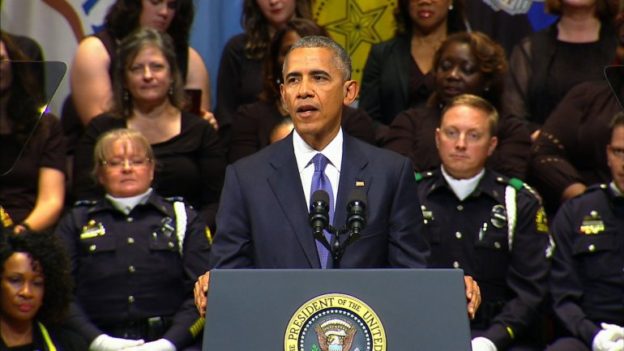
Awarding a posthumous honor to Master Sgt. Roddie Edmonds, an American serviceman who protected Jewish captives in a German POW camp, the aforementioned POTUS recalled Mr. Edmonds’ words to the camp’s commander, who had ordered Jewish prisoners to come forward: “We are all Jews.”

“We are all Jews,” explained Mr. Obama, “because anti-Semitism is a distillation, an expression of an evil that runs through so much of human history, and if we do not answer that, we do not answer any other form of evil.”

Gut gezokt.  Hear it well, Professor Auron.

© 2016 Hamodia

Agudath Israel Reaction to the “Kotel Compromise”

Designating an area at the Kotel Maaravi for feminist and mixed-gender prayer not only profanes the holy site, it creates yet a further lamentable rift between Jews.

For more than three decades, the Western Wall has been a place – perhaps the only one in the world – where Jews of all affiliations and persuasions have regularly prayed side by side.

What has allowed for that minor miracle has been the maintenance at that holy place of a standard – that of time-honored Jewish religious tradition – that all Jews, even those who might prefer other standards or none at all, can abide.

If the current plan is in fact realized, that will be no more.

Instead, there will be two options: some Jews at the Wall will pray at a space whose atmosphere respects and reflects traditional Jewish prayer, and others at a space that doesn’t.

Iranian Elephant

“Whatsa matter, you don’t like the other one?”

That was what an old-time comedian claimed his mother-in-law said when she saw him wearing one of the two neckties she gave him on his birthday.

The line comes to mind amid the lamentations over the lifting of sanctions on Iran in the wake of the country’s compliance with a main part of the deal it struck last year with the U.S. and other nations.  Iran has shipped 98 percent of its fuel to Russia, dismantled more than 12,000 centrifuges so they cannot enrich uranium, and poured cement into the core of a reactor designed to produce plutonium, the other path to a nuclear weapon.

In return, though, the U.S. and its partners agreed to lift international sanctions that had crippled Iran’s economy, releasing many billions in frozen oil-sale assets.  That’s not good news for the world, to be sure.  Iran is the greatest sponsor of terrorism in the world, and its religious leaders, who control the country, harbor a homicidal antagonism toward, among others, Israel.  The country was a most worthy candidate for membership in what George W. Bush named the Axis of Evil, and remains so.

Iran’s current leadership didn’t enter into the agreement out of any desire for peace or willingness to curb its nuclear ambitions.  It was brought to its economic knees by the sanctions (ridiculed as worthless when enacted), nothing more.

Still and all, seeing only the necktie not worn, the downside of the deal, isn’t right or wise.  There’s no question that the Western world’s high-stakes diplomacy with regard to Iran has made the world safer, at least for the next 10 to 15 years.

And afterward?

No one who isn’t a navi can know. But for those inclined toward informed prognostication, something to consider is the elephant in the Iranian room.

That would be the fact that the country has, in effect, two governments.  One is the elected administration of its president, Hassan Rouhani, which includes his Western-educated foreign minister, Mohammad Javad Zarif.

The other is the unelected clerical and military power center, the Revolutionary Guards, controlled by Iranian “Supreme Leader” Ali Khamenei, who, in the end, currently rules the roost.

Mr. Rouhani is considered reformist and pragmatic.  While he toes the anti-Israel “occupier” line, he famously condemned the Nazis’ murder of Jews during the Holocaust, in pointed contrast to his predecessor Mahmoud Ahmadinejad.

Mr. Khamenei, on the other hand, although he held his nose and permitted the Iran deal to go forward, makes no bones about his antipathy (to put it mildly) toward the West, spewing anti-American and anti-Israel venom in practically all of his speeches.

And since the nuclear agreement was reached in July, his security forces have stepped up arrests of political opponents, a crackdown seen as ensuring that hardliners dominate in national elections scheduled for Feb. 26, when voters will choose a new parliament and the administrative body empowered to select the successor to the 76-year-old and ailing Khamenei.

Some observers, however, see the hard-liners’ assertiveness as evidencing panic, born of what they perceive as a confluence of internal unrest – particularly among young Iranians, who chafe under the regime’s strict religious rules, and who protested en masse against the government in 2009 – and the impact of newly opened avenues to the West.

An Iranian businessman in Tehran recently told a visiting European delegation in hushed tones that “the fear is penetration from the West through business… They want to send the message that they still count.”

Hard-liners are trying to limit the number of reformist politicians eligible to run in next month’s election.  But Iranian analysts and politicians contend that Mr. Rouhani is working with a coalition of loyalists, technocrats and moderate religious leaders, in an effort to gain control of parliament.

Mindful of Chazal’s teaching that the only semblance of nevuah these days resides in children and fools (and well aware that my childhood lies in the distant past), I will not attempt to predict whither Iran is headed – whether, by the time the Iran deal’s term expires, the country’s government will be as intractably malevolent as it is under its current high administration, or whether a new generation of Iranians, having come of age since the “Islamic Republic” was created in 1979 and unhappy with its policies and rules, will have assumed the mantle of leadership.

Will the Western world’s gamble pay off?   None of us can know.  But we can hope that it will, and be mispallel.

© 2016 Hamodia