Category Archives: Politics

Mount-ing Tensions

It took years of complaints (mine among them) to The New York Times to get the Old Gray Lady to stop referring to Har Habayis as where the batei mikdash were “believed to have once stood,” and to respect reality by stating that “it is the site of two ancient temples.”

The paper even ran an “editor’s note” a few years back to clarify that “the headline and a passage” in an article had “implied incorrectly that questions among scholars about the location of the temples potentially affected Jewish claims to the site”; and that “unlike assertions by some Palestinians that the temples never existed,” there are no archeological findings that “challenge Jewish claims to the Temple Mount.”

Shkoyach. Chalk one up for history!

Unfortunately, the Beis Hamikdash doesn’t currently stand where it stood and where it will. And when the Har Habayis was captured along with the rest of Yerushalayim by Israel in 1967 during the Six-Day War, the Israeli government gave administrative control of the site to the Jordan-based Islamic trust known as the Waqf.

In keeping with the longstanding status quo that had prevailed until that point, Israel declared that only Muslim worship would be permitted on the Temple Mount. Israel’s leaders reasoned that changing the character of the site, where two Islamic edifices, the Dome of the Rock shrine and the Al-Aqsa Mosque, have long stood, would be seen by the Muslim world as a blatant affront. And so, to keep the peace, Israel allows only Islamic worship on the mount.

From a purely reasonable perspective, of course, prohibiting Jews from praying at Judaism’s holiest site is an absurdity. Reasonable perspectives, however, are rarities when it comes to the Middle East, and absurdities abound.

Israel’s decision to not change the character of the Temple Mount, discomfiting as it was, and remains, evidenced sensitivity and wisdom.

Neither of which are evident in the ongoing attempts by some to assert a Jewish presence on the Har Habayis.

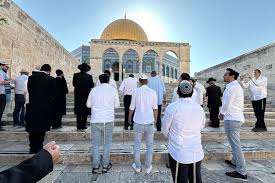
Increasingly, groups of Jews have ascended the Har Habayis and prayed there. They are motivated, no doubt, by fealty to history and Jewish pride, but their actions, nonetheless, are provocations. And gifts to Muslim extremists the world over who loathe Israel and Jews, and who are on constant lookout for any event, however tenuous, that they can portray as insulting to their faith.

And indeed, each time a group of Jews enters the compound, Arab media screamingly condemn what they laughably call “stormings” of the site.

No, they’re not stormings. But neither are they justifiable.

The “stormers” reject the opinion of gedolei Yisrael and the consensus view of Israel’s chief rabbis that Jews are barred by halachah from entering the compound. In 1967, the Israeli Chief Rabbinate ordered that a sign be posted at the Mughrabi Gate, the entrance to the Har Habayis for non-Muslims, warning that “According to Torah Law, entering the Temple Mount area is strictly forbidden due to the holiness of the site.”

But even those who rely on minority halachic rulings they say permit them to stand on part of the compound need to realize that not everything that’s permitted is necessarily wise. And asserting a Jewish presence on the Har Habayis today, in the context of raging global Israel-hatred, most certainly is not. The ascenders to the mount might feel inspired by standing on the holiest ground on earth, but there are 2 billion Muslims who, to put it delicately, don’t want them there.

Most recently, a small group of Jews entered the compound carrying a “Guide Page for the visitor to the Temple Mount,” newly published by the “Temple Mount Yeshiva.” Alongside instructions for visitors, the page pointedly includes the Shemoneh Esrei.

The man who heads the Temple Mount Yeshiva told Haaretz that he hopes the next stage will be the introduction of regular siddurim, and Jews wearing taleisos and tefillin.

To be sure, a new era of history will ensue when, in the navi Yeshayahu’s words, “a wolf and a lamb shall graze together,” when the entire world will recognize that Moshe emes viToraso emes.

But we’ve clearly not arrived there yet. And, in the interim, we are enjoined to not goad or incite other peoples or religions. That directive might be vexing, but doing the right thing often is.

(c) 2016 Ami Magazine

Walz Washout

Much attention has been given to the ascension of Zohran Mamdani to the mayoralty of New York City. 

But whether the future of the left wing of the Democratic Party is more accurately presaged by the election of a radical as mayor than by the downfall of a progressive governor is far from clear.

To read what I’m referring to, please click here.

Mikeitz – Lying Eyes

A botanist named Joseph Banks who was aboard Captain James Cook’s 1770 voyage recorded in his diary that while the 106-foot-long Endeavour sailed along the east coast of Australia, native fishermen totally ignored the large boat, the likes of which they surely had never before seen. 

Rashi (Beraishis 42:8) quotes the Gemara that explains the reason Yosef’s brothers didn’t recognize him when they appeared before him in his role as second in command of Egypt: They had last seen him as a teen and now he was a grown man with a full beard. 

But Yosef, the Midrash says, looked just like his father Yaakov, whom the brothers knew as a grown man, if one considerably older than the Yosef facing them. And so, he must have resembled surely bearded Yaakov when his brothers came before him in Egypt.

Perhaps, though, there was another element at play here, too, the sort of cognitive dissonance that might explain the Australian aborigines’ lack of reaction to the sudden appearance of the large ship. It has been speculated that they had no model in their imaginations for a vessel like the Endeavour and so their minds blocked out what was before their eyes, rendering it, for all purposes, invisible.

The very last place Yosef’s brothers could have imagined him being was on a throne in a powerful country. They had left him in the hands of slave-traders and “knew” that he was, if he was even alive, toiling somewhere as a lowly servant.  Might that “knowledge” have been at least part of why his face didn’t register with them, why they couldn’t see him even as he was right before their eyes?

Even in our times, we see the incredible power of assumptions and preconceptions, how blinding they can be. Even when faced with overwhelming evidence for the truth of something, whether a fair election or the need for a country to destroy an enemy pledged to its destruction, the fact can still remain for millions of people an unthinkable thought, and render what is right in front of them effectively invisible.

© 2025 Rabbi Avi Shafran

Vayeilech – Complementary Curses

The fact that the word tzaros in the phrase ra’os rabbos vitzaros – “many evils and troubles” (Devarim, 31:21) can mean not only “evils” but also “complementary” (for instance, as a description of the relationship of two wives of the same man – who are called tzaros) is seen as meaningful by Rav, in Chagiga 5a.

He explained that the Torah is predicting a time when some evils can be “complementary,” in the sense that addressing one will exacerbate the other, and vice versa.

The metaphor he cites is someone stung in the same place by both a hornet and a scorpion. The former sting’s pain is alleviated by a cold compress and intensified by a hot one; the latter’s, alleviated by a hot compress and intensified by a cold one. What can the stung person do? Whatever he chooses to do will leave him in greater pain.

To our anguish, we live in such times. The mortal danger that is Hamas, which is pledged to destroy the Jewish presence in our land, can only be “treated” by its utter destruction. And yet, seeing that goal to fruition is impossible without attacking the genocidal group’s forces, which are routinely embedded in hospitals and mosques, and among civilians.

Which means exacerbating world opinion, which chooses to see only the tragic but necessary wages of the war against Hamas and to ignore the terrorists’ declared goal.

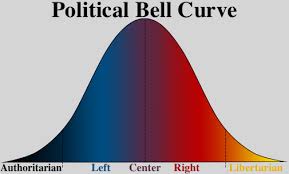
We Jews in the U.S. are experiencing hornet and scorpion stings of our own. The polarization of American society leaves us with the impossible choice of supporting a political movement that largely has embraced us and Israel, which choice brands us as adversaries in the eyes of those who oppose that movement’s antidemocratic tendencies. And if we declare our fealty to the democratic institutions that have undergirded our security and prosperity for so long, we alienate those who have most strongly championed our rights and Israel’s.

To Americans who value respect for the rule of law and political propriety, the MAGA world is a dire threat. To the MAGA world, those upholders of law and liberal (in the best sense of the word) values are the hazard.

And Jews, who have always actively participated in the democratic system and who seek both security and respect for law and propriety, are viewed suspiciously by both camps. And utterly despised by the fringe of each.

We pray for the Divine intervention that alone can alleviate the pain born of galus.

© 2025 Rabbi Avi Shafran