Can you remember the last time a consumer of rats merited an obituary in The New York Times? Me neither. But there recently was one, and you can read my thoughts about Flaco the owl here.

Can you remember the last time a consumer of rats merited an obituary in The New York Times? Me neither. But there recently was one, and you can read my thoughts about Flaco the owl here.
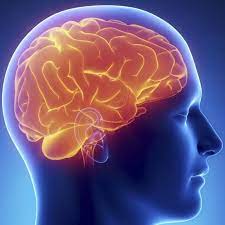
A piece I wrote for Religion News Service about “brain death” can be read here.

Seizing on the fact that the Hebrew word for a granary – osem – shares two letters with the word for “obscured” – samui – Chazal make an intriguing assertion: Blessing [i.e. increase in volume] is common only in things that are “obscured from the eye” (Bava Metzia 42a).
The pasuk on which that truth is based is in our parsha: “Hashem will order the blessing to be with you in your granaries [ba’asamecha]…” (Devarim, 28:8).
Rav Dessler (first chelek of Michtav M’Eliyahu, pg. 178 in my ancient edition) explains that what we call cause and effect, the essence of physics, is really an illusion; only Hashem’s will is operative, even in what we call physical nature. And so, when something is out of sight, where cause and effect cannot be perceived, His will can cause bracha in the hidden.
That idea of natural law’s suspension in the case of something beneath perception is vaguely, but tantalizingly, reminiscent of quantum physics’ “Schrödinger’s cat” thought experiment, where direct cause and effect is seemingly suspended – on the subatomic level, but with theoretical implications for the macroscopic world. The issue underlying Schrödinger’s paradox remains an unsolved problem in physics.
Be that as it may, though, something important will in fact be “obscured from the eye” in a few weeks: the moon, on Rosh Hashana. The moon is Klal Yisrael’s timekeeper, and time is the most fundamental element of nature. Klal Yisrael’s clock will not be visible on the first of the days of teshuva.
And time itself, in a sense, will be suspended then. Because we can interfere with its natural, relentless march forward – or, at least, with its unreachable past. Through the bracha of teshuva, which Chazal tell us can change the very nature of our pasts, traveling back, in a way, in time – turning past wrong actions done intentionally into actions done inadvertently; even, with the deepest teshuva, repentance born of pure love of Hashem, into meritorious acts.
© 2023 Rabbi Avi Shafran

A longform piece I wrote about the Noble Prize laureate physicist I.I. Rabi was published by Tablet, and can be read here.

It’s commonly, but erroneously, assumed that the symbol commonly used for the medical profession, a snake, or a pair of them, wrapped upon a pole, is meant as a depiction of the nachash hanechoshes that Moshe Rabbeinu fashioned, as per Hashem’s command. The Jewish people were to gaze upon it and be cured of the plague of poisonous snakes they were facing.
But the symbol used today comes to us from Greek mythology, associated with the imagined divinities, a depiction of the “Rod of Asclepius” (or, when there is a pair of reptiles, the caduceus).
How a staff and snake (or snakes) came to be associated with those Hellenistic “gods” is anyone’s guess. But it is certainly possible that the Torah’s narrative about the nachash hanechoshes found its way into ancient cultures, which may have repurposed the image for inclusion in their own idolatrous belief systems.
But that the symbols have come to represent the power of medicine is fascinating. Because the original staff and snake, although it was intended to focus our ancestors’ attention on the dangers of the desert and how Hashem had been protecting them (see Rav Hirsch), was kept over generations by the Jews and eventually came to be an object of worship. The melech Chizkiya put an end to that by deriding it as nechushtan (“the snakey thing”) and grinding it to copper dust (Melachim Beis, 18:4).
The medical profession itself has followed a similar trajectory.
It has enjoyed the public’s reverence since the time of Hippocrates and Galen. Even when the reigning medical theory revolved around the “four humors” or when lobotomies and trepanning were considered normative treatments for mental illness.
Medicine has come a long way since then. But even today, it is considered legitimate medical practice to abort healthy fetuses for any (or no) reason and to help people end their lives.
Medical knowledge is a blessing. As are doctors who employ it without hubris. But medical professionals who see themselves as gods (tov shebirof’im…) are self-made idols. And those who revere them as such mistake the messenger for the true Rofei cholim.
No modern-day Chizkiya has yet appeared. But the contemporary snake and staff deserve the treatment the ancient one received.
© 2023 Rabbi Avi Shafran

Incentivizing the donation of a part of one’s body is inherently objectionable to many. But should it be?
A musing on that issue can be read here.

If you are old enough to have lived through the ’70s, you may not remember the end of the world, because, well, it didn’t happen. But it was scheduled to, as you can read here.

You’ve likely met some members of the infraorder Fulgoromorpha (in, of course, the suborder Auchenorrhyncha). That is to say: lanternflies.
What to do about it, considering the damage it stands accused of causing? Well, you can read an answer here.

An old piece with a connection to Rosh Chodesh can be read here.

Good news for ears has come down the pike. And it raises a good question that isn’t often raised but should be.
To read what happened and what I mean, please click here.