Category Archives: Science

Devarim – Starry, Starry Night

It’s rare for city dwellers to truly see the night sky. Only once, many years ago, driving on a moonless night in West Virginia, did I fully perceive the vast number of stars – nearby planets and distant suns – that were a regular part of people’s lives before the advent of electrical lights.

Although I also (to my shock and delight) saw the Milky Way, the galaxy of which our solar system is part, the billions of individual stars within it cannot be differentiated by the naked eye.

How many stars can be seen with the unaided eye? Hundreds, for certain, maybe even thousands. 

Which leads me to a puzzle. Why are the “stars of the heavens” used by the Torah to mean truly huge numbers? Like in Beraishis 22:17 and Devarim 28:62 and in our parshah (1:10)?

Rashi makes the puzzle even more puzzling: “But were they [the Jewish people] on that day as [many as] the stars of the heavens? Were they not only six hundred thousand?”

In fact, including women and children, they were at least two million. Certainly many more than the stars that our eyes can make out on the starriest of nights.

There are midrashim and commentaries that see the Torah’s star/Jewish People comparisons as indicating something qualitative, not quantitative, like the midrash cited by Rashi on the pasuk in our parshah, which sees the reference indicating Klal Yisrael’s eternal nature. Or Rav Avraham Yitzchak Kook’s suggestion that, just as stars are used for navigation, so are the Jews to live lives to guide other nations, to be a “light unto” them. Perhaps he saw the word larov, “in abundance,” as implying larav, “as a teacher.”  But the word’s simple sense cannot be ignored.

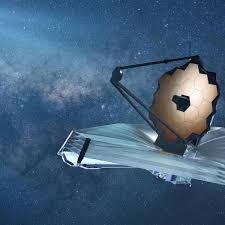
I don’t have an answer to the puzzle, only an observation. Namely, that today we know the Milky Way isn’t a “heavenly river,” as might be the meaning of Nehar Dinur (the “river of light” referenced in Chagigah 14a), some undifferentiated band of light, but rather a collection of billions of stars. And that science, most recently the Webb space telescope, has already revealed unimaginable numbers of stars in untold numbers of galaxies far, far beyond our own.

© 2022 Rabbi Avi Shafran

“Is Anybody There?”

“Is anyone there? Can you hear me?” You shout at the rubble of a collapsed building. No reply, but then… was that tapping?

You have an idea. “If you can understand me,” you yell, “tap once.” A single tap. “If you’re injured,” you then say, “tap twice.” Two taps. There’s someone there.

An apt metaphor for something very important. To read what, please click here.

Parshas V’zos Habracha – Spacewarps

A Roman emperor, according to a Midrashic account (Sifri, Devarim 357), sent two army units to find Moshe Rabbeinu’s burial site. When they stood above it on a hill, they saw it below. When they descended the hill, they saw it above them.

“So, they split up, half above and half below; those above saw it when they looked down, and those below saw it when they looked up.” But neither group could reach the grave.

Which reflects the Torah’s text “No one knows his burial place to this day” (Devarim 34:6).

The space warping recalls that of the aron in which Moshe’s luchos lay.

Rabi Levi (Yoma 21a) notes a mesorah that “the place of the aron is not included in the measurement” – that the kodesh hakadashim measured twenty amos by twenty amos, yet a beraisa states that there were ten amos of space on either side of the aron.

It was there, to be sure, but took up no space.

And Moshe’s grave exists but flips in and out of space.

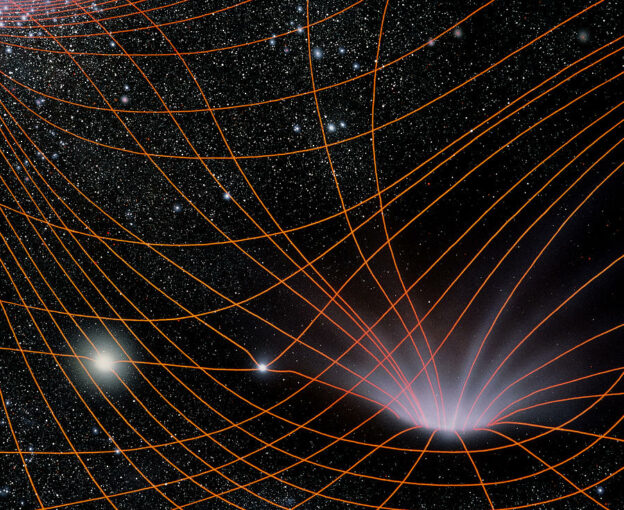
The idea that space is a given, and cannot be interrupted or bent in any way, was the dominant scientific assumption… until Einstein. Today we know that space, like time, is not a simple unchangeable grid. It can be warped, even torn. And the fact that the assigned place of the Law and the final resting place of the G-d-sent human Lawgiver don’t “fit” space as we know it may mean to telegraph the truth that the Torah, while it was given us in our cozy, seemingly three- (or four, counting time) dimensional universe, encompasses it but exists outside it.

It’s a fitting thought as we transition to the beginning of the Torah, where the first pasuk states that “heaven and earth” were brought into being. Or, as a modern astrophysicist might put it, that space and time themselves came to be, expanding from an unknowable singularity into what we call our universe.

© 2021 Rabbi Avi Shafran

Parshas Vayikra – A Most Meaningful Mineral

The word “sacrifices” used for korbanos, the mainstay topic of parshas Vayikra, is a misnomer. Korban doesn’t carry the meaning of “giving up something.” Its most accurate, if awkward, translation would be “bringer of closeness.”

How closeness is effected by korbanos may have to do, at least in a simple sense, with the hierarchy of creation noted in many Jewish sources, domeim, tzomei’ach, chai, medaber: “still” (mineral), “growing” (vegetation), “living” (animal) and “speaking” (human). 

By establishing the korban-bringer as subjugating and employing the lower realms (which are all represented in korbanos), he is placing himself closer to Hashem, in Whose image he was created.

Interestingly, the “still,” or mineral component of korbanos, is a necessary component of all korbanos, both animal and vegetable (i.e. menachos, or flour offerings): salt.   “On your every offering shall you offer salt” — Vayikra 2:13).

Rishonim like Ramban and Rabbeinu Bachya, who assert that salt is a combination of water and fire may have based that description on the simple observation of the fact that salt can be obtained through saltwater and that salt can “burn” vegetation and skin. Or maybe the description is meant as symbolic and is part of a mystical mesorah.

But whatever the source of their assertion, they see salt as representing a combination of opposites, of antagonists, which informs the use in parshas Vayikra of the word bris, or “covenant,” in the pasuk quoted above, to refer to the mineral.

The Kli Yakar explains that the “covenant [of opposites]” that salt represents conveys the idea that Dualist philosophies like Manichaeism are false. Hashem is King over all; what may seem like irreconcilable opposites are all ultimately under His control. 

I find it intriguing that, in the paradigm of contemporary physics, salt is indeed a compound of two disparate (if not “opposite,” whatever that might mean in the periodic table) elements: sodium and chlorine.  Both are highly reactive. (Countless chemistry teachers got the attention of their students by dropping a piece of sodium into a container of water.) 

And each is invariably fatal if ingested. Both, in other words, are poisons.

And yet, the ionic compound that results from the two elements’ “covenant” is a mineral that is necessary for life, that flavors our food, that preserves perishables… and that must be part of every korban

© 2021 Rabbi Avi Shafran

Plumbing the Meaning of the Torah’s First Word

The Torah’s first verse is purposely unclear.  As the Ramban, Nachmanides, points out, the deepest truths of how the universe was created are unfathomable and inscrutable, hidden, ultimately, in the realm of mysticism, not physical science.

It is intriguing, though, that the Torah’s first word, “Bereishis,” implies, as the Seforno explicitly states, that time itself is a creation – a notion that comports with traditional cosmological physics (if not with scientists who, terrified at the notion of a “beginning,” postulate a “multiverse” of universes, conveniently beyond observation).

Likewise intriguing is that, according to the Talmud, the Torah’s first word can be split into two words, “bara” and “shis.”  While the Gemara sees in “shis” a hint to an Aramaic word meaning “conduit,” hinting to an underground channel into which liquid poured on the mizbe’ach would descend (a channel created at the beginning of time – Sukkah, 49a), the word can also, most simply, mean “six.”

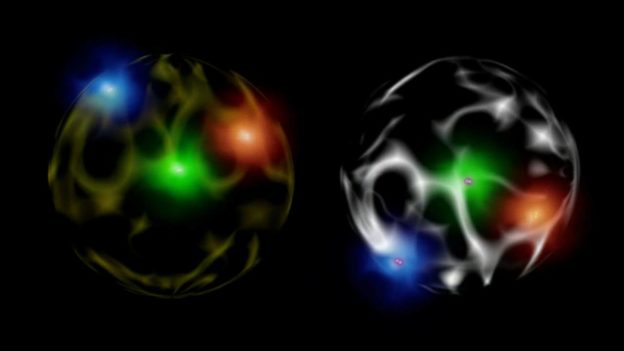
As in the six types of quarks, currently believed to be the fundamental particles of which all matter is, ultimately, comprised.

“He created six”? 

The Real Story Behind the Vaccine Story

One of the Covid-19 vaccines being studied has yielded encouraging results. That good news should yield us something too: a sense of awe at the accomplishment.

Earlier this week, the biotech company Moderna, which partnered with the National Institutes of Health to develop the vaccine, announced that results of a Phase 1 clinical trial showed that eight study participants developed antibodies for the virus like those who have experienced and survived the disease. And lab experiments with mice showed that the vaccine prevented the virus from infecting cells.

The study hasn’t yet been peer reviewed, and Phase 2 trials, which will involve several hundred subjects, are yet to come. But even the achievement to date is impressive.

If our wonderment, however, is only at the amazing progress toward, hopefully, a successful vaccine, we will have missed the truly awe-inspiring story behind the story.

A vaccine, you likely know, works by stimulating immune cells called lymphocytes to produce antibodies, specialized protein molecules that counter the targeted antigen, or toxic invader, and thus prevent the disease it could cause from taking hold.

Vaccines are made of dead or weakened antigens that can’t cause an infection but nevertheless stimulate the immune system to produce the necessary antibodies. Although with time, the produced antibodies will break down, special “memory cells” remain in the body and, when the antigen is encountered again, even years later, the memory cells can produce new antibodies to fight it.

This happens within our bodies constantly.

According to the Centers for Disease Control and Prevention (CDC), a healthy individual can produce millions of antibodies a day, fighting infections so efficiently that people never even know they were exposed to an antigen.

Last year, a team of scientists at Scripps Research Institute in San Diego published results of their antibody research in the respected journal Nature. Based on their findings, they estimated that the human body has the potential to make a quintillion — that’s one million trillion — unique antibodies.

Imagine for a moment if the workings of our immune systems were suddenly made visible to us.

We would be struck dumb.

“If the stars should appear,” wrote Ralph Waldo Emerson, only “one night in a thousand years, how would men believe and adore; and preserve for many generations the remembrance of the city of G-d which had been shown! But every night come out these envoys of beauty, and light the universe with their admonishing smile.”

Our immune systems, like the stars, are usually and easily taken for granted; their very ubiquity makes it hard to fully appreciate them. But appreciating them is the privilege, indeed the duty, of every thinking, sensitive person.

Returning to this week’s happy news. Is what really amazes us the technological breakthrough that could lead to an effective vaccine? Or is the true object of our astonishment and wonder the suddenly focused-upon workings of our biological processes?

Once upon a time, after all, heart transplants, too, were flabbergasting. But, at least to thoughtful people, they were never remotely as amazing as hearts.

Back in 1996, a sheep named Dolly was successfully cloned, the first such triumph. I recall the admiration, wonder and dread that the accomplishment evoked around the world.

What exactly had scientists done? They had managed to transfer a cell from the mammary gland of an adult sheep into another sheep’s unfertilized egg cell whose nucleus had been removed; and the egg cell was then stimulated to develop, and eventually implanted in the womb of yet a third sheep, which bore Dolly.

I recall thinking at the time that, impressive as the experiment was, all that had essentially been achieved was the coaxing of already existent genetic material to do precisely what it does, well, all the time. The achievement of producing Dolly bas Dolly was, to be sure, a major one; myriad obstacles had to be overcome, and a single set of chromosomes, rather than the usual pair from two parents, had to be convinced to do the job.

But, still and all, other than the unusual means of bringing it about, what was witnessed was a natural process that takes place millions of times in millions of species each and every day without capturing anyone’s attention. A natural process that was, like all natural processes in the end, a miracle — no less one for its ubiquity.

Likewise, with all due recognition of the great and praiseworthy efforts to create an effective vaccine for Covid-19, may they be successful, what happened this week was, in the end, a cajoling of immune systems to do… what immune systems do billions of times daily.

So our proper appreciation of the scientific knowledge we have today, and our gratitude to the scientists that used that knowledge to advance the drive for an effective vaccine should be joined by — indeed, overwhelmed by — our ultimate awe for the immune systems with which our Creator endowed us.

Whether it’s manipulating the creation of a sheep fetus or of an immune response, the true marvel lies not in the manipulation but in the manipulated, in the myriad miracles Hashem implanted in the world He created.

© 2020 Rabbi Avi Shafran