The Guardian lets down its guard
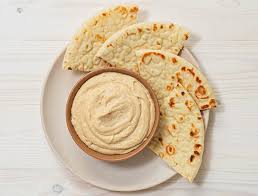
“First comes the hummus: studded with chickpeas, anointed with a little reservoir of olive oil, greedily smeared up with hunks of pitta [sic] bread and messy fingers. Then the tabbouleh, then some homemade falafels…”
Thus opened an article in The Guardian, the London daily that is considered Britain’s “paper of record,” like our country’s The New York Times. And, like The Times, it has a denied but evident bias against Israel and Jews.
The details of the sumptuous meal continued through several deliriously described courses and dessert (baklava and homemade chocolate, if you really must know). The writer, the paper’s sports writer and opinion columnist Jonathan Liew, was feasting at a successful North London Arab-run eatery called Cafe Metro.
He wasn’t writing a food column. It was, rather, a report on a controversy swirling around Cafe Metro and a new nearby branch of an popular upscale bakery called Gail’s.
The night before it was due to open, the bakery was vandalized with red paint. Less than a week later, all its windows were smashed in. Slogans reading “reject corporate Zionism” and various obscenities were scrawled on its walls.
Gail’s describes itself as “a British business with no specific connections to any country or government outside the UK,” but its parent company, Bain Capital, reportedly invests in military technology, including some Israeli security companies. Bad bakery!
Mr. Liew, after noting how Cafe Metro, “proudly blazons its Palestinian heritage” with a public display of flags, describes it lovingly as “a source of comfort and community in troubling times, resistance in its tastiest and most delicately spiced form.” And goes on to contend that “the very presence of [Gail’s] 20 metres away from a small independent cafe feels quietly symbolic, an act of heavy-handed high-street aggression.”
Gail’s, the writer seems to imply, has no business being a business.
Many people saw Mr. Liew’s description of the bakery’s opening, “an act of heavy-handed, high-street aggression” as, well, an act of heavy-handed Fleet Street aggression.
It was also an example of utterly corrupt journalism. Mr. Liew wasn’t quoting the Arab owners of Cafe Metro – who would be misguided enough to characterize Gail’s as an aggressor for simply existing. It was the columnist’s own ostensible statement of fact.
Making matters even more outrageous, the piece, which included no quotes from anyone connected to Gail’s, dismissed the window-smashing and paint smearing as “small acts of petty symbolism.”
A slew of complaints about the column was registered by, among many others, Conservative Party leader Kemi Badenoch, who called the column “disgusting,” “appalling” and “ridiculous.”
With typical droll British humor. Senior Barrister Simon Myerson referenced the paper’s record of bias, writing: “I see the Guardian is having an antisemitic moment. Sorry, another antisemitic moment.”
The Guardian later edited the piece, “repositioning” the objectional “aggression” wordage “to clarify it meant to refer to the described fears about the chain’s impact on small traders.”
Also, “to avoid misunderstanding,” the paper removed the “small acts of petty symbolism” phrase, which, it explained, “was not intended to minimize local vandalism but rather to suggest its misdirected futility.”
All of which really misses the real point. It was the framing of the entire piece that was, and remains, journalistically objectionable.
After hundreds of words extolling the gustatory delights of Arab cuisine, Mr. Liew dwells for hundreds more on how the family of one of Cafe Metro’s operators “once lived in the city of Beit Hanoun in Gaza, and now lives out a precarious and hunted existence in one of Gaza’s many temporary refugee camps…”
And he contrasts that with how “Gail’s has long been feted as a purveyor of luxury baked goods and is an unmistakable barometer of local affluence.” Even though the chain is not currently owned by Jews or Israelis, the insinuation is as obvious as it is odious.
And Mr. Liew concludes with the observation that the two businesses “have found themselves on the frontline of a war. A deeply asymmetric war, defined by gross imbalances in power and resources and platforms.”
There is in fact a gross imbalance here. It lies in the shameless portrayal of a vandalized victim as an aggressor, opposite a reverent, adulatory portrayal of an imagined victim.
(c) 2026 Ami Magazine