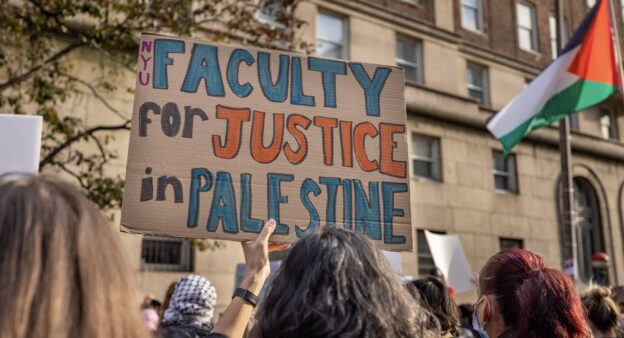
There was a time, dear young’ns, when academia – the world of universities and professors – was the gold standard, the go-to place for ascertaining truths. A time when scholarship was objective and reliable; and scholars, the same.
The most recent reminder that things have changed arrived recently in the sad saga of Jason Arday, one of Britain’s most prominent young academics, who, in 2003, rose to become Cambridge University’s youngest black professor at just 37.
He was renowned for having been mute until he was 11, illiterate until he was 18 and yet later completed a PhD and published widely-praised sociological research. When he was hired by Cambridge, the head of its department for education told him: “You are the best in the world in terms of the research that you do.”
Professor Arday also wrote about running marathons, and that he ran 600 miles in six days.
Sound too amazing to be true? Well, it was.
Mr. Arday stood accused of not only falsifying his life story and academic credentials, but also of having plagiarized his PhD thesis. He canceled a series of events promoting his memoir “Great and Unfortunate Things,” and resigned from Cambridge, because, he explained, the public scrutiny had been bad for his mental health.
It clearly was, since he was discovered on erev Shabbos to have died.
Mr. Arday’s field of academic endeavor was sociology, and it wouldn’t have been wrong to characterize him as woke. In a keynote speech at the British Sociological Association, he contended that white conservative activists target black academics and are a “cancer” to be “eradicate[d] from academia.” He did not write or speak about Jews or the Middle East, but his wokeness and fabulism was very much of a kind with that of other professorial prevaricators who did.
Like former Harvard University dean of social science Claudine Gay, who famously, at a Congressional hearing, said that calling for the genocide of Jews might perhaps violate the school’s code of conduct, “depending on the context.”
Dean Gay later was later accused of, in the delicate words of The New York Times, “using material from other sources without proper attribution.” The plagiarism allegations totaled almost 50 instances spanning eight of her academic works, including her dissertation and five of her 11 published articles.
Ms. Gay resigned, saying that having “doubt cast on my commitments to confronting hate and to upholding scholarly rigor” has been “distressing.” Understandably.
Back in 2005, Columbia University Professor Rashid Khalidi, who calls Israel a “colonial” project and ignores Jewish historical ties to Eretz Yisrael, was accused of plagiarizing significant portions of another writer’s 1994 article.
While it’s interesting that plagiarizing and vilifying Israel and/or Jews seem to enjoy a cozy relationship, there are all too many academics who, even if they haven’t been caught stealing from others, are nevertheless guilty of another, even worse, academic sin: Bias.
Two Anti-Defamation League reports that just came down the pike reveal rising levels of antisemitism and anti-Zionism in university classrooms. Some instructors are assigning readings by terrorist groups and – not a joke – offering extra credit for attending anti-Israel protests.
One of the reports cites incidents of professors presenting one-sided narratives, framing lectures around a single political view and treating contested claims as settled fact. Criticism of Israel without presenting counterarguments is worse than plagiarism; it is educational malpractice.
Stanford University, for one example, offers a course called “Palestine Across Disciplines: An Introduction” and asks in its description, “How do we talk about Palestine and Palestinian life in the midst of devastation and genocide?” Somehow, one imagines, the true genocidal actors in the Middle East are untalked about in the course.
And at the University of California, Berkeley, history students were reportedly assigned to read a book by a former spokesperson for the terrorist Popular Front for the Liberation of Palestine, alongside materials on plane hijacker Leila Khaled. (Alan Dershowitz’s “The Case for Israel” did not appear on the reading list.)
According to Gallup, the percentage of U.S. adults who say they have “quite a lot” of confidence in higher education has fallen 19 points since 2015 to just 38 percent.
For good reason.
© 2026 Ami Magazine