Anyone interested in a Zoom presentation on “The Hidden Haggadah: Subliminal messages in our Seder text” is welcome to join me at 4:00 pm tomorrow (4/1)
Meeting ID: 388 827 398 Password: 573128
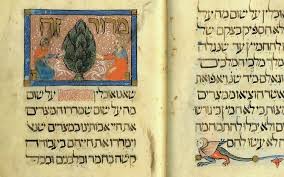
Anyone interested in a Zoom presentation on “The Hidden Haggadah: Subliminal messages in our Seder text” is welcome to join me at 4:00 pm tomorrow (4/1)
Meeting ID: 388 827 398 Password: 573128
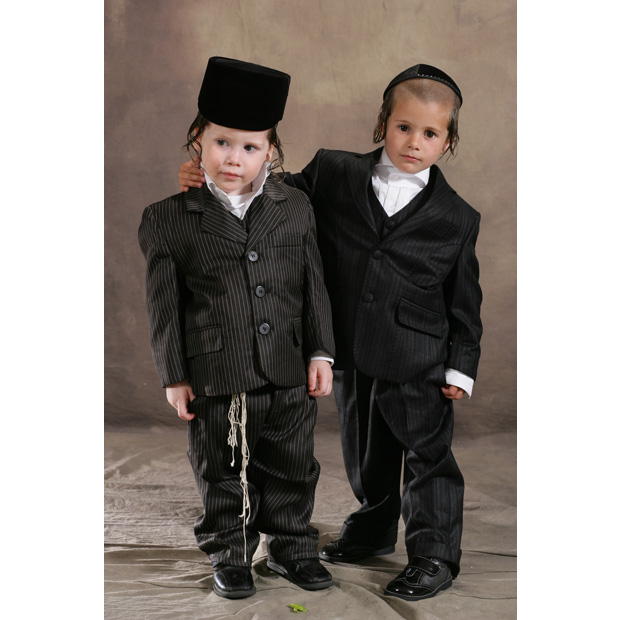
My Purim’s highlight was an interaction I had with two little boys, no older than 8 or 9. The shul I attend is often visited by a number of “collectors” asking for small donations, usually for the poor or needy institutions. Usually they are adults, with documentation backing the legitimacy of their quest for donations.
Sometimes, children approach people on behalf of their yeshivos or other charitable causes. On Purim, such undersized collectors abound. I must have been approached by little people 20 or 25 times. When my stash of dollar bills was down to one, wouldn’t you know, two youngsters approached me at the same time.
I smiled and showed them my last bill, identifying it as such. One boy, whose hand held more revenue that the other boy’s, unhesitatingly pointed to the other and said “Please give him.”
Which I did.
But the boy who directed me to the other one gave me something priceless, the story I just shared.

I used to pass the fellow each morning years ago as I walked up Broadway in lower Manhattan on my way to work. He would stand at the same spot and hold aloft, for the benefit of all passersby, one of several poster-board signs he had made. One read “I love you!” Another: “You are wonderful!”
He seemed fairly normal, well-groomed and decently dressed, and he smiled broadly as he offered his written expressions of ardor to each of us rushing to our respective workplaces. I never knew what had inspired his mission, but something about it bothered me.
Then, one day, I put my finger on it. It is ridiculously easy to profess true love for all the world, but a sincere such emotion simply isn’t possible. If one gushes good will at everyone, he offers it, in fact, to no one at all.
By definition, care must exist within boundaries, and our love for those close to us – our families, our close friends, our fellow Jews – is of a different nature than our empathy for others outside our personal lives.
What is more, and somewhat counterintuitive, is that only those who make the effort to love their immediate families, friends and other Jews have any chance of truly caring, on any level at all, about all of mankind.
The thought, it happens, is most appropriate for this time of Jewish year, as Sukkos gives way, without so much as a second’s pause, to Shemini Atzeres (in the Gemara’s words, “a Yom Tov unto itself.”)
While most Yamim Tovim tend to focus on Klal Yisrael and its particular historical narrative, Sukkos, interestingly, also includes something of a “universalist” element. In the times of the Beis Hamikdash, the seven days of Sukkos saw a total of seventy parim-korbanos offered on the mizbei’ach, the bulls corresponding, says the Gemara, to “the seventy nations of the world.”
Those nations – the various families of people on earth – are not written off by our mesorah. We Jews are here, the Navi exhorts, to be an example to them. A mere four days before Sukkos’s arrival, on Yom Kippur, Yidden the world over heard Sefer Yonah, the story of the Navi who was sent to warn a distant people to do teshuvah, and who, in the end, saved them from destruction.
Similarly, the korbanos in the Beis Hamikdash, the Gemara informs us, brought Divine brachos down upon all the world’s peoples. Had the ancient Romans known just how greatly they benefited from the merit of the avodah, Chazal teach, instead of destroying the structure, they would have placed protective guards around it.
And yet, curiously but pointedly, Sukkos’s recognition of the value of all humanity is made real by the Chag that directly follows it, Shemini Atzeres.
The word atzeres can mean “refraining” or “detaining,” and the Gemara (Sukkah, 55b) teaches that Shemini Atzeres (literally: “the eighth day [after the start of Sukkos], a detaining”) gives expression to Hashem’s special relationship with Klal Yisrael.
As the well-known Midrashic mashal has it:
A king invited his servants to a large feast that lasted a number of days. On the final day of the festivities, the king told the one most beloved to him, “Prepare a small repast for me so that I can enjoy your exclusive company.”
That is Shemini Atzeres, when Hashem “detains” the people He chose to be an example to the rest of mankind – when, after the seventy korbanos of the preceding seven days, a single par, corresponding to Klal Yisrael, is brought on the mizbei’ach on that eighth day.
We Jews are often assailed by others for our belief that Hashem chose us from among the nations to proclaim His existence and to call on all humankind to recognize our collective immeasurable debt to Him.
Those who are irritated by that message like to characterize the special bond Jews feel for one another as hubris, even as contempt for others.
The very contrary, however, is the truth. The special relationship we Jews have with each other (yielding ahavas Yisrael); and with Hakadosh Baruch Hu (yielding ahavas Hashem) – the relationships we acknowledge in particular on Shemini Atzeres – are what provide us the ability to truly care – with our hearts, not our mere lips or poster boards – about the rest of the world.
Those deep relationships are what allow us to hope – as we declare in Aleinu thrice daily – that, even as we reject the idolatries that have infected the human race over history, “all the peoples of the world” will one day come to join together with us and “pay homage to the glory of Your name.”
© 2019 Hamodia
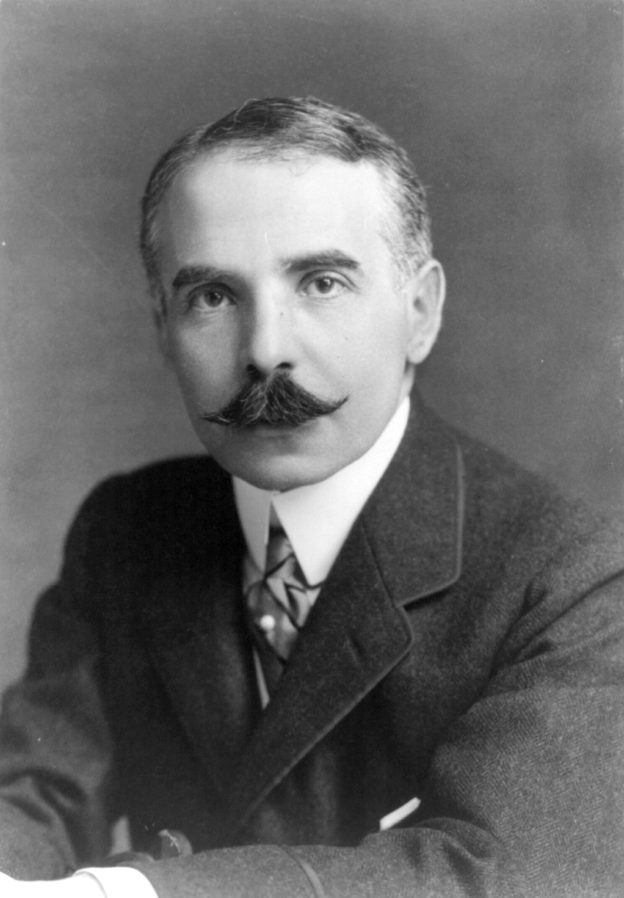
The famous early 20th century German-born American financier Otto Kahn, it is told, was once walking in New York with his friend, the humorist Marshall P. Wilder. They must have made a strange pair, the poised, dapper Mr. Kahn and the bent-over Mr. Wilder, who suffered from a spinal deformity.
As they passed a shul on Fifth Avenue, Kahn, whose ancestry was Jewish but who had received no Jewish chinuch from his parents, turned to Wilder and said, “You know, I used to be a Jew.”
“Really?” said Wilder, straining his neck to look up at his companion. “And I used to be a hunchback.”
The story is in my head because we’re about to recite Kol Nidrei.
Kol Nidrei’s solemnity and power are known well to every Jew who has ever attended shul on the eve of the holiest day on the Jewish calendar. It is a cold soul that doesn’t send a shudder through a body when Kol Nidrei is intoned in its ancient, evocative melody. And yet the words of the tefillah – “modaah” would be more accurate – do not overtly speak to the gravity of the day, the last of Aseres Yemei Teshuvah.
They speak instead to the annulment of nedarim, vows, specifically (according to prevailing Ashkenazi custom) to undermining vows we may inadvertently make in the coming year.
Nedarim, the Torah teaches, have deep power; they truly bind those who utter them. And so, we rightly take pains to avoid not only solemn vows but any declarative statements of intent that could be construed as vows. So, that Yom Kippur would be introduced by a nod to the gravity of neder-making isn’t entirely surprising. But the poignant mournfulness of the moment is harder to understand.
It has been speculated that the somber mood of Kol Nidrei may be a legacy of distant places and times, in which Jews were coerced by social or economic pressures, or worse, to declare affiliations with other religions. The text, in that theory, took on the cast of an anguished renunciation of any such declarations born of duress.
Most of us today face no such pressures. To be sure, missionaries of various types seek to exploit the ignorance of some Jews about their religious heritage. But few if any Jews today feel any compulsion to shed their Jewish identities to live and work in peace.
Still, there are other ways to be unfaithful to one’s essence. Coercion comes in many colors.
We are all compelled, or at least strongly influenced, by any of a number of factors extrinsic to who we really are. We make pacts – unspoken, perhaps, but not unimportant – with an assortment of mastinim: self-centeredness, jealousy, anger, desire, laziness…
Such weaknesses, though, are with us but not of us. The Amora Rav Alexandri, the Gemara teaches (Berachos, 17a), would recite a short tefillah in which, addressing Hashem, he said: “Master of the universe, it is revealed and known to You that our will is to do Your will, and what prevents us? The ‘leaven in the loaf’ [i.e. the yetzer hora] …” What he was saying is that, stripped of the rust we so easily attract, sanded down to our essences, we want to do and be only good.
Might Kol Nidrei carry that message no less? Could its declared disassociation from vows reflect a renunciation of the “vows”, the unfortunate connections, we too often take upon ourselves? If so, it would be no wonder that the recitation moves us so.
Or that it introduces Yom Kippur.
When the Beis Hamikdosh stood, Yom Kippur saw the kiyum of the mitzvah of the Shnei Se’irim. The Cohen Gadol would place a lot on the head of each of two goats; one read “to Hashem” and the other “to Azazel” – according to Rashi, the name of a mountain with a steep cliff in a barren desert.
As the Torah prescribes, the first goat was sacrificed as a korban; the second was taken through the desert to the cliff and cast off.
The Torah refers to “sins and iniquities” being “put upon the head” of the Azazel goat before its dispatch. The deepest meanings of the chok, like those of all chukim in the end, are beyond human ken. But, on a simple level, it might not be wrong to see a symbolism here, a reflection of the fact that our aveiros are, in the end, foreign to our essences, extrinsic entities, things to be “sent away,” banished by our sincere repentance.
In 1934, when Otto Kahn died, Time Magazine reported that the magnate, who had been deeply dismayed at the ascension of Hitler, ym”s, had, despite his secularist life, declared: “I was born a Jew, I am a Jew, and I shall die a Jew.”
Mr. Kahn may never have attended shul for Kol Nidrei. But perhaps a seed planted by a hunchbacked humorist, and nourished with the bitter waters of Nazism, helped him connect to something of the declaration’s deepest meaning.
© 2019 Hamodia
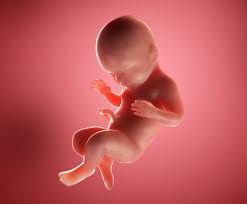
Thoughts of consequence can sometimes arise from the most mundane experiences, even a headache.Opening the medicine cabinet one day, I was struck by a sticker on a prescription container.
“Not for use by pregnant women,” it read.
“And why not?” part of my aching head wondered.
Because, another part answered, a fetus is so much more sensitive to the effects of chemicals than a more developed person. Partly, of course, because of its very tininess, but more importantly because it is an explosively, developing thing. While a single cell is growing to a many-billions-of-unbelievably-variegated-cells organism in a matter of mere months it is easily and greatly affected by even subtle stimuli.
Which thought led, slowly but inexorably, to others, about the creation of the world – the subject, soon, of the parshas hashovua – and about the beginning of a new Jewish year.
“The Butterfly Effect” is the whimsical name science writers give to the concept of “sensitive dependence on initial conditions” – the idea that beginnings are unusually important. A diversion of a single degree of arc where the arrow leaves the bow – or an error of a single digit at the beginning of a long calculation – can yield a difference of miles, or millions, in the end. For all we know, the flapping of a butterfly’s wings halfway around the world yesterday might have set into motion a hurricane in the Atlantic today.
The most striking butterfly effects take place during formative stages, when much is transpiring with particular rapidity. Thus, the label on the medication; the gestation of a fetus, that single cell’s incredible journey toward personhood, is strikingly responsive to so much of what its mother does, eats and drinks. The developing child is exquisitely sensitive to even the most otherwise innocent chemicals because beginnings are formative, hence crucial, times.
Leaving the realm of the microcosm, our world itself also had a gestation period, six days’ worth. Interestingly, just as the initial developmental stage of a child takes place beyond our observation, so did that of the world itself. The event and processes of those days are entirely hidden from us, the Torah supplying only the most inscrutable generalities about what actually took place then. Thus, Chazal applied the posuk “the honor of Hashem is the concealment of the thing” (Mishlei, 25:2) to the days of creation. Honest scientists admit the same. E.A. Milne, a celebrated British astronomer, wrote “In the divine act of creation, G-d is unobserved and unwitnessed.”
Despite our inability, however, to truly know anything about the happenings of the creation week, to think of those days as a gestational time is enlightening. It may even help explain the apparent discrepancy between what we know from the Torah is the true age of the earth and what the geological and paleontological evidence seem to say
Consider: What would happen if the age of an adult human since hisconception were being inferred by a scientist from Alpha Centauri, using only knowledge he has of the human’s present rate of growth and development? In other words, if our alien professor knew only that the individual standing before it developed from a single cell, and saw only the relatively plodding rate of growth currently evident in his subject, he would have no choice but to conclude that the 30-year-old human was, in truth, fantastically old. What the Alpha Centurion is missing, of course, is an awareness of the specialized nature of the gestational stage of life, the powerful, pregnant period before birth, with its rapid, astounding and unparalleled rate of development.
If we recognize that a similar gestational stage existed for the universe as a whole at its creation – and the Torah tells us to do precisely that – then it is only reasonable to expect that formative stage to evidence a similarly accelerated rate of development, with the results on the first Shabbos seeming in every detectable way to reflect millions of years of development, eons that occurred entirely within the six days of the world’s explosive, embryonic growth.
Rosh Hashana is called “the birthday of the world.” But the Hebrew word there translated as “birth of” – haras – really refers to the process of conception/gestation. And so, annually, at the start of the Jewish year, it seems in some way we relive the gestational days of creation. But more: those days are formative ones, the development period for the year that is to follow. Beginning with the “conception-day” of Rosh Hashana itself and continuing until Yom Kippur, the period of the early new Jewish year is to each year what the creation-week was to the world of our experience: a formative stage.
All of which may well lend some insight into a puzzling halacha.
We are instructed by the Shulchan Aruch to conduct ourselves in a particularly exemplary manner at the start of a new Jewish year. We are cautioned to avoid anger on Rosh Hashana itself. And for each year’s first ten days, we are encouraged to avoid eating even technically kosher foods that present other, less serious, problems (like kosher bread baked by a non-Jewish manufacturer), and to generally conduct ourselves, especially interpersonally, in a more careful manner than during the rest of the year.
It is a strange halacha. What is the point of pretending to a higher level of observance or refinement of personality when one may have no intention at all of maintaining those things beyond the week?
Might it be, though, that things not greatly significant under normal circumstances suddenly take on pointed importance during the year’s first week, because those days have their analogue in the concept of gestation?
Might those days, in other words, be particularly sensitive to minor influences because they are the days from which the coming year will develop?
Observance and good conduct are always in season, but our mesora teaches us that they have particular power during Rosh Hashana and the Aseres Yimei Teshuvah – that we should regard these days with the very same vigilance and care an expectant mother has for the rapidly developing, exquisitely sensitive being within her.
Let us seize the days and cherish them; they are conceptual butterfly-wings, the first unfoldings of a new Jewish year.
© 2010 Rabbi Avi Shafran
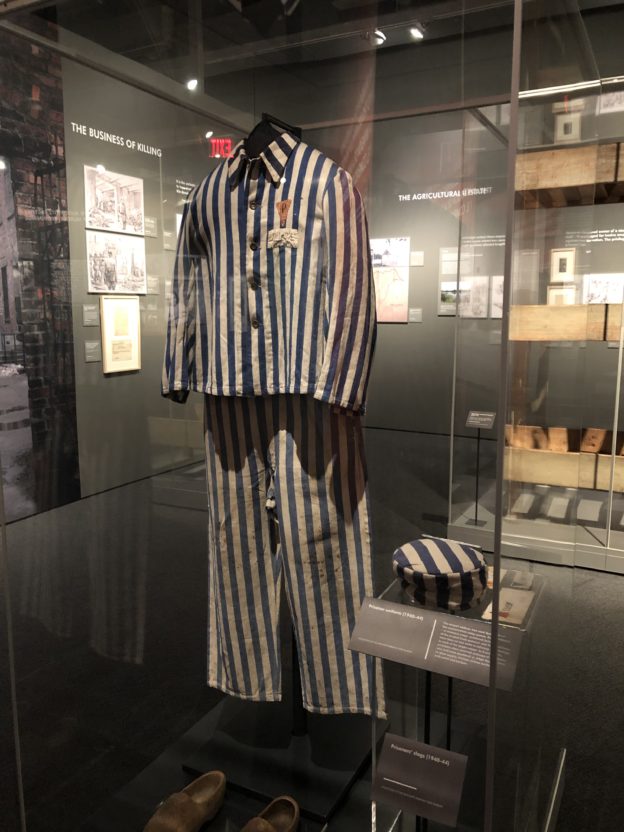
Considering that a survey last year revealed that 31 percent of Americans, and 41 percent of millennials, believe that two million or fewer Jews were killed in the Holocaust, and that 41 percent of Americans, and 66 percent of millennials, cannot say what Auschwitz was, a large and impressive Holocaust exhibit would seem to merit only praise.
And praise the “Auschwitz. Not Long Ago. Not Far Away” exhibit currently at the Museum of Jewish Heritage in Manhattan has garnered in abundance. It has received massive news coverage in both print and electronic media.
First shown in Madrid, where it drew some 600,000 visitors, the exhibit will be in New York into January before moving on.
Among many writers who experienced the exhibit and wrote movingly about its power was reporter and author Ralph Blumenthal. In the New York Times, he vividly described the artifacts that are included in the exhibit, which includes many items the Auschwitz-Birkenau State Museum in Poland lent for a fee to the Spanish company Musealia, the for-profit organizer of the exhibition.
Mr. Blumenthal wrote that the museum, within sight of Ellis Island and the Statue of Liberty, had to alter its floor plan to make room for large-scale displays like a reconstructed barracks. Outside the museum’s front door, there is a Deutsche Reichsbahn railway cattle car parked on the sidewalk, placed there by a crane.
Inside, among the 700 objects and 400 photographs and drawings from Auschwitz, are concrete posts and barbed wire that were once part of the camp’s electrified perimeter, prisoners’ uniforms, three-tier bunks where ill and starving prisoners slept two or more to a billet, and, “particularly chilling,” an adjustable steel chaise for medical experiments on human beings.
There is a rake for ashes and there are heavy iron crematory latches, fabricated by the manufacturer Topf & Sons There is a fake showerhead used to persuade doomed victims of the Nazis, ym”s, that they were entering a bathhouse, not a death chamber about to be filled with the lethal gas Zyklon B.
And personal items, like a child’s shoe with a sock stuffed inside it.
“Who puts a sock in his shoe?” asks Mr. Blumenthal. “Someone,” he explains poignantly, “who expects to retrieve it.”
Another essayist, this one less impressed by the exhibit – at least in one respect –is novelist and professor Dara Horn, who teaches Hebrew and Yiddish literature.
Writing in The Atlantic, Ms. Horn approached the exhibit carrying in her mind the recent memory of a swastika that had been drawn on a desk in her children’s New Jersey public middle school and the appearance of six more of the Nazi symbols in an adjacent town. “Not a big deal,” she writes. But the scrawlings provided a personal context for her rumination on her museum visit.
In her essay, titled “Auschwitz Is Not a Metaphor: The new exhibition at the Museum of Jewish Heritage gets everything right – and fixes nothing,” she recalls her visit to Auschwitz as a teenager participating in the March of the Living, and reflects on Holocaust museums, which she characterizes as promoting the idea that “People would come to these museums and learn what the world had done to the Jews, where hatred can lead. They would then stop hating Jews.”
And the current exhibit, she notes, ends with a similar banality. At the end of the tour, she reports, “onscreen survivors talk in a loop about how people need to love one another.”
To do justice to Ms. Horn’s reaction would require me to reproduce her essay in full. But a snippet: “In Yiddish, speaking only to other Jews, survivors talk about their murdered families, about their destroyed centuries-old communities… Love rarely comes up; why would it? But it comes up here, in this for-profit exhibition. Here is the ultimate message, the final solution.”
Ouch.
“That the Holocaust drives home the importance of love,” she writes further, “is an idea, like the idea that Holocaust education prevents anti-Semitism, that seems entirely unobjectionable. It is entirely objectionable.”
Those sentences alone would make the essay worth reading. And the writer’s perceptivity is even more in evidence when she writes:
“The Holocaust didn’t happen because of a lack of love. It happened because entire societies abdicated responsibility for their own problems, and instead blamed them on the people who represented –have always represented, since they first introduced the idea of commandedness to the world – the thing they were most afraid of: responsibility.”
Har Sinai is called that, Rav Chisda and Rabbah bar Rav Huna explain, because it is the mountain from which sinah, hatred, descended to the nations of the world. (Shabbos 89a). One understanding of that statement is precisely what Ms. Horn contends. Although her essay appeared the week before Shavuos, she didn’t intend it to have a Yom Tov theme.
But in fact it did.
© 2019 Hamodia

Ever find yourself in a long “10 items or less” supermarket line waiting for the cashier to check the price of kumquats for the lady who apparently considers all her fruits and vegetables to count as a single item?
Well, even if you have, you might compare your experience with the recent one of the hundreds of people bundled up in minus-20-degree weather waiting patiently in line on a narrow path more than 26,000 feet above sea level to reach the summit of Nepal’s Mount Everest. And, in the supermarket, you weren’t likely laden with an oxygen tank – a necessity at that altitude – whose contents were steadily diminishing.
What’s more, you probably didn’t have to navigate past the body of someone who died while waiting on line before you.
What makes people do things like climb what they consider the world’s highest peak (which in fact is probably Gangkhar Puensum in Bhutan)?
After all, according to mountain guide Adrian Ballinger, “humans just really aren’t meant to exist” in such places. “Even when using bottled oxygen,” he explains, “there’s only a very few number of hours that we can actually survive up there before our bodies start to shut down. So that means if you get caught in a traffic jam above 26,000 feet … the consequences can be really severe.”
Indeed. At this writing, 11 people are known to have breathed their last on treks to or from the summit of Mount Everest this year. The quest has claimed the lives of almost 300 people since 1923.
I suspect that those who spend considerable amounts of time, effort and money – the average price paid in 2017, for permits, equipment and guides, to climb Everest was approximately $45,000 – are impelled, ultimately if subtly, by the human search for meaning.
Nineteenth century secular philosophers argued about what ultimate essential goal motivates human beings. The German thinker Friedrich Nietzsche contended that it was power; another German, Sigmund Freud, that it was pleasure.
Both tapped into something real, although they were, like all secular thinkers, blind men trying to figure out an elephant. That Hashem has granted humanity bechirah, free will, and that we can, as a result, actually accomplish – change the courses of our lives and, ultimately, of history – is a power unparalleled in all of creation. So the “will to power” that, unfortunately, mostly yields bullies and tyrants is, in its most refined expression, the exercise of gevurah, “strength,” that Ben Zoma defines as “hakovesh es yitzro,” one who, by force of will, overcomes his nature (Avos 4:1).
And Freud was on to something too, as the Ramchal begins Mesilas Yesharim with the surprising statement that the most basic ideal of life is the pursuit of pleasure. Ultimate pleasure, that is – the pleasure of “enjoying the radiance of the Shechinah.” But the German secularist, of course, couldn’t see past the temporal, ephemeral yearnings of this world to the ta’anug ha’amiti, the “singularly genuine pleasure,” of the next.
Which brings us to the third nineteenth century conception of human motivation, that of the Danish thinker Søren Kierkegaard. He wrote of the “will to meaning” – the yearning to achieve some truly meaningful, ultimate goal in life.
His approach was popularized by a Holocaust concentration camp survivor, Viktor Frankl, whose 1946 book “Man’s Search for Meaning,” was deemed by a Library of Congress survey to be one of “the ten most influential books in the United States.” By the time of Frankl’s death in 1997, the book had sold over 10 million copies and had been translated into 24 languages.
There indeed seems to be an innate human aspiration to achieve something “meaningful,” to aim at some larger-than-oneself “accomplishment,” no matter how strangely some people may define that for themselves. For one person, such meaning may entail achieving a mention in the Guinness Book of World Records for the most slices of pizza eaten while riding a unicycle and simultaneously juggling balls. For others, the grand vision is the scaling of a mountain, even – especially? – if it entails danger.
For others still, namely those of us who recognize our Creator and His will for us, the accomplishment to reach for is a spiritual one, achieved through Torah and mitzvos. At certain times in history, aiming for that goal also entailed great danger. In our own times, baruch Hashem, it does not, although it may not offer a simple, obstacle-free and easy path.
As for us, well, while we may wish the Everest climbers every good fortune, we’ll be focusing in coming days on a very different mountain.
Have a happy and meaningful Shavuos.
© 2019 Hamodia
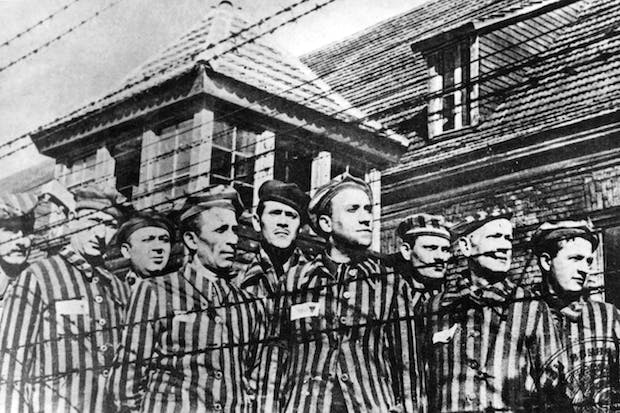
I often feel terribly pampered. Especially when I think of my parents’ generation.
At the age when my father, z”l, and several others from the Novardok Yeshiva in Vilna were captured for being Polish bnei yeshivah and banished by the Soviets to Siberia, I was being captured by a teacher for some prank and banished to the principal’s office. When he was trying to avoid working on Shabbos as his taskmasters demanded, I was busy trying to avoid the homework my teachers demanded.
When he was moser nefesh finding opportunities to study Torah while working in the frozen taiga, my mesirus nefesh consisted of getting out of bed early in the morning for davening. Where he struggled to survive, my only struggle was with the mundane challenges of adolescence. Pondering our respective age-tagged challenges has lent me perspective.
And so, while I help prepare the house for Pesach, pausing to rest each year a bit more frequently than the previous one, thoughts of my father’s first Pesach in Siberia arrive in my head.
In his slim memoir, “Fire, Ice, Air,” he describes how Pesach was on the minds of the young men and their Rebbi, Rav Leib Nekritz, zt”l, as soon as they arrived in Siberia in the summer of 1941. While laboring in the fields, they pocketed a few wheat kernels here and there, later placing them in a special bag, which they carefully hid. This was, of course, against the rules and dangerous. But the Communist credo, after all, was “from each according to his ability, to each according to his needs,” and so they were really only being good Marxists. They had needs, after all, like matzah shemurah.
Toward the end of the frigid winter, they retrieved their stash and ground the wheat into coarse, dark flour.
They then dismantled a clock and fitted its gears to a whittled piece of wood, fashioning an approximation of the cleated rolling pin traditionally used to perforate matzos to ensure their thorough baking. In the middle of the night, the exiles came together in a hut with an oven, which they fired up for two hours to make it kosher l’Pesach before baking their matzos.
And on Pesach night they fulfilled, to the extent they could, the mitzvah of achilas matzah.
Perspective is provided me too by the wartime Pesach experience of, l’havdil bein chaim l’chaim, my wife’s father, Reb Yisroel Yitzchok Cohen, may he be well. In his own memoir, “Destined to Survive,” he describes how, in the Dachau satellite camp where he was interned, there was no way to procure matzah. All the same, he was determined to have the Pesach he could. In the dark of the barracks on the leil shimurim, he suggested to a friend that they recite parts of the Haggadah they knew by heart.
As they quietly chanted Mah Nishtanah, other inmates protested. “What are you crazy Chassidim doing?” they asked. “Do you have matzos, do you have wine and food for a Seder? Sheer stupidity!”
My shver responded that he and his friend were fulfilling a mitzvah d’Oraysa – and that no one could know if their “Seder” is less meritorious in the eyes of Heaven than those of Jews in places of freedom and plenty.
We in such places can glean much from the Pesachim of those two members – and so many other men and women – of the Jewish “greatest generation.”
A passuk cited in the Haggadah elicited a novel thought from Rav Avrohom, the first Rebbe of Slonim. The Torah commands us to eat matzah on Pesach, “so that you remember the day of your leaving Mitzrayim all the days of your life.”
Commented the Slonimer Rebbe: “When recounting Yetzias Mitzrayim, one should remember, too, ‘all the days’ of his own life – the miracles and wonders that Hashem performed for him throughout…”
Those who, baruch Hashem, emerged from the Holocaust and merited to see children, grandchildren and great-grandchildren, naturally do that. But the rest of us, too, have experienced our own “miracles and wonders.” We may not recognize all of the Divine guidance and chassadim with which we were blessed. But that reflects only our obliviousness. At the Seder, when we recount Hakadosh Baruch Hu’s kindnesses to our ancestors, it is a time, too, to look back at our own personal histories and appreciate the personal gifts we’ve been given.
And should that prove a challenge, we might begin by reflecting on what some Jews a bit older than we had to endure not so very long ago.
© 2019 Hamodia

A piece about Chanukah that I wrote for the New York Times was published online today. It can be read here.
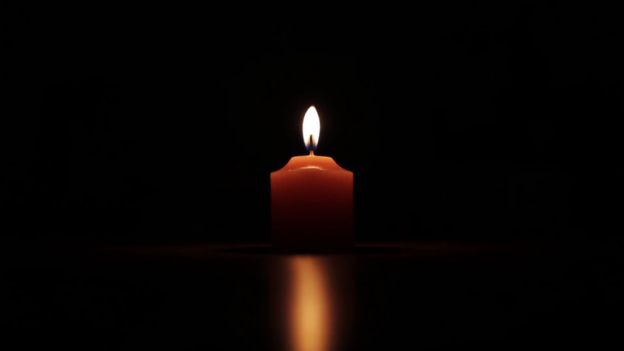
I’m always struck by the contrast this time of year between, on the one hand, the garish multicolored and blinking lights that scream for attention from so many American homes and, on the other, the quiet, tiny ones that softly grace the windows of Jewish ones. I think there may be cosmic meaning in Chanukah’s tendency to roughly coincide with a major non-Jewish holiday season.
For, while Chanukah is often portrayed by some Jewish clergy on radio programs and in newspapers as nothing but a celebration of religious freedom (or even, bizarrely, as some sort of salute to religious pluralism), the true meaning of the neiros Chanukah is clear from the many classical Jewish sources about the holiday – from the Gemara to the sifrei Kabbalah to the works of Chassidus. The celebration is entirely about the struggle to maintain Jewish integrity and observance within a non-Jewish milieu, to resist assimilation into a dominant non-Jewish culture.
The real enemy at the time of the Maccabim was less the Seleucid empire as a military power than what Seleucid society represented: a cultural colonialism that sought to erode the beliefs and observances of our mesorah, and to replace them with the glorification of the physical and the embrace of much that the Torah considers unacceptable. The Seleucids sought to acculturate the Jewish people, to force them to adopt a “superior,” “sophisticated,” overbearing secular philosophy. And so, the Jewish victory, when it came, was a triumph not over an army but over assimilation. The Maccabim succeeded in preserving the mesorah, and protecting it from dilution.
The overwhelming gloss and glitter of the non-Jewish celebration of the season are thus a fitting contrast to the still, small, defiant lights of the Chanukah menorah.
And in times like our own, when the larger Jewish world, l’daavoneinu, is so assimilated, and intermarriage so rampant, nothing could be more important for American Jews than Chanukah’s message.
Some try to make lemonade out of the bitter fruit of contemporary Jewish demographics, choosing to celebrate the incorporation of the larger society’s perspectives and mores into “new forms of Judaism,” and to view intermarriage as a wonderful opportunity for creating “converts” – or, at least, willing accomplices to the raising of Jewish, or Jewish-style, children. But they are dancing on the deck of a Jewish Titanic.
Lowering the bar for what constitutes Jewish belief and practice does not make stronger Jews, only weaker “Judaism.” And intermarriage is a bane, not a boon, to the Jewish future.
Over so very much of history, our ancestors were threatened with social sanctions and violence by people who wanted them to adopt foreign cultures or beliefs. Today, ironically, what threats and violence and murder couldn’t accomplish – the decimation of Jewish identity – seems to be happening on its own. Where tyranny failed, freedom is threatening to succeed.
Poignant meaning shines forth from the Bais Hamikdash’s menorah’s supernatural eight-day burning on a one-day supply of oil. For light, of course, is Torah, the preserver of Klal Yisrael.
Even the custom of playing dreidel is a reminder of that symbol of Jewish continuity. The Seleucids, it is related, had forbidden not only various fundamental mitzvos and hanhagos, they also outlawed the study of Torah, which they understood, consciously or otherwise, is the engine of Jewish identity and continuity. The spinning toy was a subterfuge adopted by Jews when they were studying Torah; if they sensed enemy inspectors nearby, they would suddenly take out their dreidels and spin them, masking their study session with an innocuous game of chance.
The candles we light each night of Chanukah recalling that menorah miracle reflect a greater miracle still: the survival of Klal Yisrael over the millennia. All the alien winds of powerful empires and mighty cultures were unable to extinguish the flames of Jewish commitment. “Chanukah” means “dedication.” It doesn’t just recall the Bais Hamikdash that was rededicated bayamim hahem, but calls on us to rededicate ourselves baz’man hazeh.
We do that by keeping ourselves from melting into our surroundings, and resisting the blandishments of those who insist that there is no other way. We know how to put the dreidels away and open the sefarim.
And with our determination, our mitzvos and our limud haTorah, we can prove worthy descendants of those who came before us, and continue as a people to persevere.
The great and powerful empires of history flared mightily but then disappeared without a trace. Their lights were bright but artificial.
Ours, small as they may be, are eternal.