Category Archives: News

Hideous Headline

On the first day of Pesach, Michigan Representative Rashida Tlaib offered the “Jewish sisters and brothers” among her constituents Passover greetings, accompanied by a graphic that included two fluffy loaves of bread. A similar faux pas (perhaps, here, articulating the French should-be-silent “s”) was part of the British Labor Party’s seasonal greeting as well.

Ms. Tlaib’s ignorance of one of the most important and widely-recognized elements of Pesach observance nicely paralleled her similar unawareness of the history of the Jews and Eretz Yisrael.

Her unbridled support of the “Palestinian cause” reveals an obliviousness to the uninterrupted Jewish presence over millennia in the land that today comprises the state of Israel, and the even more trenchant fact that the Jews who were expelled from the land after the destruction of the Second Beis Hamikdash, and their descendants over all the subsequent generations, have turned daily to Yerushalayim in prayer and pined for a return to their ancestral homeland.

Although Ms. Tlaib hasn’t publicly expressed an explicit hope for an end to the Jewish presence in the Jewish land, she openly supports the Boycott, Divestment and Sanctions (BDS) movement against Israel, advocates for a “Palestinian right of return” and backs a “one-state solution” – by which she presumably means (based on that “right of return” for all the descendants of all the emigrants from Partition-era Palestine) the transition of Israel, chalilah, into a 22nd Arab country.

The offensiveness of her infamous comment back in January about Senators Marco Rubio and Jim Risch – that, because of their opposition to BDS, they “forgot what country they represent” – has now been complemented by the craziness of her reaction to a report on the most recent conflict between Hamas and Israel in Gaza.

To be specific, to a headline in The New York Times summing up the violent happenings. The headline read: “Gaza militants fire 250 rockets, and Israel responds with airstrikes.”

The 250 rockets eventually became more than 700, and caused scores of Israeli civilian casualties, including three deaths – one of them a Bedouin father of seven; another, a 21-year-old chareidi father of a one-year-old. But, at the time of the Times’ report, the headline was an accurate, straightforward description of events.

Representative Tlaib, though, was outraged. “When will the world stop dehumanizing our Palestinian people who just want to be free?” she tweeted. “Headlines like this & framing it in this way just feeds into the continued lack of responsibility on Israel who unjustly oppress & target Palestinian children and families.”

Wha?

The headline just stated the bald facts of the conflict: terrorists shot hundreds of rockets at Israeli civilians and Israel ended the onslaught by attacking Hamas military targets from the air. Perhaps Ms. Tlaib would have preferred the chronology to be reversed, with Israeli attacks followed by Hamas retaliation. But time, alas, proceeds in only one direction.

And if the Congresswoman meant to reference the four Palestinian protesters at the border fence who were killed by Israeli forces the previous Friday, well, Palestinian violence at “peaceful protests” is legend. And those killings were preceded by the shooting of two Israeli soldiers there. That pesky arrow of time again.

The Congresswoman might also be reminded that Israel evacuated Gaza in 2005, relocating over 10,000 Jews, ethnically cleansing the region; and that the local residents, “who just want to be free,” freely elected a terrorist organization to rule them – which is what has directly resulted in their current deprivation and suffering.

If Ms. Tlaib – and we might well add her colleague Minnesota Representative Ilhan Omar, who likewise wished Jews a “happy Passover” – really wanted to gain respect from Jewish constituents and other American Jews, they might have issued a full-throated condemnation of Hamas’ most recent attempt to terrorize and murder Israeli civilians. And, for that matter, of Hamas’ general embrace of terrorism, incitement of the populace under its control and sworn goal of erasing Israel from the map.

Shia Muslim Imam and President of the Islamic Association of South Australia Mohamad Tawhidi did precisely that. And he went on to call out Mss. Tlaib and Omar for their own lack of outrage over Hamas’ terrorism.

Earlier this year, while paying his respects to Holocaust victims at Auschwitz, the imam was even blunter about the two Congresswomen, criticizing them as “absolute frauds and Islamists” who “promote hatred against the Jewish people.”

I don’t claim to know what lies in the heart of either woman. But I know what seems absent from both their heads: a recognition of the facts of history, both ancient and current.

As absent, it would seem, as leavened bread in observant Jewish homes on Pesach.

© 2019 Hamodia

Bad Times, Good Times

The third one, at least for me, did the trick. The third New York Times apology, that is.

The venerated publication, as most readers know by now, not long ago published an overtly anti-Semitic cartoon in its International Edition.

It depicted a guide dog with a face resembling Benjamin Netanyahu leading a blind, grotesquely overweight Donald Trump wearing dark glasses and a black yarmulke. A magen Dovid dangled from the dog’s collar.

When the cartoon was shared online, it was met with broad outrage. With its Jewish symbols and theme of an Israeli Prime Minister leading an unsighted American president, its Der Stürmer-keit was unmistakable. The Times issued a quick but brief apology – #1 – and then, after a wide and loud public outcry, a more comprehensive one – #2.

Then, last week, came #3, in the form of an unusual “Editorial Board” lead editorial.

When it appeared, Agudath Israel of America had been poised to issue a strongly worded statement about the cartoon, and a subsequent one depicting Mr. Netanyahu descending a mountain carrying a tablet featuring the Israeli flag, taking a picture of himself with a “selfie-stick.”

The ready-to-release statement pointedly suggested that The Times take a selfie of its own, and examine it closely and critically. Since the paper essentially did that, the statement was quashed.

The April 30 Editorial Board offering, titled “A Rising Tide of Anti-Semitism” and representing the view of the highest echelon of the paper, admitted, inter alia, that the first cartoon was “appalling” and that “an obviously bigoted cartoon in a mainstream publication is evidence of a profound danger – not only of anti-Semitism but of numbness to its creep, to the insidious way this ancient, enduring prejudice is once again working itself into public view and common conversation.” [Emphasis mine.] Indeed.

The editorial went on to list recent acts of violent anti-Semitism, to acknowledge that “anti-Zionism can clearly serve as a cover for anti-Semitism,” and to bemoan the fact that “In the 1930s and the 1940s, The Times was largely silent as anti-Semitism rose up and bathed the world in blood. That failure still haunts this newspaper.”

The editorial board statement also admitted that “apologies are important but the deeper obligation of The Times is to focus on leading through unblinking journalism and the clear editorial expression of its values.” And that, while “society in recent years has shown healthy signs of increased sensitivity to other forms of bigotry… somehow anti-Semitism can often still be dismissed as a disease gnawing only at the fringes of society. That is a dangerous mistake. As recent events have shown, it is a very mainstream problem.”

It is a problem that The Times, unfortunately, has helped feed, with its reportage, editorials and op-eds over more recent years, from misrepresentation of the 1991 Crown Heights riots to harsh criticism of Israeli actions of self-defense to repeated, unwarranted criticism of the Orthodox Jewish community.

Late last year, a group of representatives from Agudath Israel and the Orthodox Union met with The Times’ editorial page editor with the express purpose of trying to call attention to the dearth of Orthodox views on the paper’s op-ed page – a wrong compounded by the frequent criticism of the community that appears there.

The editor, who had at first tried to rebuff the charge, did some research and admitted the problem. And he pledged to be more open to Orthodox views.

So far, slim pickings. Although an opinion piece I submitted about Chanukah was published by The Times online, it was a “thought piece,” not a presentation of a position on a contemporary issue. And while ideas for examples of the latter, on topics like yeshivah education and the measles outbreak, to be written by qualified, credentialed members of our community were put forth, they were not accepted.

Does The Times recognize that part of the “creep” of subtle anti-Semitism involves negative coverage of the most recognizably Jewish of Jews, and the vacuum of Orthodox views on its op-ed page? Or has “numbness” set in there too?

It’s easy, even for an inveterate optimist like me, to be pessimistic. After all, there hasn’t been much positive movement to date, at least not visibly so.

But the willingness of the Old Grey Lady to publicly and prominently confess to sins both distant and present, and her pledge to be alert to the “insidious way this ancient, enduring prejudice” of Jew-hatred “creeps” into societal (and journalistic) discourse, and to the danger of “numbness” to that creep, leaves some hope in my heart.

Time, as the truism has it, will tell.

© 2019 Hamodia

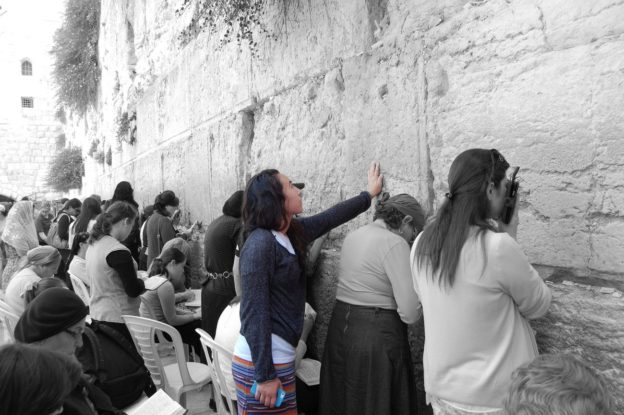
Make the Kosel Plaza Great Again

An Open Letter to Anat Hoffman

Dear Ms. Hoffman,

Many years ago, we shared a stage for a panel discussion about Israel and Judaism. But you are a well-known public figure and have appeared in countless venues to promote the feminist cause of your group “Women of the Wall,” so I hardly expect you to remember our fleeting interaction.

What you may be more familiar with is my written criticism of your goals and your group, since some of it has appeared in secular media both here in America and in Israel. I want to assure you that it was not intended as a personal attack, but was rather a battle undertaken in the arena of ideas. You have argued that the Kosel Maaravi should be a place where nontraditional public and vocal services should take place, even if such things offend those who most frequent the site.

And I have maintained that the hanhagah in place since the Wall was captured in 1967, effectively enshrining normative Orthodox practice as the standard for congregational prayer at the Kosel, should remain unchanged.

I am writing to you publicly now because of the results of the most recent Israeli elections. As you know, and likely bemoan, the two chareidi parties, Yahadut HaTorah and Shas, made unexpectedly strong showings. Their equally shared 16 Knesset seats represent a nearly 25 percent increase from their previous electoral representation. And together, they now constitute the largest Knesset faction in the government coalition after Likud, with more than three times the seats as the next most successful party.

That being the case, the chareidi parties are virtually assured to be part of Israel’s new government. That observation is not made to rub salt in any wounds, chas v’shalom, but rather as a prelude to a plea.

Realistically speaking, political machinations are not likely to change the longstanding status quo at the Kosel in the foreseeable future. And even if the Israeli courts are successfully enlisted to support the cause of dismantling the traditional public prayer custom at the site, the Knesset may be able to use its legislative power to circumvent such efforts.

In any event, the change for which you advocate is not likely in the cards for now.

And so, my plea:

Might you consider, in light of that reality, “demilitarizing” the Kosel, and putting your formidable talents and energies into truly important feminist causes, things like advocacy on behalf of equal pay for equal work and effective anti-harassment laws?

For, as you know, bringing loud nontraditional services to the revered site, as you have regularly done, only serves to cause strife. I make no excuses for anyone who berates another Jew, or so much as throws a crumpled piece of paper at her or him, much less for someone who assaults another. Hotheads exist in every group and should be tolerated in none.

But you know that your group’s actions will always meet with obnoxious reactions. Indeed, you have counted on it, making sure that when you arrive at the Kosel there are cameras and media in tow to capture whatever ugliness might result.

Provoking another Jew to overreact may not be as wrong as the overreaction itself. But it, too, is wrong.

And so, just think of what it might be like were you to seek changes to truly improve the lot of women in Israel, rather than a crusade whose only ultimate yield is strife.

Think of what it would be like to join the women who daven at the Kosel regularly with the sole goal of pouring out their hearts to Hashem. What an accomplishment it would be to make the Kosel plaza great again. A place of peace again.

You know that no one – traditional or nontraditional, Jew or non-Jew – has ever been prevented from worshipping there as an individual, and that the great majority of those who flock to the site regularly are Orthodox Jews, who want there to be a mechitzah near the Wall, and want audible public tefillah there to respect the norms born of centuries, indeed millennia, of Jewish tradition.

And you know, further, that until you launched your quest, the Kotel plaza was a place of uninterrupted amity – a Jewish societal oasis, probably the only place on earth where Jews of different religious stripes prayed sincerely side by side.

Might you consider returning it to that, every day of the year?

You and your followers can, as always, promote your religious or societal ideals in any private venue. But please give thought to the good will that you would be showing, and inspiring, were you to decide to make the Kosel once again an undisturbed place of Jewish comity and peace.

Thank you,

Avi Shafran

© 2019 Hamodia

An American Inconsistency

(This is the original version of my assisted suicide piece, which I adapted and changed considerably for the Fox News one below this posting.)

When a 79-year-old man stopped his car and exited it last week in the middle of the Verrazzano Bridge connecting Brooklyn and Staten Island, he was determined to leap more than 200 feet into the New York Narrows’ waters below.

But a driver, an Orthodox Jewish man named Tuli Abraham, saw the would-be jumper, stopped his own car, and approached the older gentleman to see what was wrong. When the elderly man announced his intentions, Mr. Abraham grabbed him and held him back. The suicidal man proved quite strong, but, eventually, Mr. Abraham, along with other civilians who had stopped and several law enforcement personnel who had been summoned, managed to pull the man to safety.

Suicide had been prominent in the news mere weeks earlier, when, over the course of mere days, a young survivor of last year’s massacre at Marjory Stoneman Douglas High School in Parkland, Florida, took her own life, as did another student at the same school. And Jeremy Richman, the 49-year-old father of a six-year-old who was murdered in the 2012 Sandy Hook Elementary School shooting ended his life too.

In light of the fact that tens of thousands of Americans kill themselves each year, and that the suicide rate continues to rise, news reports of those deaths responsibly included public service addenda providing readers and viewers contact information for groups like the National Suicide Prevention Lifeline.

Inconsistent is somehow inadequate to describe American society’s attitude toward suicide.

Consider that the very day of Mr. Richman’s death, New Jersey’s legislature voted to allow doctors to help patients kill themselves. If the state’s governor, Phil Murphy, signs it into law as he has pledged to do, New Jersey will join several other states and European countries that already allow physician-assisted suicide. It seems almost inevitable that other deadly dominos will fall, with other states following those unfortunate examples.

So, which is it, America? Is suicide something we need to try to prevent, even if it means tackling a man on a bridge and supplying the public with suicide prevention hotlines? Or is it a simple and respectable expression of personal autonomy, a “human right” that must be accepted, even aided?

We believing Jews know well that life isn’t about “rights,” of course, but rather about right – in the sense of right and wrong. And that it is wrong to take an innocent life, even one’s own. We know, too, that an Olam Haba and a reckoning await us all, and that every moment of Olam Hazeh is invaluable, since only here on earth can we accomplish anything.

But even those who choose to not recognize those truths need to be consistent. What explains how otherwise reasonable people can insist on intervention, counselling and treatment when someone in pain and distress shows suicidal tendencies but, should the same person experience pain and distress while lying in a hospital bed, consider it proper to help the patient kill himself?

Proponents of physician-assisted suicide will respond that the laws they support, and that have been enacted, require the patient to have been medically judged to have less than six months to live. But life itself, after all, is terminal. What makes the arbitrary time span of five months and 29 days so significant, so – quite literally – life-changing?

The person lying in the hospital might be distraught and convinced that he will be better off leaving living to others. But it can’t be denied that even a tiny slice of time can be used to accomplish much. Even someone with no comprehension of the immense power of a mitzvah or teshuvah has to admit that a smile can be shared, a kind word spoken; an apology offered, or a regret confronted; thoughts can be thought and reconciliation with an alienated friend or relative achieved.

New Jersey and its fellow assisted-suicide-sanctioning states seem to feel that a diagnosis of “terminal” and mental anguish are sufficient for a life to be considered void of worth. But the truth is that no life is worthless and no moment of life without value.

Voters and those who represent them would do well to consider that instead of offering terminal patients – a label, again, that applies in a broad sense to us all – the means to end their lives, we should feel charged to convince them of what they can yet accomplish, whatever their medical, mental or physical states, in whatever months, days or even moments left them on this earth. We need to treat the man in the hospital bed no differently than we treat the man on the bridge.

© Hamodia 2019

Blessed Bang for the Buck

Across an ocean but hot on the heels of Congresswoman Ilhan Omar’s not-so-subtle invoking of the hoary stereotype of Jews’ wily wielding of wealth – “It’s all about the Benjamins,” she contended, referring to $100 bills and pro-Israel influence on Congress – comes an exhibit at London’s Jewish Museum titled “Jews, Money, Myth.”

It features, well, a wealth of anti-Semitic imagery, from an 1807 British board game called “Game of the Jew” to a money-dispensing figurine of an Orthodox Jew sold last year in Poland. Other awful offerings include the opening sentences from a Nazi-era children’s book. “Money is the god of the Jew,” the Teutonic tykes were tutored. “He commits the greatest crimes to earn money. He won’t rest until he can sit on a great sack of money.” And a helpful cartoon of that image ensures that the lesson was learned.

Greed, of course, is a pan-human phenomenon. But if any lives are lived in obsession over possessions and the means of acquiring them, it’s those of the typical westerner, craving cars, music, jewelry, clothing and high-tech toys. Most Orthodox Jews – who are those usually depicted in the ugly imagery – have always had more rarified priorities in life.

And yet it is the Jew who is accused of obsession with money. Jewish success born of business acumen and, more importantly, divine blessing has for centuries been twisted into the ugly trope that Jews are more prone to greed and malfeasance than other groups of humanity.

We aren’t, of course, but since when has anti-Semitism ever been linked to logic?

There’s an “on the other hand,” though, here. Because there is a kernel of truth to the charge that we believing Jews have a special relationship with money.

Rabi Elazar informs us (Chulin 91a) that Yaakov Avinu was dangerously “left alone” at Nachal Yabok because he crossed back over the river to retrieve some pachim ketanim, small jars. A lesson to us, the Tanna explains, that “the property of the righteous is dearer to them than their bodies.”

That comment is not meant to counsel miserliness; it conveys an important Jewish thought: Every penny has true worth, for it can be turned into something meaningful. We might think of someone who rinses out and re-uses foam cups as some sort of miser; and maybe he is. But the cups might also be his pachim ketanim, and he might also be a righteous man, reluctant to waste something usable. If he’s generous to the needy, we know which one he is.

And so, while stinginess is ugly, frugality is not. It is a meaningful Jewish trait.

Money’s worth is not only a function of what Rabi Elazar observes elsewhere, that “Each and every penny contributes to a large sum” (Bava Basra, 9b), but because there is inherent value in every thing. As Rabi Yitzchak reveals (ibid), “One who gives a penny to a poor person is blessed with six brachos.” Pretty good deal.

Money, moreover, offers us opportunities for honesty. A believing Jew carefully keeps an accounting of his assets and obligations – including his debts and charitable responsibilities.

And cash can yield great Kiddush Hashem as well.

My wife and I had the pleasure several weeks ago of spending a Shabbos in the lovely community of Scottsdale, Arizona, as guests of the local shul, Ahavas Torah, and its esteemed Rav, Rabbi Ariel Shoshan.

We stayed in the home of a Rebbi at the Torah Day School of Phoenix, Rabbi Noach Muroff, and his wife and family. Back in 2013, the Muroffs lived in Connecticut and Rabbi Muroff, an unassuming, modest person, found himself the subject of incredulous reports in international media. He had purchased a desk and discovered $98,000 that had fallen into the back of the piece of furniture. (During our stay, I wrote a Hamodia column on the desk!)

He decided to return the money to its owner, and a Gadol to whom he confided the story told him that it was an opportunity for a Kiddush Hashem that shouldn’t be squandered. And so a member of the media was apprised of the happening, and the rest was, as they say, history.

Many might have counseled the Muroffs to just keep the windfall. After all, they had bought the desk “as is.” But farther-seeing eyes counseled otherwise. And the world saw a true picture of how a Jewish-minded Jew looks at money, as a valuable means, not a meaningless end.

He may have forfeited a large sum, but, actually, he got a really great deal.

© 2019 Hamodia

The Hermit Horror Kingdom

To his great credit, President Trump didn’t allow the testimony of his former lawyer Michael Cohen before a Congressional committee to pressure him into making a deal at all costs with North Korea.

It would have been helpful to the president’s image to have upstaged the Cohen hearing last Wednesday with the signing of an agreement with North Korean dictator Kim Jong Un – a signing ceremony had in fact been scheduled – pushing Mr. Cohen’s allegations of the president’s ethical and moral turpitude to second place in the day’s news cycle.

But, despite the two days the American and North Korean leaders spent together in Hanoi at their second summit, there was no diplomatic triumph to announce, not even the usual joint statement expected after such talks.

Things apparently broke down when it became clear that the North Korean despot was unwilling to even disclose the number and locations of his country’s nuclear weapon sites until some economic sanctions against his country were lifted. And even then, reportedly, he was prepared to shut down only one of his reactors. Mr. Trump, laudably, would not agree to that, even if it meant that news organizations would be focused on Mr. Cohen’s harsh disparagement of his former boss.

Less laudably, the president responded to a question about the American Jewish college student Otto Warmbier, who was arrested in North Korea for allegedly stealing a propaganda sign and died six days after he was repatriated to the U.S. in a coma, by relating that Mr. Kim denied knowledge at the time of the student’s deterioration in a North Korean prison, “feels very badly” about it, and that he, Mr. Trump, takes the Korean leader “at his word.” (He later said that his words were “misinterpreted.”)

Mere hours later, true to form, Nikki Haley, Mr. Trump’s former ambassador to the United Nations, tweeted starkly that “Americans know the cruelty that was placed on Otto Warmbier by the North Korean regime.”

The president, of course, may have just been trying to be diplomatic, with the goal of achieving some future actual progress on North Korea’s nuclear disarmament, and may harbor very different feelings about his summit partner than he verbally expressed. If he does, he is justified.

Shortly before the summit, a collection of accounts from North Korean defectors and North Korean officials in China was released, under the title “Executions and Purges of North Korean Elites: An Investigation into Genocide Based on High-Ranking Officials’ Testimonies,” by the Seoul-based North Korean Strategy Centre (NKSC).

It offered chilling accounts of utter contempt for human rights and numerous murders, claiming that Mr. Kim has had 421 officials executed and exiled since seizing power in 2011. Some victims, it reported, had been thrown unclothed to vicious hunting dogs; others were killed with shells; others still, burned alive with flamethrowers.

In some cases, the report asserted, entire families of officials have been executed or were imprisoned in concentration camps and “erased from society.” Officials faced death or imprisonment, the report alleges, for minor infractions like improper posture at an event attended by “supreme leader” Kim.

Mr. Kim is also said to have ordered the execution of his own family members, including his uncle Jang Song Thaek, who was killed along with his associates in 2013 (for having “sold the country’s resources to foreign countries at a low price”), and his half-brother Jong-nam, who was assassinated at a Malaysian airport in 2017.

A former student at Pyongyang Commercial College, identified only as “Moon,” is quoted in the report as claiming to have witnessed a 12-man public execution by soldiers using anti-aircraft guns. Armored vehicles then reportedly crushed their remains.

Evil tends to dovetail with Jew-hatred, of course. And that may be why North Korea sent pilots to Egypt during the Yom Kippur War, more recently helped Syria construct a nuclear reactor and recognizes the sovereignty of the non-existent “State of Palestine” over all of Israel, except for the Golan Heights (which it considers as part of Syria).

There are, of course, despots at the helm of other countries with which the U.S. has made strategic alliances over the years. And such associations, disturbing as they are, are not always the worst of the available options.

But it is hard to find a parallel, outside the example of Nazi Germany, to the sort of flagrant monstrousness that credible witnesses have described as an essential characteristic of the Korean peninsula’s hermit kingdom.

Iran, still abiding by the 2015 multi-nation deal, isn’t currently an immediate nuclear threat to others.

North Korea, though, is. And President Trump should not rest until it, too, is constrained.

© 2019 Hamodia