A piece about the Anglican Church’s attitude toward antisemitism and anti-Israel-ism, is here.

A piece about the Anglican Church’s attitude toward antisemitism and anti-Israel-ism, is here.
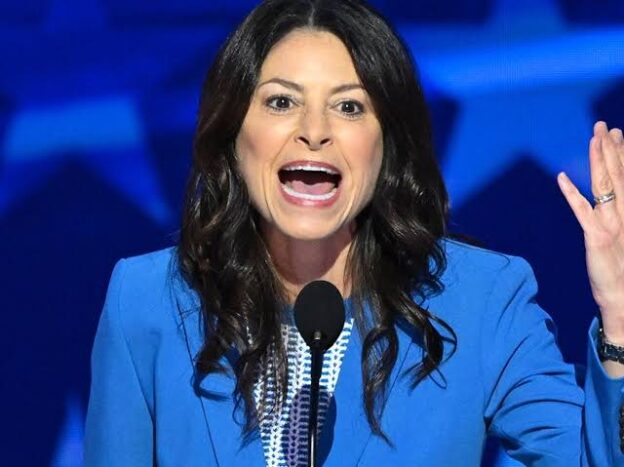
An unbelievably ill-conceived statement was made recently by Michigan’s Democratic attorney general. To read about it, click here.

Leaked recordings of private conversations and “hot mic” moments – when a politician or other public figure doesn’t realize that his microphone is still on – offer the best evidence of the true character and positions of the speaker. And, sometimes, those of others.
Last week, Michigan Senate candidate Abdul El-Sayed was confronted with words he didn’t expect would become public. But they did, and revealed something about the candidate’s assessment of a bastion of his strongest supporters, and likely about himself.
On audio obtained by The Washington Free Beacon website from an event that Mr. El-Sayed held shortly after the death of Iranian Supreme Leader Ali Khamenei, the candidate told staff that he wasn’t going to comment on the mullah’s death, and shared his feeling that the dictator’s demise had resulted in “a lot of people in Dearborn who are sad.”
Dearborn, of course, is a Michigan city that has the largest Muslim population in the U.S. It is the only Arab-majority city in the country.
CNN reporter Jake Tapper asked Mr. El-Sayed about his remark, prefacing his question by explaining that he “thought that quote was interesting, because the ayatollah has killed tens of thousands of innocent Iranians, not to mention the proxies that Iran has funded that have killed innocent civilians all over the Middle East.”
And then, the question: “Why were you worried about offending people who support the ayatollah?”
Mr. El-Sayed’s response to the question was revealing in itself: He tried to change the subject, citing the then-recent deaths of two American soldiers in an Iranian attack on a military base in Jordan.
“Jake,” he said, in a patronizing tone, “on a day where we’re mourning the loss of two more service members in a war we never should have fought, I think all of us ought to step back and ask whether or not everybody in Michigan, frankly, everybody in America, shouldn’t be sad.”
Funnier moments in recent politics are few. Mr. El-Sayid couldn’t deny what he had said about bereaved Dearborners – which revealed his recognition that the Arab, mostly Muslim, population of the city were sitting shiva for a mass murderer. So he pivoted to to a non sequiter, in the hope that no one would notice.
Mr. Tapper, however, tried to steer things back, “I was specifically asking you,” he said, “about comments you didn’t want to make because you didn’t want to offend people in Dearborn, which is in Michigan.”
Alas, Mr. Tapper, gentleman (or weakling) that he is, didn’t press the issue further.
In truth, though, he didn’t have to. The reality was all too apparent. The candidate had revealed the disturbing, demented and dangerous mindset of a subset of the citizenry, perhaps of himself as well.
Michigan is an imporant “swing state,” and a politically “purple” one too, neither reliably Democrat nor Republican. It voted for Donald Trump in 2024 and has a Democratic governor. It has flipped between parties in recent elections.
Mr. El-Sayed is a Muslim progressive, pursuing the Democratic party’s nomination to succeed retiring Senator Gary Peters, a Democrat. Earlier this month, Mr. Sayed refused – repeatedly – to say whether he believes that Israel “has a right to exist.”
“Nobody’s ever asked me whether I believe Palestine has a right to exist,” he huffed. (Maybe, Abdul, because the answer is obvious?)
Among his endorsers are Bernie Sanders, AOC, Rashida Tlaib and Elizabeth Warren. Enough said.
His opponent in the August 4 primary is Congresswoman Haley Stevens, who supports a strong U.S.-Israel alliance and strongly opposes the Boycott, Divestment, and Sanctions (BDS) movement. The race is currently too close to call.
If Mr. El-Sayed should, chalila, win the Democratic nomination, he will face a highly competitive general election matchup against presumed Republican nominee Representative Mike Rogers, Chairman of the House Armed Services Committee. Mr. Rogers considers Iran’s pursuit of nuclear weapons to be an existential threat. And he is a steadfast defender of Israel and her right to attack Iranian proxies like Hamas.
Michigan state law provides for “open” primaries, contests in which any voter, regardless of party affiliation, can cast a vote.
And so, all Michiganders who were not saddened by the demise of Ayatollah Khamenei need to turn out and vote their consciences on August 4.
(c) 2026 Ami Magazine
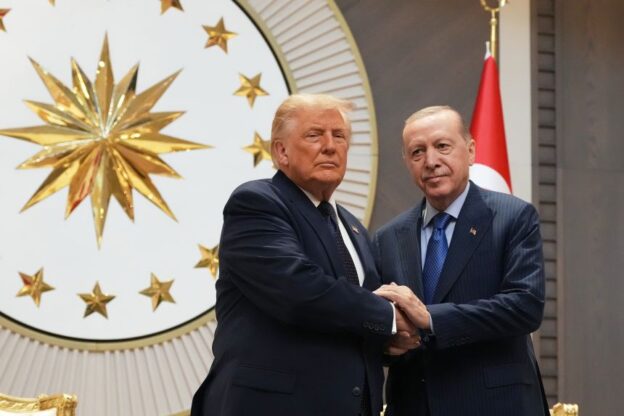
Did you know that President Trump has a soft spot.
Well, I think he does, and you can read what I mean here.
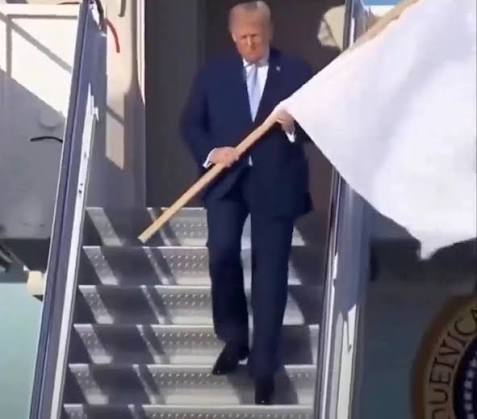
The US-Israel Memo of Understanding was, according to Iran, a “humiliat[ion of] American and Zionist enemies.”
Pretty much, unfortunately, on-target.
You can read why, here.

Our country and Israel have each used an array of advanced weaponry against Iran since February 28.
Three U.S. aircraft carriers deployed to the region have launched hundreds of Tomahawk cruise missiles at Iranian sites; and aircraft, including B-2 stealth bombers, have pounded targets in the country. New systems like the Precision Strike Missile (PrSM) have also been employed in attacks.
Israel brought the power of F-35I Adir stealth fighters, F-15I Ra’am jets and specialized precision-guided munitions to the fight.
The combined attacks have wrought significant degradation of Iran’s air defenses and missile production, and extensive destruction of military and civilian infrastructure.
Iran, for its part, has employed large numbers of kamikaze drones against U.S. sites and those of allies, as well as specialized anti-ship missile launchers stationed near the Strait of Hormuz. Its weapons inventory also includes some older U.S.-made equipment, like F-14 fighters, that the country was provided before the mullahs took over.
According to The Washington Post, Iranian strikes have damaged over 200 structures at U.S. military sites in the region. And U.S. intelligence indicates that Iran could produce enough bomb-grade uranium in 3-6 months.
But the war of weapons is only one part of the conflict’s calculus. Iran possesses a secret weapon, and it resides here in the U.S.
No, it’s not some fifth column of sleeper cells (though the existence of such threats can’t be ruled out). And it’s not even the sophomoric, self-righteous and besotted-with-themselves demonstrators (of, above all, their ignorance) who chant their affection for Iran’s proxies like Hamas and Hezbollah.
No, the Iranian secret weapon is something else: the American public. Or, to be more precise, citizens’ increasing fear of rising gas prices – on which the mullahs are counting to wear down America’s determination to defang them.
Ludicrous as it might sound – and in a sane world would sound – the Iranian secret weapon is the price of a gallon of gasoline at American pumps.
That reluctance to make an economic sacrifice in order to prevent Iran, once and for all, from being able to obliterate entire cities, plays a large role in what a recent PBS News/NPR/Marist poll showed: Six in 10 Americans disapprove of how President Trump is handling Iran.
Even among Republicans, who overwhelmingly approve of the campaign against Iran, that support is down seven points from March.
Odious but influential right-wing voices like Tucker Carlson, Megyn Kelly, Alex Jones and Candace Owens have raised a hue and cry against the war, which Mr. Carlson has characterized as “absolutely disgusting and evil.”
Such opposition to de-nuclearizing Iran capitalizes on fuel pump fearfulness. James Fishback, who is currently running for the GOP nomination in Florida’s gubernatorial race, encapsulated the Carlson et al position when he declared that “My definition of America First is that if it does not benefit American citizens, it is not America First.” And if American citizens are distressed, well, that’s worse.
In May, 1942, when Nazi Germany was on the ascendant, Americans received ration cards. Among items rationed were: cars, tires, gasoline, fuel oil, coal, firewood, nylon, silk, and shoes. Not to mention household staples like meat, dairy, coffee and oils.
Sacrifice was embraced as a common good for the war effort, and it affected every American household. There were minor protests, but the dominant mood among the citizenry was that decisively winning the war, no pun intended, trumped all else.
American society has markedly changed since the 1940s. The unity of purpose that reigned at that era is all but absent in these polarized times. The idea of the common good has yielded to a “what’s in it for me?” mindset.
What’s more, many these days seem desensitized to the danger posed by Iran possessing nuclear weapons. The local chants of “From the river to the sea…” and “Globalize the intifida” have all but drowned out the far-away Iranian ones of “Marg bar America” (“Death to America!”).
All of which provides fertile ground for enemies of civilization like Iran to sow seeds of noxious weeds, to wear down an American public unused to sacrifice and terrified by the specter of $5-a-gallon gas.
© 2026 Ami Magazine

One doesn’t expect an anti-racist organization to help finance white supremacist groups. But that is precisely what Southern Poverty Law Center (SPLC), a public interest law firm that fights discrimination, stands accused of.
The accuser is the Department of Justice, which last week issued a surprising indictment of the SPLC, charging it with secretly funding hate groups, including affiliates of the Ku Klux Klan and the National Socialist Party of America.
According to the government, between 2014 and 2023, the SPLC paid over $3,000,000 – laundered through bank accounts registered to fictitious entities – to people in those groups.
Todd Blanche, the acting attorney general, further claimed that the SPLC had failed to comply with its non-profit status, saying they committed fraud against their donors by failing to disclose the payments.
“And in no fundraising efforts that the investigation found,” he noted, “did they say, ‘Oh, and by the way, we’re going to give a million bucks to the Ku Klux Klan.’ So that’s fraud.”
Mr. Blanche, speaking alongside FBI Director Kash Patel at a news conference, said the organization made payments to at least eight people, including those affiliated with violent extremist groups like the Ku Klux Klan and Nazi organizations.
“The SPLC was not dismantling the groups,” Mr. Blanche said. “It was instead manufacturing the extremism it purports to oppose by paying sources to stoke racial hatred.”
Mr. Patel said that the SPLC “used the money they raised from their donor network to actually pay the leadership of these very groups.”
Established in 1971 and based in Alabama, the SPLC, over many years, successfully battled the Ku Klux Klan and similar groups in courts, and helped reporters and law enforcement keep tabs on domestic extremists.
In recent years, though, the group widened its net, identifying arguably mainstream conservative organizations as hate groups, which it defines as having “beliefs or practices that attack or malign an entire class of people.” Among the more recently SPLC-targeted groups are the Family Research Council and Turning Point USA (TPUSA).
In 2024, the SPLC said that TPUSA’s “primary strategy is sowing and exploiting fear that white Christian supremacy is under attack by nefarious actors, including immigrants… and civil rights activists… [The group] is at the forefront of the movement to promote Christian nationalism, the theocratic worldview that the U.S. is a fundamentally Christian country and that Christian values and beliefs should inform the government and wider culture…”
It notes that the late Charlie Kirk, TPUSA’s executive director until his murder in 2025, said, “You cannot have liberty if you don’t have a Christian population.”
Whether TPUSA is a hate group or what most people would simply consider a conservative (okay, “ultra-conservative”) organization, the SPLC certainly alienated some Republican lawmakers – and President Trump.
During a December congressional hearing, House Republicans accused the group of “being partisan and profitable.” In October, Mr. Patel severed FBI ties with the SPLC, alleging that it “long ago abandoned civil rights work and turned into a partisan smear machine.”
In an article last year, Margaret Huang, who was then the president and chief executive of the group, wrote that with President Trump’s second election, hard-right extremism now had “an ally in the highest office in the nation.” Needless to say, Mr. Trump was not pleased.
What, though, exactly, did the SPLC do to earn the administration’s charges?
It hired informants to infiltrate the targeted groups and convey back information about them and their plans. Bryan Fair, the SPLC’s chief executive, said that the group no longer used informants, but did so when extremist violence was common.
“There is no question that what we learned from informants saved lives,” he said.
There is nothing illegal about paying informants to spy on groups, something that government agencies like the FBI themselves have often done. Which fact has let the president’s critics to accuse him of vindictively targeting the SPLC with specious charges.
“The Southern Poverty Law Center, one of the greatest political scams in American History,” Mr. Trump exulted on his social media platform, “has been charged with FRAUD.”
And, he added, somewhat incongruously, “If it is true, the 2020 Presidential Election should be permanently wiped from the books and be of no further force or effect!”
© 2026 Ami Magazine

Mathias Döpfner, the respected CEO of the European digital publishing and media company Axel Springer recently spoke the obvious (or what should be obvious to his fellow Europeans) out loud. Read about it here.
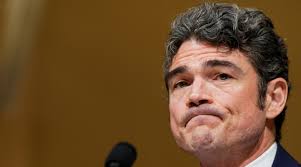
Just over a year ago, President Trump nominated Joe Kent, a former Army Special Forces soldier and two-time Republican candidate for Congress, to be director of the National Counterterrorism Center (NCTC). It was a decision the president has come to regret.
Although Mr. Kent was a Trump loyalist, even to the point of endorsing the discredited “stolen election” of 2020 claim and asserting that the January 6 attack on the Capitol was an FBI plot, he turned his back on Mr. Trump last week, resigning his position in protest of the current Iran war.
The content of his resignation letter should concern us all.
Mr. Kent is entitled to believe, as he wrote, that the current war was not warranted because there was no “imminent threat” to the U.S. that would permit an American president to order to attack another country.
It’s a risible stance, considering Iran’s “Death to America” drumbeat and accelerated ballistic missile and nuclear programs – not to mention the mullahs’ employment of proxies over years to kill American citizens. But people are entitled to be short-sighted, even myopic, even stupid.
The gist of Mr. Kent’s letter, however, was not an insistence on Congressional approval or some pacifist plea. It was contemporary blood libel. And aimed at such slanders’ perennial targets.
The former security official lays responsibility for what he considers an illegitimate war squarely at the feet of Israel and her American supporters. It was they, he asserted, who forced a helpless, impressionable President Trump to attack Iran. “It is clear,” he wrote, “that we started this war due to pressure from Israel and its powerful American lobby.”
He blames the Iraq war, too, on Israel, which “cost our nation the lives of thousands of our best men and women.”
That Mr. Trump might be vulnerable to outside pressure is a laughable notion. If there is anything that both supporters and detractors of the president agree upon, it’s that the man has a mind of his own and is about as pliable as a steel rod.
But Mr. Kent seems to harbor an unshakeable belief in the Jewish ability to… control things, including the president.
Mr. Netanyahu certainly made the case to Mr. Trump that Iran is an imminent threat not only to Israel, its “Little Satan,” but also to the U.S., its “Great Satan.” But Mr. Trump has regarded Iran as a threat for decades. Well before he first became president, he actually called for troop deployments to the country and seizure of control of Iranian oil. In 2018, he famously withdrew from the Obama-era JCPOA nuclear deal with Iran.
Sharing an interest with Israel – and acting in unison with her to head off the mullahs’ desire to Islamify the world – isn’t some dark conspiracy. It’s responsible leadership.
What’s more, Israeli leaders have lobbied every president in memory to go to war in Iran. That Mr. Trump decided to do so is not a sign of some gullibility but of his judgment that the time had come to remove a threat to the Western world.
Mr. Kent should never have been in a governmental position, much less a counterterrorism post. That should have been evident from the start. The evidence would have included his 2021 call to the odious white nationalist Nick Fuentes to get advice on social media strategy for a Congressional run. And his interview by neo-Nazi blogger Greyson Arnold. And his hiring of a member of the neo-fascist “Proud Boys” as a campaign consultant.
And then there’s the large tattoo on his arm, revealed in a relative’s innocent posting of him in a swimming pool, that reads: “Panzer.” The name, of course, of a famed Nazi tank.
Now, since his resignation, he has appeared on Jew-baiting Tucker Carlson’s podcast and has been lauded by the likes of Candace Owens, a reincarnation of rabid antisemite Charles Coughlin. “May American troops take [Kent’s] lead,” she posted on social media, “and look into conscientious objection to Bibi’s Red Heifer War. Goyim stand down.”
Birds of a feather…
While we can feel relief that Mr. Kent has left the NCTC, it’s deeply concerning that he was ever part of it. One has to wonder if other bigots may be lurking in government bodies.
(c) 2026 Rabbi Avi Shafran
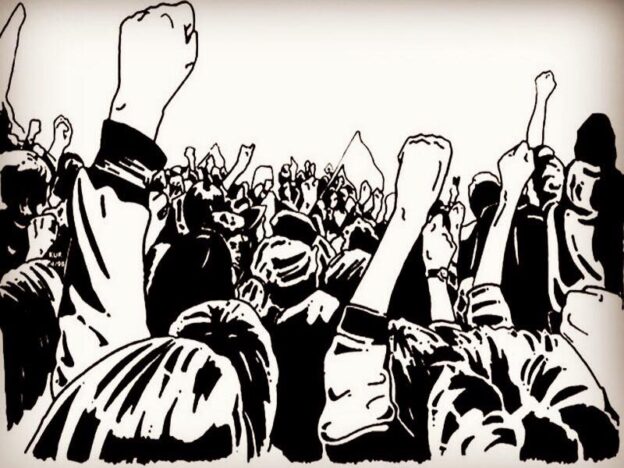
Describing our ancestors’ worshipping of the egel hazahav, the golden calf, the Torah relates that “Early next day, the people offered up olos [burnt offerings] and shelamim [peace sacrifices], they sat down to eat and drink, and then arose litzachek [to enjoy themselves]” (Shemos 32:6).
The legendary Novardhoker Maggid, Rav Yaakov Galinsky, zt”l, would comment in the name of an “early master” that the order of the happenings in that pasuk is significant, andhas broad historical pertinence.
The egel hazahav, he explained, was the first veering of the Jewish people away from Hashem, the first Jewish pursuit of a foreign-to-Torah ideal, one that bordered on idolatry. But it is an unfortunate prototype for other such ideal-idolatries in subsequent times.
Many a social movement has been birthed or eagerly embraced by Jews. And each began with with a lofty ideal, a figurative olah, a sacrifice entirely consumed on the altar, signifying selfless devotion.
With the passage of time, though, the heady days of every “ism”’s youth give way to a more jaded, or at least “realistic,” approach, signified by shelamim, a sacrifice where the supplicant is able to enjoy some of the meat. The high ideal, of course, is still heralded as paramount, the flag of altruism still flies, but there is an expectation of some “return on the investment” in the cause.
And then come the final stages, when the loftiness of the movement’s revolutionary goal deteriorates into “eating and drinking” – where self-interest and a “what’s in it for me?” mentality reigns — and, ultimately, into a litzachek frame of mind, when materialism and lust become the society’s entire foci.
The golden calf was the first worshipped ism, but it was far from the last.
© 2026 Rabbi Avi Shafran