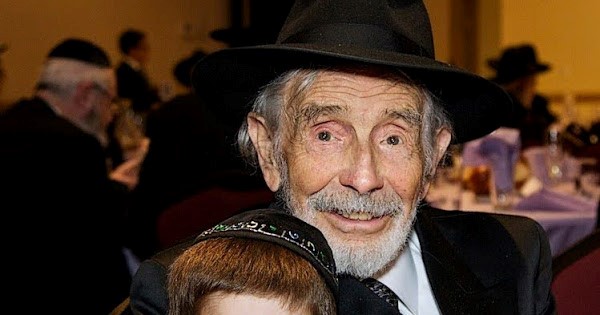
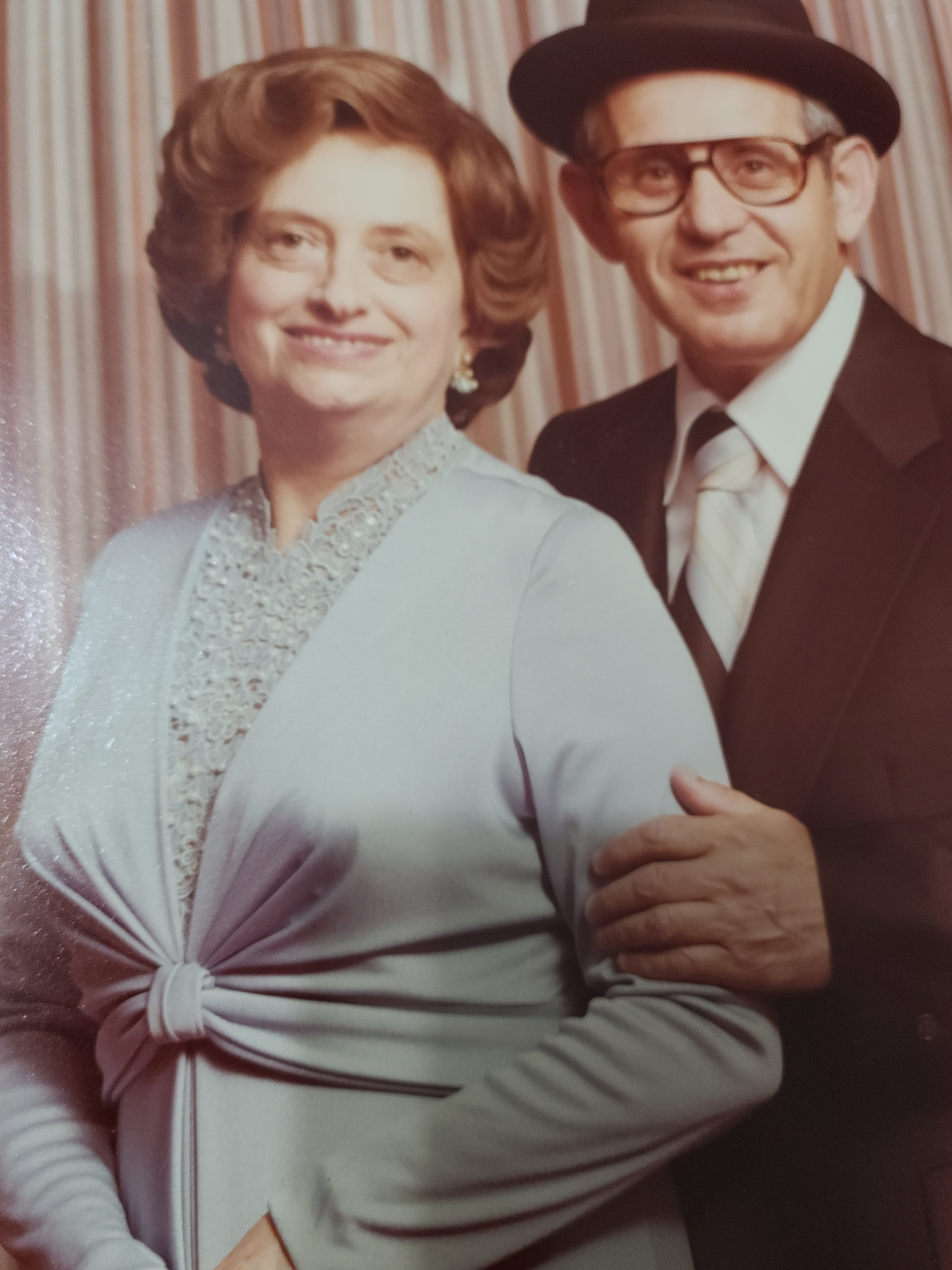
“Second Passover,” or Pesach Sheini, a minor Jewish holiday, is anything but minor in my family. It was on that Jewish date, which, in 1945, fell on April 27 (and this year, falls on May 15), that my late father-in-law, the late Yisroel Yitzchok Cohen, was liberated by American forces from Kaufering, part of the concentration camp complex known as Dachau.
In biblical times, Pesach Sheini, coming a month after Pesach, was a day on which Jews who were unable for various reasons to bring the korban Pesach, or paschal sacrifice, on Pesach had another opportunity to do so, and to eat its meat along with matzos (unleavened bread), and bitter herbs. For my father-in-law, it became a symbol of his own “second chance” — at life. His happy one as a child in the Polish city of Lodz had been rudely interrupted by the Nazis on September 8, 1939.
Mr. Cohen became a teenage inmate of several concentration camps. On Pesach Sheini in 1945, he and a friend, Yossel Carmel, lay in Kaufering, in a corpse-filled pit, where they had been cast by their captors, who thought them dead.
Over recent days, there had been rumors that the camp’s commanders had been ordered to murder all the prisoners, to deprive the advancing Allied armies of living witnesses to their work.
The friends’ fear, though, was leavened by hope, born of the sound of explosions in the distance. “We prayed,” he later wrote, that “the thunderous explosions would go on forever.” The pair, he recalled, “eventually fell asleep to the beautiful sound of the bombs.”
The only moving things in the camp were shuffling, emaciated “musselmen,” the “walking skeletons” who had been rendered senseless by starvation and trauma. And so the pair wondered if, perhaps, the camp guards had abandoned the premises. Alas, though, the S.S. returned, bringing along prisoners from other parts of the camp complex, who were kicked toward waiting wagons and, quite literally, thrown onto them.
But, when no one was looking, the two inmates managed to climb down from where they had been cast and found new refuge in a nearby latrine. “Our stomachs,” he recalled, “were convulsing.”
Eventually the wagons left, and the two young men crept back into their cellblock, posing again, not unconvincingly, as corpses.
Then they smelled smoke. Peeking out from their hiding place, the young men saw flames everywhere. Running outside, the newly resurrected pair saw German soldiers watching a barracks burn, thankfully with their backs toward them. There were piles of true corpses all around, and the two quickly threw themselves on the nearest one that wasn’t aflame.
My future father-in-law thought it was the end, and wanted to recite the “final confession” that Jewish liturgy suggests for one who is dying. But his friend reminded him of an aphorism the Talmud ascribes to Dovid Hamelech, King David, that “Even with a sharp sword against his neck, one should never despair of Divine mercy.”
And that mercy, at least for them, arrived. Every few minutes, bombs whistled overhead, followed by fearsome explosions. The earth shook, but each blast shot shrapnel of hope into their hearts. The Germans now really seemed gone for good.
Dodging the flames and smoldering ruins, the pair ran to the only building still intact, the camp kitchen. There they found a few others who had also successfully hidden from the Nazi mop-up operation.
And they discovered a sack of flour. They mixed it with water, fired up the oven and baked flatbreads. My father-in-law, who, throughout his captivity, had kept careful note of the passing of time on the Jewish calendar, knew it was Pesach Sheini. And the breads became their matzos. No bitter herbs were necessary.
The door flew open and another inmate rushed in breathlessly, finally shouting: “The Americans are here!”
A convoy of jeeps roared through the camp. American soldiers approached the barracks, some, Mr. Cohen recalled, with tears streaming down their faces at the sight of the piles of blackened, smoldering skeletons.
“Along with the American soldiers,” he wrote, “we all wept.”
And then he recited the Jewish blessing of gratitude to God for “having kept us alive and able to reach this day.”
Eventually, Mr. Cohen made his way to France, where he cared for and taught Jewish war orphans; and then to Switzerland, where he met and married my dear mother-in-law, may she be well. The couple emigrated to Toronto and raised five children. For decades thereafter, each Second Passover, he and others who had been liberated from Kaufering that day, along with other camps’ survivors, would arrange a special meal of thanksgivingin Toronto or New York, during which they shared memories and gratitude to God.
As the years progressed, however, sadly but inevitably, fewer and fewer of the survivors were in attendance. And, like his friend Mr. Carmel, Mr. Cohen is no longer with us.
But his wife, and my wife and her siblings, along with scores of grandchildren and great-grandchildren, spread across several states, Canada and Israel, gather in groups, in person or virtually, every Pesach Sheini to recall his ordeals and his liberation, the “second life” we are so grateful he was granted by God.
Many are survivors today, of hateful violence, again against Jews in Israel, as well as other people in places like Sudan, Myanmar, Yemen, Europe and Ukraine. Despair is a natural reaction to witnessing such evil. But those who, like my father-in-law — and my own father, who spent the war years in a Soviet labor camp in Siberia — persevered and created new post-trauma lives show that pasts needn’t cripple futures.
That, like in the case of Pesach Sheini, we can be graced with second chances.