Defining Indecency Down

It may have started back in the summer of 2020, when a Kansas Republican county chairman posted a caricature of the state’s Democratic governor Laura Kelly on his newspaper’s Facebook page. Ms. Kelly had issued a public-setting mask mandate, and was depicted wearing a mask with a Magen David on it. In the background was a photograph of European Jews being loaded onto train cars. The caption: “Lockdown Laura says: Put on your mask … and step on to the cattle car.”

The next summer, we were treated to Congresswoman Marjorie Taylor Greene’s criticism of House Speaker Nancy Pelosi’s mask requirement for the chamber, in which Ms. Taylor Greene declared: “You know, we can look back at a time in history where people were told to wear a gold star… were put in trains and taken to gas chambers in Nazi Germany. And this is exactly the type of abuse that Nancy Pelosi is talking about.”  Under pressure from her peers, the congresswoman later apologized; but her point, such as it was, had been made, and likely energized her like-minded supporters.

Then came Oklahoma GOP chairman John Bennett’s comparison of private companies requiring employees to get vaccines to — three guesses — the Nazis’ forcing Jews to wear a yellow star.

The odious comparisons just seemed to pile up, across the country. They were getting attention, after all, and attention is catnip for political felines. Of course, the offensive comments, each in turn, were all roundly condemned by Jewish groups. Wash, rinse and repeat.

Last week, though, may have offered us the Mother Of All Such Slurs, when broadcaster Lara Logan, once a respected CBS News foreign correspondent and now a Fox Nation commentator, appeared on the “Fox News Primetime” program, where she addressed Dr. Anthony Fauci’s recommendation that Americans get fully vaccinated, including  booster shots, in the wake of the appearance of the Omicron COVID variant. Her words:

“This is what people say to me, that he doesn’t represent science to them. He represents Joseph Mengele, the Nazi doctor who did experiments on Jews during the Second World War and in the concentration camps. And I am talking about people all across the world are saying this.”

A cursory search turns up no one but Ms. Logan saying such a thing, but maybe those people all across the world spoke with her privately.

As usual, Jewish groups rightly rushed to condemn her statement. But she was impervious to the criticism, later re-tweeting to her 197,000 Twitter followers a Jewish fan’s comment: “Shame on the Auschwitz Museum for shaming Lara Logan for sharing that Jews like me believe Fauci is a modern day Mengele.” Well, that makes two people, anyway.

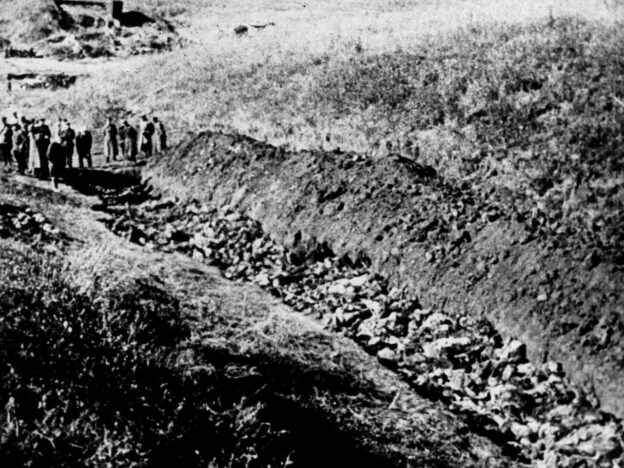
This introduction shouldn’t be, and probably isn’t, necessary, but for any readers not fully familiar with Josef Mengele, yimach shemo vizichro: He was a Nazi doctor given the title “Todesengel” — German for malach hamaves. At Auschwitz, he performed deadly experiments on prisoners, selected victims to be killed in the gas chambers and helped administer the Zyklon B, or hydrogen cyanide, gas. 

Mengele was particularly interested in twins, separating them on their arrival at the concentration camp, and performing experiments on them, including infecting them with germs to give them life-threatening diseases, performing operations on them without anesthetics and killing many of them to compare their and their siblings’ internal organs.

As to Dr. Fauci’s sin, it is being cautious — overly so, to his critics — about public health measures.

Aside from the insult and offensiveness of the Holocaust comparisons, the repeated use of the murder of six million Jews as a political tool should bother us for another reason:

With each one, even dutifully followed by condemnations, the memory of Churban Europa is further dulled a bit, the force of its historical reality subtly blunted. The public mind is, slur by slur, lulled into regarding the Holocaust as a mere metaphor. That may be of no concern to the offenders, but it should be to us.  

Because the cascade of casual co-optings of the Holocaust to score political points dovetails grievously with the diminishing number of living links to the events of 1939-1945.

And all the loathsome little Holocaust deniers and revisionists are just licking their lips as they wait in the wings.

© 2021 Ami Magazine

Vayechi – A Singular Kindness

Chesed v’emes, “kindness and truth,” is the term Yaakov Avinu uses to describe what he is asking of Yosef when charging his son to not bury him in Mitzrayim (Beraishis 47:29).

And Rashi famously explains that the term is meant to reflect the fact that doing something for someone deceased is the  ultimate kindness – since the doer “isn’t looking toward repayment,” presumably from the recipient of the act.

But while the deceased is no longer in a position to repay the kindness, others certainly are. And the performer of the kindness can also expect reward of a greater sort – in the world-to-come. So why is doing chesed for a deceased person in a singular category?

I wonder if the answer might lie in the words “isn’t looking for” (eino metzapeh) in Rashi’s explanation (although I haven’t found those words in the Midrash that Rashi seems to be citing).

What Rashi might mean is that, while there may indeed be repayment for an act of kindness toward someone no longer able to reciprocate, the performer of the kindness isn’t looking toward repayment. Because he’s in a special state of mind, bluntly confronting the inevitability of death. When he performs his kindness, he is blinded to everything but his own mortality.

Facing head-on what we all too often choose not to think about, although we intellectually know it is real, puts screeching brakes on our merry marches toward success in life and achievement of rewards of all sorts. At that time, we do not look toward any compensation for our efforts.

Interestingly, the word “eivel”, “mourning,” is spelled precisely as the word aval, “however.” What “however” does in a sentence – interrupts and reverses its flow – is what death of a loved one does in a survivor’s life. It stops the speeding “reward pursuant” train and focuses the mourner exclusively on the inevitable truth that this world is ours only until it isn’t.

And so, a chesed done for someone deceased is done in a singular state of pureness, of emes.

© 2021 Rabbi Avi Shafran

Vayigash — Full Circle

The wagons (agalos) that Yosef sent back with his brothers to their father (Beraishis 45:27) were intended to convince Yaakov it was indeed Yosef who was the effective ruler of Mitzrayim. They were, as Rashi there explains, a pun-hint to what Yosef and Yaakov were speaking of when they last saw one another, 22 years earlier.

The subject of that discussion was the law of “egla arufah,” the ritual performed when a person is discovered murdered outside a city. Yaakov had, back then, accompanied Yosef as he went looking for his brothers, and explained that the law of egla arufah implies the importance of escorting someone who is going on a journey.

The agalos were meant to conjure egla, which means “calf,” as the ritual involves dispatching one.

Why, though, use a pun? Why didn’t Yosef simply send a calf to his father? Wouldn’t that have been a more effective means of identifying himself?

There may, though, have been a deeper message in the agalos. The root of the word is “wheel.”  It might thus imply, for lack of a better phrase, the closing of the circle of justice, as we colloquially say, “what goes around comes around.” The circle is the most perfect simple shape, and can be seen as representing the resolution of all that seems discordant or incomprehensible. 

As the ancient proverb has it: “The millstones of G-d grind slowly but exceedingly fine.” And millstones, of course, are round.

When Hillel saw a skull floating in a river, he said :” Because you drowned others, they drowned you. And in the end, those who drowned you will be drowned” (Avos 2:6). Obviously, not every drowned person had drowned someone else. Hillel’s statement is a conceptual declaration, namely, that ultimate justice is assured. And perhaps significance lies in the fact that what he spied was a skull, a gulgoles, literally “something round.”

So Yosef’s message to his father in the identifying hint he sent, may have been: “All has turned out fine, despite my travails; my brothers and I are reconciled, and not only has the family circle not been broken, our lives have come… full circle.”

© 2021 Rabbi Avi Shafran

Letter to the NYT about abortion

To the Editor:

Judaism permits, even requires, abortion in limited cases, and responsible Jews cannot endorse measures that give a fetus the same protections as a born child.

But, with regard to Sarah Seltzer’s rumination on Judaism’s abortion position, there is nothing whatsoever in the Jewish religious tradition that permits abortion as a mere “choice” to be made for personal, economic or social reasons.

Nothing whatsoever.

(Rabbi) Avi Shafran
New York
The writer is director of public affairs at Agudath Israel of America.

Mikeitz – Small, Not Inconsequential

Yosef, who reaches the height of temporal power in this week’s parshah, was originally presented as unimpressive, even vain, the favorite of his father but the lesser, at least as they saw things, of his brothers. He tells on them, doesn’t think it unwise to share his seemingly self-aggrandizing dreams to his family and spends time attending to his superficial appearance. The Midrash refers to him as the katan shebish’vatim, the “small one” of the tribes.

How misleading all that is began to become evident when, in last week’s parshah, Yosef, made part of an Egyptian nobleman’s home, summons superhuman fortitude to refuse his benefactor’s wife’s adulterous entreaties. The Gemara (Yoma, 35b) holds him up as the ultimate model for the ages of resisting temptation.

The hidden potential power of the “small” and “unimpressive” is a timely thought at the time of Jewish year when we read about Yosef.

I’m always struck by the contrast between, on the one hand, the garish, multicolored and blinking lights that scream for attention from so many American homes each winter and, on the other, the quiet, tiny ones that softly grace the windows of Jewish ones. 

Chanukah is often portrayed as a “minor” holiday. It is indeed only rabbinic in nature, but its deep power is evident from its treatment in classical Jewish philosophical and mystical works.

And, echoing “small” Yosef’s attainment of the epithet “tzaddik,” for his personal fortitude, the events recalled on “minor” Chanukah were about fortitude, too — the struggle to maintain Jewish integrity and observance, and resist an enticing and dominant non-Jewish culture.

Small can be consequential. Isn’t that, in the end, the essence of rabbim biyad me’atim

Chanukah celebrates how all the alien firestorms of powerful empires and mighty cultures were unable to extinguish the flame of Jewish commitment. Those empires may have flared mightily, but they disappeared without a trace. Their luster was mere tinsel. 

Yosef seemed unimpressive; he was anything but. And our small, flickering lights are eternal.

© 2021 Rabbi Avi Shafran

Vayeishev – Gone, But Not Forever

When Yaakov Avinu is shown his son Yosef’s blood-soaked coat, “All his sons and daughters sought to comfort him; but he refused to be comforted” (Beraishis, 37:35).

Quoting the Midrash Rabbah (84:20), Rashi explains that, under normal circumstances, there is a Divine decree that people will come to terms with the loss of someone they love. Life would be unbearable without the diminishment of the pain of such a loss (Rashi, Pesachim 54b).

But the Divinely ordained reality of consolation, the Midrash explains, is only operative when the person being mourned is in fact deceased. Hence, Yaakov’s inability to be comforted, as Yosef was still very much alive.

Intriguingly, there is another person who similarly could not be comforted. In fact, it is Yaakov’s wife, Rachel, centuries later, lamenting from heaven the exile of the Jewish people.

A cry is heard in Ramah

Wailing, bitter weeping

Rachel weeping for her children.

She refuses to be comforted

For her children, who are gone. (Yirmiyahu, 31:14)

There, too, her inability to be comforted, like her husband’s when shown Yosef’s coat, stemmed from the fact that she was lamenting a people who only seemingly “are gone,” but are in fact only temporarily lost but destined to be found.

As the navi continues, with Hashem telling Rachel: 

Restrain your voice from weeping,

Your eyes from shedding tears;

For there is a reward for your labor

declares Hashem.

They shall return from the enemy’s land. (ibid, 15)

Just as Yosef ends up being reunited with his father, so will all of Klal Yisrael “return to their borders” (ibid, 16). 

© 2021 Rabbi Avi Shafran

The Myth of Mundanity

The thought experiment begins by asking us to ponder a world where the dead routinely rise from their graves but in which no grain or vegetation has ever grown. Long departed relatives routinely reappear and, presumably, funerals are au revoirs, not goodbyes. Food is procured exclusively from non-vegetative sources.

And the fantasy continues with the sudden appearance of a stranger who procures a seed, something never seen before in this bizarre universe, and plants it in the ground. The inhabitants look on curiously, regarding the act as no different from burying a stone, but are shocked when, several days later, a sprout pierces the soil where the seed had been consigned. They are even more flabbergasted to witness its eventual development into a full-fledged plant, bearing fruit – and, even more astonishing – seeds of its own.

Rav Eliyahu Eliezer Dessler painted the bizarre panorama, and, as it happens, the conjured scenario has pertinence to Chanukah.

The point Rav Dessler was making was the fundamental idea that there really is no inherent, objective difference between what we call nature and what we call miraculous.  We simply use the former word to refer to that to which we are well accustomed; and the latter, for things that we have never before experienced.  All there is, in the end, Rav Dessler concludes, is Hashem’s will, expressed most commonly in nature.

Yesh chachma bagoyim, “there is wisdom among the nations.” The celebrated essayist and philosopher Ralph Waldo Emerson famously conveyed much the very same idea, when he wrote:

“If the stars should appear one night in a thousand years, how would men believe and adore; and preserve for many generations the remembrance of the city of God which had been shown! But every night come out these envoys of beauty, and light the universe with their admonishing smile.”

The star-filled sky, Emerson asked us to realize, is seen as non-miraculous only –only – because it appears every night.

Famed physicist Paul Davies put the thought starkly and strikingly: “The very notion of physical law,” he wrote, “is a theological one.”

What does all that have to do with Chanukah?

The chag, of course, commemorates the Macabeeim’s routing of the Greek Seleucid fighters who sought to impose heathenism on the Jews in Eretz Yisrael. The Maccabeeim managed to rout their enemy, recover Yerushalayim and rededicate the defiled Beis Hamikdash.  Only one vial of tahor, undefiled, oil, though, for use in the menorah was discovered in the debris. It was enough to burn for only one day, yet, once kindled, lasted for a full eight, yielding Chanukah’s observance of eight nights of candle-lighting.

Why, the Beis Yosef famously asked, is Chanukah observed for eight days, when the miracle of the oil was really only evident over seven – since there was sufficient recovered oil for one day?

Many answers have been suggested. One, though, offered by, among others, Rav Dovid Feinstein, zt”l, is based on Rabbi Dessler’s (and Emerson’s, and Professor Davies’) contention.

Seven of Chanukah’s days, goes this approach, indeed commemorate the miracle that the menorah’s flames burned without fuel.  The eighth day, though, is a celebration unto itself, commemorating the fact – no less of a miracle to perceptive minds — that oil burns at all. It is an acknowledgment of the Divine essence of nature itself.

Which poignantly echoes the Gemara’s account of how the daughter of Rabi Chanina ben Dosa realized shortly before Shabbos that she had accidentally poured vinegar instead of oil into the Shabbos lamps, and began to panic.  Rabi Chanina, who vividly perceived divinity in all and, the Talmud recounts, as a result often merited what most people would call miracles, reassured her.  “The One Who commanded oil to burn,” he said, “can command vinegar to burn.”

Which, in that case, is precisely, the Gemara recounts, what happened. Vinegar doesn’t usually burn, of course, unless it’s Rabbi Chanina’s. But the fact that oil burns, for all of us, remains a miracle, if a common one.

Sifrei nistar portray the small Chanukah flames as leaking spiritual enlightenment into the world. Perhaps the realization of the miraculous hidden in the mundane is part of what we are meant to gain from the lights.

Heading into the dismal darkness of what some coarse folks might think of as a “G-d-forsaken” deep winter, the Chanukah lights remind us that nothing, not even nature, is ever forsaken by G-d, nothing devoid of divinity.

© 2021 Rabbi Avi Shafran

A “Certain Sect of People”

People sometimes ask me if writing a letter to the editor of a major newspaper is worth the trouble, considering that having one’s letter chosen for publication is a long shot. I reply that it’s still worthwhile, because the paper knows that, for every letter it gets that takes a particular stand, there are likely hundreds of readers who share the letter-writer’s view but didn’t bother to write.

To compare apples to, well, rotten ones, something similar is true when it comes to antisemitic screeds. Like 45-year-old Nick Colella’s during a Planning Board public hearing in the Rockland County town of Haverstraw, north of Ramapo.

The topic of the hearing was a request for a variance to convert a single-family residence into a shul. The owners want to build an addition and second floor to the home and add 27 off-street parking spaces.

At the podium, Mr. Colella took the opportunity to assert that some of his neighbors don’t put away their garbage cans for days and weeks because they “are too lazy to take it in because their maid didn’t pick it up, right?” Scattered applause ensued.

Then, eliding the fact that most of the neighborhood lacks sidewalks, he complained about a “certain sect of people” who he said “tend to walk in the street, and nobody is wearing any reflective gear.” And then explained, “So if I run one of them over, and of course I’m going back over them again, right?”

Once the video of the repulsive comment circulated, public officials were quick to condemn it. New York Governor Kathy Hochul tweeted: “Antisemitism, like all forms of hate, is horrifying and unacceptable. Everyone has the right to walk down the street without fear. New York, we are better than this.”

Ramapo Town Supervisor Michael Specht and State Sen. James Skoufis denounced the remark. And Rockland County Executive Ed Day, who has himself been accused of unfairly characterizing some of the county’s Orthodox Jewish residents and institutions, called the tirade “beyond disgusting… utterly ignorant and hateful,” condemning it “in no uncertain terms.”

Local authorities are looking into bringing charges against the shameless speaker, and New York Attorney General Letitia James offered her assistance in the matter.

All of which is reassuring and laudable. But what remains, in the end, is the likelihood that for every racist or antisemite sufficiently simpleminded to announce his hatreds publicly, there are likely many more who quietly embrace similar vile sentiments.

As Rabbi Shragi Greenbaum, the Agudah’s Rockland Office director, put it to a reporter: “What remains of concern… is how many Rockland County residents harbor similar feelings to those of the speaker at the planning board but aren’t foolish enough to proclaim them publicly.”

How many congratulatory calls, one wonders, did Mr. Colella get that night? I imagine if you asked him, he’d happily tell you.

There are people in whom antisemitism is ingrained. They are part of society and, like people who don’t shower, they just have to be tolerated (at least to an extent). And then there are non-Jews who sincerely like Jews. But the broadest penumbra of the non-Jewish population has no inherent animus or love for us, but can easily be pulled in either direction.

As Rabbi Greenbaum continued: “It’s important for neighbors — Jewish and non-Jewish — to introduce themselves to one another and to better get to know the needs and sensitivities of those outside their social circles.”

I like to call identifiably Orthodox Jews “walking Jewish billboards.” We project — intentionally or not — the image of Torah fealty to others who may well form their opinion of Jews based on how they perceive us.

And showing others that menschlichkeit is fundamental to Yiddishkeit is not hard. With the growth, baruch Hashem, of our communities and our expansion into new areas, opportunities to make good impressions are ubiquitous.

Things as simple as yielding to others in traffic or holding a door open for the person behind one can make all the difference. So can a simple smile and “good morning.” 

Unfortunately, though, nothing is likely to change the Colellas of the world.

(c) 2021 Rabbi Avi Shafran